Author: Ilana Stark

Your Brand’s Legacy Could Be Holding You Back

Posted on by Ilana Stark

You know, history is a funny thing. For brands that have been around forever, it’s like having a superpower that’s also like a pair of cement shoes.

On the one hand, you’ve got something priceless: trust. The kind of reputation that startups burn millions trying to create overnight. Your name is a part of people’s lives. It’s that go-to tool, that comforting taste of home, the brand your grandparents swore by. This brand loyalty is your fortress, built brick by brick over decades of keeping your promises. It’s a huge asset.

But here’s the catch: that same fortress can start to feel like a prison. The consistency that made you a household name can also make you slow and stubborn, stuck in a “this is how we’ve always done it” mindset. Meanwhile, the world outside is changing at lightning speed. All of a sudden, “timeless” starts to feel, well, just plain “old.” Your most loyal fans are getting older with you. And the next generation? Millennials and Gen Z? They play by a whole new rulebook. They grew up with the internet in their pocket and have seen it all. They see you as their parents’ staple, and let’s be real, their whole mission is to carve out their own unique identity, not copy the last generation.

So, that’s the big puzzle, isn’t it? How do you stay true to your roots while still being cool and relevant today? How do you honor the past without getting stuck in it?

What’s Shaking Things Up?

First up, the whole digital world has flipped the script. You’ve got these speedy, direct-to-consumer (DTC) brands popping up and talking directly to your customers. They’re not weighed down by old-school systems or slow decision-making. They can launch a new product based on a TikTok trend in a matter of weeks! They’re nimble and quick on their feet, building a direct line to their fans.

A real digital makeover means completely rethinking how you do business. Look at Walmart using fancy tech to get products to people faster. Or Under Armour, which went from just selling clothes to creating a whole “Connected Fitness” world with apps that are part of your workout. And what about LEGO? They have a site where fans can dream up and vote on new sets. How cool is that?! For these guys, digital isn’t just a side project; it’s the heart of everything they do.

Second, and this is a big one, the new wave of customers has arrived. Here’s the deal with Millennials and Gen Z: they don’t just buy your stuff. They buy your story and what you stand for. A good product is just the starting point; it’s the bare minimum. What really makes you stand out is your purpose. They have a built-in radar for anything that feels fake and can’t stand slick, corporate talk. They want brands to be real and open and to take a stand on issues that matter, from sustainability to social justice.

They don’t want to just be sold to; they want to be a part of the conversation. They love it when brands share their photos and videos. It makes them feel like they’re on the team, not just a number. The big question has changed from “Is this product better?” to “Do I vibe with what this brand is all about?”

So, What Now?

First things first, you need to do a real, honest check-up on your brand to see where you stand with people today.

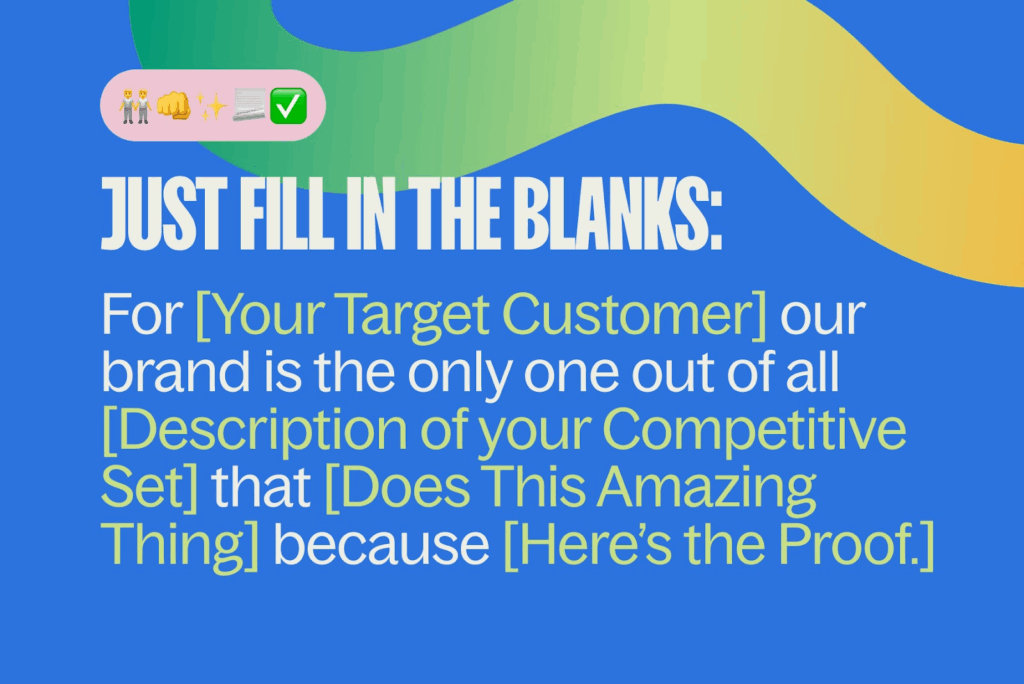
The biggest change you need to make is in your mindset. You’ve got to tell a new story, and it all starts with a clear-as-day plan. You need to nail down your “Customer Value Proposition” or CVP. 

This little exercise makes you get super clear. Who are you for? Who are you up against? And what’s your special sauce? Once you’ve got that locked down, you can start telling your story. And remember, that word “only” is doing a lot of heavy lifting here. If your competitors can accurately say they do that amazing thing you listed, it won’t stack up. 

Brand Marketing vs. Performance Marketing: Why You Can’t Have One Without the Other

Now, it’s super tempting to pour all your money into what’s called “performance marketing”—you know, those super-targeted digital ads that give you instant, measurable results like clicks and sales. And hey, those are important. But here’s a secret: performance marketing works a thousand times better when you’ve also invested in brand marketing.

Think of brand marketing as the big-picture storytelling. It’s what builds awareness, trust, and a real emotional connection with people over time. It’s the reason someone searches for your brand by name instead of just “running shoes.” When people already know you, like you, and trust you, they’re way more likely to click on that targeted ad when they see it. Brand marketing fills the tank so performance marketing has gas to burn. 

And get this: the best brand stories do something completely different. They make the customer the hero and figure out what they’re really struggling with. Is it something practical, like high prices? Or something emotional, like feeling guilty or overwhelmed? Or maybe it’s something bigger, like wanting to be a better person?

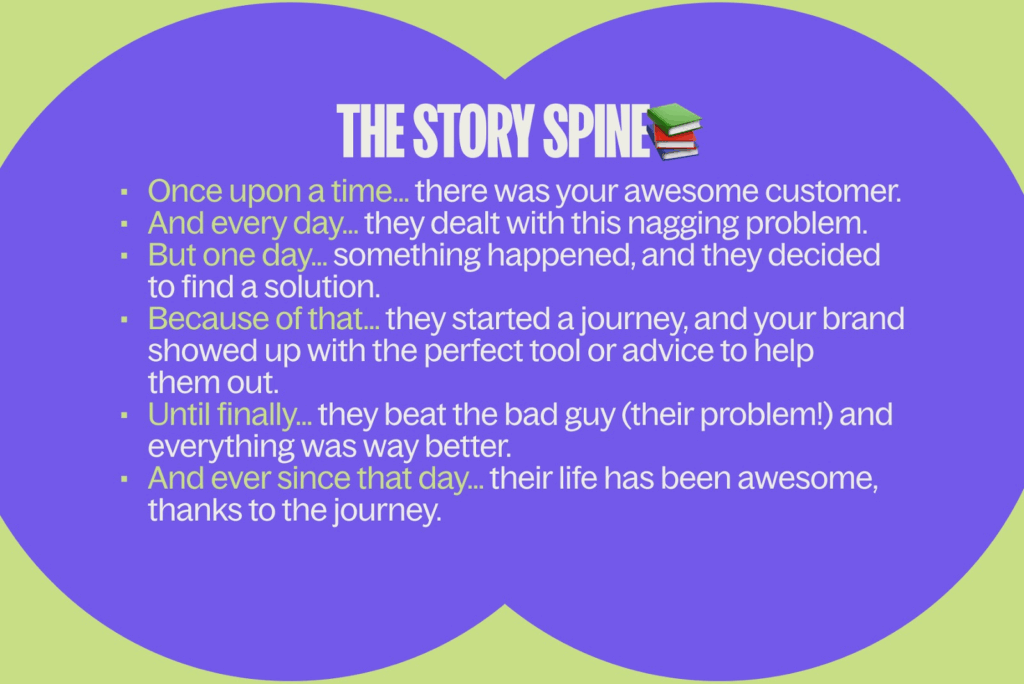
Once you know what the hero’s quest is, you can map out your story. The folks at Pixar use a simple trick called the “Story Spine,” and it works like a charm:

To make your story extra powerful, you can give your brand a personality, like an archetype. Are you The Creator, like LEGO? The Rebel, like early Apple? The Caregiver, like Dove? Picking one makes it easier to know how to act in your role as the hero’s guide. You’re not changing for no reason. You’re changing to be a better guide for your hero—the customer!

Don’t Just Tell Your Story, Live It! (And Learn from Past Fails)

Once you’ve got your story straight, everything else just falls into place. Your digital stuff? That’s how you help the hero on their journey. Your social media? It’s where you chat with them. The whole experience, online and off, becomes the world where their story happens.

Changing up a brand that’s been around for ages is a big deal. It takes guts. But hey, a word of warning: history is full of brands that got this wrong.

Remember the Kraft Heinz mess? They got acquired by a private equity firm, and cut costs on things like staff, marketing and new ideas to save a quick buck, and their famous brands just faded away. It’s a huge reminder that you have to keep investing in your brand. Or what about Tropicana? They changed their classic “orange with a straw” carton to something boring and generic. People were confused, sales dropped and they had to spend millions to switch it back. It shows you can’t just mess with things people know and love without a good reason.

These slip-ups all point to one big truth: this isn’t a one-and-done project. The brands that really win are the ones that are always changing, always learning, and never taking their customers for granted. 

Ready to Write Your Next Chapter?

Does this whole “legacy vs. relevance” puzzle sound a little too familiar? You don’t have to figure it out alone. If you’re ready to honor your brand’s incredible history while building an exciting future, we’d love to chat. Contact Us. 

Designing with Intelligence: Why Tech Decisions Are Now Brand Decisions

Posted on by Ilana Stark

Balancing AI Innovation, Infrastructure, and Human Insight

In today’s digital economy, your tech stack is your brand. It doesn’t matter how great your visuals or messaging are—if your site lags, your app crashes, or your AI gives bad answers, that’s what your customers will remember. From the backend frameworks you choose to the AI tools you implement, every technical decision now plays a visible role in shaping your brand experience.

This is the new reality: systems aren’t just enablers—they’re expressions of values. Performance, reliability, automation, and intent aren’t technical footnotes. They’re customer touchpoints. And increasingly, they’re the difference between trust and doubt, loyalty and churn.

Infrastructure Is Experience. Experience Is Brand.

We’ve spent years designing systems that power complex user journeys—course registrations, custom dashboards, CRM workflows—and we’ve seen firsthand how backend infrastructure shapes brand perception. Whether you’re using Laravel Nova or Filament to streamline administrative tasks or integrating the Forecast API to manage internal resourcing, your tech choices show up in the real world as either friction—or fluidity.

Consider this:

  • A fast, well-designed admin panel isn’t just a developer win—it communicates care, modernity, and intentionality to everyone who uses it.
  • A seamless registration process doesn’t just convert users—it signals that your organization is organized, thoughtful, and credible.
  • And when a system crashes at a critical moment? That’s not just downtime. That’s a broken promise.

The infrastructure is no longer invisible. It’s front and center in the customer journey.

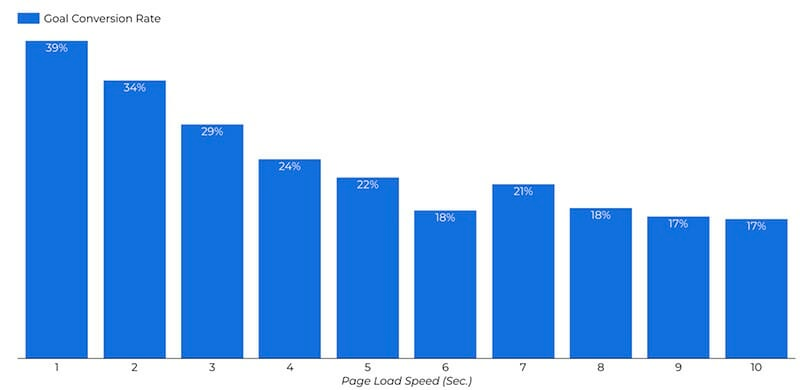
Here’s a chart showing the correlation between page load time and conversion rates. Image Source: Portent

Smarter Systems, Not Just Smarter Machines

At the same time, AI has moved from hype to utility. It’s in the IDE, in the CMS, in the chatbot. Tools like GitHub Copilot help us autocomplete boilerplate, auto-generate tests, and even surface better implementation patterns. But here’s our stance: AI is a tool, not a vision. And automation is not a license to stop thinking.

We don’t chase novelty. We use AI to make systems cleaner, workflows smoother, and teams more efficient. But every AI decision needs a why. Because the more power we give the system, the more clarity we owe the humans interacting with it.

When we use AI to surface recommendations, route leads, or prefill data, we build guardrails around it—fallback paths, transparency logs, auditability. Why? Because accountability is the real product. You can’t build trust with a black box.

Every Technical Choice Sends a Message

Here’s how we see it:

  • Performance equals professionalism. A system that loads in 400ms doesn’t just work better—it feels premium.
  • Reliability equals trust. Failures in infrastructure erode user confidence. In enrollment systems, even a few seconds of lag during peak traffic can damage your brand.
  • Transparency equals integrity. Whether it’s an API call, an AI decision, or a sync between systems, users deserve to understand what’s happening—and why.

From Laravel-powered admin panels to Forecast-backed resource planning, we design for speed, scale, and clarity. And we design with eyes open—balancing what automation can do with what people still need to control.

Developer Experience = User Experience

Tools like Filament and Nova don’t just make devs happy—they make users happy. Why? Because a clean, modular, auditable codebase translates into better iterations, faster bug fixes, and ultimately smoother experiences for everyone.

When systems are designed with developers in mind, users benefit from:

  • Fewer bugs and less downtime
  • More frequent, useful feature updates
  • Systems that grow and evolve as the organization does

And when AI is used with intention—not just to automate, but to amplify—those benefits multiply.

Infrastructure, Intelligence, and Intent

In the end, our goal is simple: to build systems that reflect the best of what humans and machines can do together. Systems that scale human insight. That move fast—but never faster than we can explain. They feel as thoughtful as they are powerful.

Because in 2025, your backend isn’t just part of your brand. It is your brand.

Want to turn your tech stack into a brand asset?
Let’s talk about how we can help you build infrastructure—and intelligence—that earns trust.

DSXL: The Enterprise CMS That Delivers Membership Growth

Posted on by Ilana Stark

For organizations with thousands—or even hundreds of thousands—of members, global events, and competition results that demand split-second accuracy, the stakes are high. A standard CMS might work for your main marketing site, but for those running large-scale memberships, processing high-volume registrations, managing credentialing, or tracking live results, the marketing website is only the front door. 

Behind the scenes, you need a platform built for operational heavy lifting—one that unifies membership management, event operations, eCommerce, performance tracking, advanced reporting, and third-party integrations into a single, AWS-backed system. 

That’s DSXL: our proprietary, enterprise-grade platform engineered for scale, performance, and your exact business needs—so you can deliver world-class experiences for your members, athletes, students, campers, parents and partners.

What makes DSXL different from a standard CMS?

The wrong technology tools act as a bottleneck, leading to frustrated users, data silos, and systems that fail under peak demand. DSXL was engineered to solve these exact problems. It’s the difference between an everyday, passenger car and a rally-ready SUV built for demanding terrain. 

Your leadership decisions are only as good as the data behind them. DSXL gives you on-demand, fully customizable reports for every corner of your organization:

  • Membership trends and retention analysis
  • Event attendance, ticket sales, and revenue breakdowns
  • Athlete performance summaries and historical comparisons
  • Merchandise and eCommerce sales reports

Export reports in CSV, Excel, or PDF for easy sharing with executives, coaches, accounting teams, or stakeholders. 

Fully Tailored to Your Organization

You don’t get a “version” of our CMS—you get a custom DSXL build aligned with your processes, branding, and goals:

  • Bespoke scoring algorithms and ranking systems
  • Branded portals for members, athletes, and partners
  • Event workflows optimized for your operations
  • Advanced analytics dashboards and automated reporting

AWS-Powered Scalability You Can Trust

Whether it’s a membership renewal period or the peak moments of a national championship, DSXL performs flawlessly.

  • With Amazon SQS, we process millions of transactions and background tasks without slowing your operations. 
  • AWS Lambda powers heavy lifting—like bulk imports, scoring, and reporting—without costly manual scaling.

How does DSXL improve membership management?

Your members are your most valuable asset—and neglecting their experience is a direct hit to your bottom line. When registrations are clunky, event check-ins drag, or competition results lag, it’s not just an inconvenience. It’s a breach of trust. Frustrated members disengage, renewals drop, and referrals dry up. 

Prioritizing the member experience isn’t just a “nice to have”; it’s the foundation of long-term growth. Every interaction—from the first click on a registration form to the moment they see their results—shapes how they feel about your organization. DSXL is built to make every touchpoint seamless, intuitive, and reliably fast, so members stay engaged, loyal, and ready to recommend you to others.

 DSXL ensures every interaction is seamless:

  • Instant onboarding and automated renewals at scale
  • Tiered memberships with advanced role-based access
  • Fully integrated payments and invoicing
  • CRM and marketing automation integration for targeted engagement

And with Apple Wallet and Google Wallet support, members carry digital membership cards directly on their smartphones—ready for event check-ins, facility access, and loyalty perks with a single tap.

For USA Triathlon, a previous system left half of members struggling with password errors and one in five unable to complete basic tasks. Our solution fixed these glitches, simplified sign-ups, and added smarter filters. The result was a platform that works exactly as members expect—fast, intuitive, and frustration-free.

Can DSXL handle events at scale?

Yes. DSXL was built for organizations that run multiple events, sometimes across multiple continents.

The Arrowmont School of Arts and Crafts came to us with a challenge: their registration process wasn’t keeping up with the demand for their world-class workshops. With a new DSXL system, they’ve logged over 230 registrations in 2025 alone, which is four times their previous average

From regional competitions to national venue sales, our event management suite keeps you in full control:

  • High-volume ticket sales and registrations without bottlenecks
  • Streamlined check-in with scannable, wallet-ready tickets
  • Personalized schedules for VIPs, sponsors, and attendees
  • Post-event analytics and actionable insights to drive smarter planning and revenue growth

No matter the size of your event, you deliver an experience that feels seamless, professional, and premium.

What about performance tracking and credentialing?

For some clients, DSXL isn’t just about selling tickets. It’s about managing complex training and certification programs or tracking real-time competition results. DSXL delivers:

  • Real-time scoring, rankings, and leaderboard updates
  • Support for complex, multi-event scoring systems
  • Long-term historical performance archives
  • Instant publishing to web and mobile for athletes, fans, and sponsors

For USA Fencing, the challenge was clear: a growing membership of over 40,000 required a platform that could handle the intricacies of a competitive sport. Their previous systems made it difficult to track athlete points and rankings in real-time, and managing coach and referee certifications was a cumbersome, manual process. Our solution was a custom platform built to simplify these exact tasks. The result is a system that provides real-time performance tracking and automates credentialing, empowering USA Fencing to support its community with speed, accuracy, and operational excellence.

Is DSXL reliable and easy to manage?

If your organization is juggling multiple third-party systems for memberships, events, and reporting, your team is losing time, money, and focus. DSXL replaces all of that with a single, unified platform that:

  • Eliminates the cost of maintaining and integrating multiple vendors
  • Reduces data silos and errors from manual transfers
  • Provides a single source of truth for your entire organization

Our built-in e-commerce suite allows you to sell memberships, add-ons, and merchandise directly, with seamless integration for global payment methods like Stripe and Apple Pay. This keeps inventory, orders, and payments perfectly synchronized. The entire platform, backed by enterprise-grade AWS infrastructure, scales effortlessly to process millions of transactions and is custom-built to your exact workflows and goals.

It’s so easy and intuitive that an organization like Wilderness Medical Associates International uses it as their all-in-one administrative backbone, managing everything from enrollment and certifications to course schedules across six continents.

Is your organization built for what’s next?

DSXL is more than a CMS. It is the operational backbone your organization needs to grow, scale, and deliver exceptional value. 

Contact us today to see how DSXL can become your strategic advantage.

The Summer Buzz: What’s New at DS

Posted on by Ilana Stark

🎂🥳✨ 24 Years In. Still Hungry.

We’ve come a long way from a spark of an idea in 2000. What started as a small crew with big ambition has grown into a full-force team pushing brands to think sharper, work smarter, and connect deeper.

This August, we’re celebrating 24 years of bold ideas, better outcomes, and the people who make both possible.

From industry wins to personal milestones, here’s what’s been fueling us lately:

🏆🎥🎙️ Big Wins, Big Moments.

Year 23 ended on a high note. We brought home a National Silver Addy for our out-of-home installation with Regal in Times Square and snagged a Webby People’s Voice Award with Jaymee Sire for Food Network Obsessed.

Great work isn’t the exception; it’s the expectation.

🌭🍸✈️ Eat Up

Over at the office, we had our fair share of hot dogs, martinis, and hot dog martinis (in that order). 

But out of the office, Ryan and Lauren hit the Wall Street Journal’s Food Forum and had some dishes that might have outshone our hot dogs. Alongside their expanded palette, they brought back fresh takes on the future of the food and beverage category. Not just what’s trending, but what’s next. If you haven’t read our 2025 Food & Beverage Trends Report, fix that. You’ll be smarter (and hungrier) for it.

Meanwhile, our team headed west to South Dakota, capturing golden-hour content with the Governor’s Office of Economic Development. Think cows and crops, ingenious operations, hardworking farmers and agriculturalists, and wide-open skies—real scenes that reflect the heart, soul, and grit of the state.

🎉🍾🎈Woo-hoo-worthy Wins

The celebrations haven’t stopped, and honestly, why should they?

Hunter Foster, our VP of Media, made it official and tied the knot. And Isabella Cornaby is up next!

Jessica Thompson is gearing up for baby #2 in September (future media strategist in the making?).

And if that’s not enough to cheers to, how about these anniversary milestones:

  • Michael Pryfogle — 21 years
  • Hunter Foster — 10 years
  • Chris Wise — 8 years
  • Ryan Lee — 7 years
  • Barry Hylton — 6 years
  • Madelyn Cunningham — 6 years
  • Chelsea Penticuff — 4 years
  • Jessica Thompson — 4 years
  • Courtney Borgers — 4 years
  • Lindsay Jones — 2 years

That’s 73 combined years of talent, tenacity, and inside jokes we can’t print here.

We’re grateful for every single one of you.

🚀 Onward

If the last 24 years have taught us anything, it’s this: momentum matters. We’re building brands that move people—and we’re just getting started.

Thanks for being part of the ride. Let’s make year 25 our boldest yet.

Future-Proof Your Digital Experience: The Power of ReactHeadless & Sitecore XM 10.4

Posted on by Ilana Stark

The digital landscape is a jungle. Businesses are constantly hunting for flexible, high-performance content platforms that play nice with modern development frameworks. And let’s be honest, getting those platforms to actually perform and integrate without becoming a black hole for your budget is the real challenge.

This is where Sitecore XM, particularly when paired with Sitecore’s JavaScript Services (JSS) React in a headless setup, offers a powerful solution. It’s a scalable, decoupled architecture, perfectly suited for the demands of the modern cloud-first environment. While Sitecore boasts powerful capabilities, its full potential is only realized when implemented correctly. We’ve seen firsthand how teams can struggle with complex integrations, leading to budget overruns and underutilized features. A powerful platform should be an asset, not a resource drain.


A critical consideration right now is Sitecore’s product support lifecycle. For companies still operating on Sitecore 9.3, a vital deadline approaches: Extended Support ends on December 31, 2025. Beyond this date, your Sitecore instance will no longer receive essential security patches or bug fixes, introducing significant risks and increasing maintenance complexities. Upgrading to Sitecore XM 10.4 is therefore not just an enhancement; it’s a strategic imperative for maintaining security, optimizing performance, and accessing the latest features.


Designsensory specializes in transforming these digital challenges into real-world success. Our recent Sitecore upgrade for Bush’s Beans, migrating them from Sitecore 9.3 to 10.4, demonstrates our practical expertise. We streamlined existing services, removed unnecessary third-party functions, and optimized code for enhanced performance, achieving +2 React Versions, 400+ React Files Upgraded, and a remarkable +50% Page Size Reduction. This comprehensive rebuild was managed outside of production to minimize risk, ensuring a robust and modern Sitecore platform for future growth without disrupting live operations.

In light of upcoming support deadlines, we’ve compiled some frequently asked questions that clients often have about embracing this powerful solution:


Q: What is “headless” Sitecore, and why is it beneficial for my business?

A: Headless Sitecore separates the content management system (CMS) backend from the frontend presentation layer. Sitecore XM 10.4 fully supports this architecture through Sitecore Headless Services, allowing developers to use modern frameworks like React via Sitecore JSS. This decoupling offers significant advantages for businesses:

  • Agility and Speed: Backend and frontend teams can work independently and in parallel, drastically speeding up development cycles and time-to-market for new feature and campaigns.
  • Omnichannel Reach: Content can be retrieved flexibly through RESTful and GraphQL APIs, making it truly “write once, publish everywhere” – accessible for any channel or device (e.g., websites, mobile apps, IoT devices, smart displays).
  • Future-Proofing: By separating the presentation layer, your digital platform remains adaptable and resilient to changing technologies. You can swap out or upgrade your frontend framework without rebuilding your entire CMS.
  • Developer Empowerment: Developers can leverage popular, modern frameworks like. React and Next.js, using familiar tooling and workflows, which attracts top talent and boosts productivity.
  • Enhanced Performance: Headless architectures often lead to faster loading times and more dynamic user experiences, crucial for SEO and user engagement.


Q: Why is upgrading to Sitecore XM 10.4 particularly urgent for companies currently on Sitecore 9.3?

A: For companies still running Sitecore 9.3, the need to upgrade is immediate. Sitecore 9.3’s Extended Support ends on December 31, 2025. This is a critical deadline because, after this date, your Sitecore instance will no longer receive vital security patches or official bug fixes from Sitecore. Continuing to operate on an unsupported version carries significant risks:

  • Increased Security Vulnerabilities: Without official patches, your platform becomes a prime target for cyber threats.
  • Higher Maintenance Costs: Resolving issues without vendor support can become complex and expensive.
  • Compatibility Issues: Older versions may struggle with new browsers, operating systems, or third-party integrations.
  • Lack of Innovation: You’ll miss out on new features, performance improvements, and ongoing advancements in the Sitecore platform. Proactive migration to 10.4 ensures your digital investment remains secure, performs optimally, and can leverage all the latest advancements, well before your current version becomes a liability.


Q: How does deploying Sitecore XM headlessly on Microsoft Azure enhance scalability and performance for enterprises?

A: Deploying Sitecore XM headlessly on Microsoft Azure ensures enterprise websites and applications can scale effortlessly, handling even the most demanding traffic. Our experience shows how Azure complements Sitecore’s power:

  • Elastic Scalability: Azure App Services can quickly scale up or down automatically to meet fluctuating demands, ensuring your website or application performs optimally during peak traffic or sudden campaigns.
  • Global Reach & Speed: Services like Azure CDN (Content Delivery Network) and Front Door improve global load times by efficiently offloading static and cached content, delivering it from servers closest to your users worldwide.
  • Operational Efficiency & DevOps: Seamless integration with Azure DevOps pipelines and GitHub workflows enables automated code standards verification and continuous deployment of both frontend and backend environments, leading to more reliable and frequent updates.


Q: What tools does Sitecore 10.4 offer for streamlined local development and team collaboration?

A: Sitecore 10.4 provides robust, built-in tools that simplify onboarding and streamline workflows, making development more efficient and consistent for teams of all sizes:

  • Docker Containers: Developers can quickly spin up complete, isolated Sitecore XM environments locally using official Docker images. This dramatically reduces setup time and ensures consistency across different development and testing environments.
  • Sitecore Content Serialization (SCS): This critical feature allows teams to version and transport content and template items as part of their source code. This enables true DevOps practices and continuous integration/continuous deployment (CI/CD) pipelines, ensuring content consistency and version control alongside code. For Bush’s Beans, updating and reworking existing Sitecore serialization was a complex but vital “behind the scenes” effort that ensures consistency and version control.
  • Real-Time Content Access (JSS Connected Mode): Frontend developers can quickly preview production content by connecting to the Production Content Delivery Server without needing a full Sitecore installation. This also allows for efficient testing with various browsers and devices, including Apple hardware.
  • Rapid Prototyping: Components can be built and tested against actual data early in the development cycle, speeding up the design-to-delivery process. This was invaluable for projects like Bush’s Beans, enabling quick and confident iterations.


Q: While Sitecore is powerful, how do we ensure it doesn’t become a resource drain or overly complex?

A: This is precisely where our certified Sitecore guidance becomes invaluable. While Sitecore XM 10.4 in a headless configuration offers a future-ready content management solution, without the right expertise, teams can get bogged down by custom modules, fragile integrations, and unused features, diverting budget from progress. We simplify this complexity, ensuring powerful tools don’t overwhelm your team, optimizing costs by pruning unnecessary integrations and fine-tuning caching and image generation for tangible value. Our expertise smooths the developer experience through GitHub workflows and Sitecore Headless decoupling, while strategically navigating Azure DevOps for secure, scalable deployments, ultimately accelerating your Sitecore instance’s impact and making your brand impossible to ignore.

Ready to Elevate Your Digital Experience?

The digital landscape is evolving rapidly, and staying ahead means embracing powerful, flexible solutions like Sitecore XM 10.4 with React Headless. As the December 31, 2025, support deadline for Sitecore 9.3 looms, upgrading isn’t just an option—it’s a strategic imperative for security, performance, and innovation.

At Designsensory, we don’t just implement technology; we transform digital challenges into real-world success, as demonstrated by our comprehensive Sitecore upgrade for Bush’s Beans. We help you unlock Sitecore’s full potential, ensuring your platform is an asset, not a drain on resources.

Is your Sitecore instance ready for the future? Don’t let unsupported versions or complex integrations hold you back. Reach out today for a strategic consultation on upgrading to Sitecore XM 10.4 and harnessing the power of headless architecture.

Fast Isn’t the Problem. Rushed is.

Posted on by Ilana Stark

The Long‐Term Costs of Rushed Web Development

Speed takes the blame when tech projects derail. But speed isn’t the problem—it’s rushing. Urgency has focus. Rushing doesn’t. It skips strategy, cuts corners, and defers clarity like it’s optional.

We’ve seen what happens when deadlines drive the work: specs half-written, UX tacked on, teams scrambling. Maybe it ships. Then come the patches, the rework, the regret.

A fast launch feels good—until the costs hit. Not up front. After. In trust. In performance. In momentum. We ran the numbers on what rushing really costs, because sometimes, you truly just need to see the facts.

Technical Debt from Rushed Builds

Shortcuts today become tech debt tomorrow. When teams rush development, they trade time for rework. According to Stripe, developers spend 42% of their week—about 17 hours—on maintenance and tech debt. That adds up to $85 billion in lost productivity each year (​tiny.cloud). Every hour fixing bugs is an hour not spent building something new. The cost isn’t just in time—it’s in lost innovation (tiny.cloud).

Maintenance costs add up fast. In 2023, research showed that teams spend about $306,000 a year—or 5,500 developer hours—cleaning up technical debt in a codebase with 1 million lines (​sonarsource.com). Left unresolved, that climbs to $1.5 million over five years (​sonarsource.com). The message is clear: the “interest” in rushed work compounds. 

Quick fixes come with a heavy price. McKinsey reports companies spend 10–20% more on every new IT project just to patch around existing tech debt (​mckinsey.com) One company learned the hard way: years of rushing led to such tangled systems that a modernization effort ran $400 million over budget. They canceled 25% of planned improvements—yet even after pouring in another $300 million, only half the updates were delivered two years later  (​mckinsey.com).

Website Performance Pitfalls of Rushed Development

A site that lags loses users fast. When performance optimization gets skipped, load times drag and conversions drop. Studies show a 7% decline in conversions for every additional second of load time (​thrivemyway.com). In the first five seconds, each delay cuts conversions by about 4.4% (​thrivemyway.com) For an e-commerce site pulling in $100,000 a day, that one-second lag can mean $2.5 million in lost sales per year (outerboxdesign.com). Users won’t wait—they’ll walk. And once they’re gone, they rarely come back.

Performance isn’t a nice-to-have; it’s a business imperative. Bounce rates increase by 32% when load time climbs from 1 to 3 seconds—and by 90% from 1 to 5 seconds (thrivemyway.com). Nearly half of users say they won’t revisit a site that loads poorly (outerboxdesign.com). Even a single second of delay drops customer satisfaction by 16% (outerboxdesign.com). You’re now looking at lost loyalty, conversions, and long-term value. And since page speed directly impacts SEO, a slow site won’t just frustrate users—it’ll bury your visibility, too. 

Compressed Timelines and Project Outcomes

“Deadline at all costs” can backfire. When timelines compress, quality assurance is often the first to go. And the consequences can be catastrophic. Take Samsung’s Galaxy Note 7. In the rush to beat Apple to market, Samsung launched early—just a month ahead of the iPhone (​techtarget.com). Testing and quality control suffered. Exploding phones, a global recall, and over $3 billion in immediate losses—plus an estimated $17 billion in long-term damage to the product line (​techtarget.com). As one CIO put it: “Rushing product development is less a tech issue and more a quality control issue” (​techtarget.com). 

Speed without quality rarely wins. In a 2021 survey, 56% of IT leaders admitted their teams prioritize speed over quality (​tricentis.com). Nearly half believed that decision had cost them revenue. Bugs, crashes, and slow performance erode trust. If a product underdelivers, it misses the point entirely.

Deferred work becomes debt—and debt snowballs. Tight deadlines don’t eliminate problems; they bury them. Anything unfinished gets pushed to the backlog, otherwise known as a “mountain of debt” (smashingmagazine.com). The result? A system held together by quick fixes. Speeding up again only makes it worse. As one developer put it, “The company can’t pull over to fix the wheel because customers expect it to keep moving” (smashingmagazine.com). When you’re always racing, you never get time to repair. And what starts as a shortcut becomes a slow bleed of breakdowns, rework, and rising costs—often when you can least afford them.

Expert Insights on Speed vs. Quality Tradeoffs

Short-term speed can sabotage long-term growth. As software architect Mohit Kanwar puts it, “When we prioritize speed over quality and skip essential processes, we are merely borrowing time from the future” (​linkedin.com). The hours saved now come back later.

This isn’t just theory. It’s a known pattern. TinyMCE warns that rushed development creates technical debt that eventually overtakes growth efforts—slowing progress and delaying releases (tiny.cloud). McKinsey calls technical debt the “silent killer” of modernization—an anchor that drags harder the longer it’s ignored (mckinsey.com). 

Choose Fast. Not Fragile. 

It’s clear: Quick-and-dirty builds don’t save time—they borrow it. And you’ll pay it back with interest. As engineers say: “There’s never time to do it right, but always time to do it over.”

So let’s build with urgency, not chaos. Let’s launch with confidence, not cleanup crews. Because when it’s done right, fast and future-proof aren’t opposites—they’re inseparable.

At Designsensory, we move fast because we do the groundwork first. Strategy aligned. Assumptions tested. Performance designed from the start. Speed isn’t our goal—it’s the byproduct of doing things right.

Stop confusing “done” with “ready.” Let’s build something that lasts. And let’s do it fast—the right way.

2025 Food and Beverage Trends Report

Posted on by Ilana Stark

New Palates, New Playbook: Decoding 2025’s F&B Rules.

The global food and beverage industry is undergoing a seismic shift. Consumer values are recalibrating, technology is reshaping every touchpoint, and the definition of “health” is expanding. If you’re still operating on yesterday’s assumptions, you’re missing the future.

Our research arm, Designsensory Intelligence, has meticulously analyzed the data. The result: a sharp, clear look at where food and beverage is headed next, so you can lead, not just react.

Key shifts we uncovered:

  • Consumer Trust is Brittle. Only 62% of consumers trust the U.S. food supply, down sharply from 70%. Transparency in labeling, safety protocols, and sourcing isn’t optional.
  • Fast Food Pricing is Breaking Perception. 47% price growth in the last decade has reshaped how consumers view quick service—80% now see it as a luxury. Value menus are a strategic defense against churn.
  • Plant-Based Isn’t Niche. With an 11.5% CAGR through 2030, plant-based is now a structural shift, not a fad. This is about mass adoption, not vegan identity.

The takeaway: If your brand isn’t adapting to these fundamental shifts, you’re not just behind—you’re getting left behind.

Want the full breakdown?

Download the full 2025 Food + Beverage Trends Report for deeper insights, sharper data, and smarter next steps to own the future of food.

TikTok Shows Us How to Be Recession-Proof

Posted on by Ilana Stark

If you want to know where the economy is headed, just open TikTok.

Or Instagram. Or YouTube. Or Facebook. Or X.

A (not so) quiet storm is building across social media. You’ve probably seen it: young Americans labeling everything from grocery prices to fast fashion knockoffs as a “recession indicator.” Not in the CNBC sense, there’s no talk of yield curves or Q3 projections. This is the crowdsourced, cultural version of a recession indicator.

Unhinged features in your favorite sandwich chain’s app? Recession indicator. Prices falling for items on Depop? Recession indicator. Orange beverage? Recession indicator.

Let’s be honest, these posts are oftentimes just cultural commentary, not macroeconomic forecasting. But brands can’t afford to wait for official confirmation of a downturn. Perception is reality. If people feel like we’re in a recession, they’ll act accordingly and expect brands to respond.

So, how do people feel? Are these things (and more) all signs of an impending recession?

Welcome to the aesthetics of economic uncertainty.

Many people start the conversation by pointing to fashion. Hemline Theory, a long-standing idea that skirt lengths correlate with market health, predicted the drop. And sure enough, they’re falling. Not just hemlines, but color and personal styles.

Trends like Clean Girl, Old Money, Trad Wife, Quiet Luxury, Office Fetish — and “Business Casual in the Club” — don’t just reflect style shifts. They signal economic and cultural contraction. Conservatism, financial and aesthetic, is in. 

Fast fashion knows this, and it’s playing along by mimicking luxury marketing while keeping product quality bargain-bin. Aesthetics of wealth, without the cost.

But how are consumers responding? By turning the middle class into the new aspirational class.

Capsule wardrobes. Natural hair. Earth-tone neutrals. Survival—financially, emotionally, aesthetically—has been the trend. And there’s plenty of content to prove it.

Eggs and a strawberry. The fridge is restocked.

Of course, people are also quick to point to food as proof of a recession.

In March 2025, The Ordinary, which is known for minimalist skincare and under-$10 serums, started selling eggs. Real ones. In-store. In Manhattan. Branded and shelved like moisturizer.

Why? Because egg prices were surging due to a bird flu outbreak. Some supermarkets were charging nearly $12 a dozen. The Ordinary undercut Trader Joe’s by $2 and made a bigger statement than any billboard: We understand inflation and we’re not pretending it’s business as usual.

Of course, it’s a stunt, and some called it tone-deaf. Others called it genius. Either way, it worked. When skincare brands start selling groceries, the line between product, politics, and performance completely blurs.

Back in February, one single strawberry was being sold for $20. At Erewhon, the California-based luxury grocer, naturally.

The Tochiotome strawberry is imported from Japan in a plastic jewelry box. It’s fruit as fashion. A clout-chasing grocery item for people who eat aesthetics.

In a time when food insecurity is rising and grocery staples feel out of reach for many, Erewhon turned nourishment into a luxury good.

And people couldn’t stop posting about it.

Let’s go even further back, back to 2020, and look at TikTok’s restock trend, an ASMR-driven frenzy of fridge organization, color-coded cereals, and curated abundance. It’s calm. It’s tidy. It’s also deeply revealing.

As mentioned in a Vogue article, we fetishize control when life feels out of control. We perform stability through pantries when real security is slipping further away. This isn’t just about being neat. It’s a soft scream for order in a chaotic economy.

Coincidentally, this trend boomed during the last recession, and it’s sticking around.

Recession Pop: The Remix

Music is following suit, too. Just like the 2008 crash brought us Lady Gaga, Pitbull, and “Just Dance” energy, 2025 has ushered in its own wave of similar music that’s high-gloss, high-energy, deeply unserious, and totally necessary.

It’s Recession Pop 2.0: Charli XCX, Chappell Roan, Sabrina Carpenter. Even dubstep is back. Because when reality sucks, escapism sells.

The FADER notes of the pattern: economic downturns trigger musical upticks in energy. Pop becomes refuge. Fun becomes protest.

But escapism isn’t limited to music. Look at The Pitt — grounded, competent people trying to fix a broken system. Or Severance — the anti-capitalist fever dream. Or White Lotus — aspirational rot in paradise. This isn’t mindless media. It’s wish fulfillment and a coping mechanism rolled into one.

No Buy 2025 is the biggest signal yet.

No Buy 2025 started as a personal finance challenge: buy nothing but essentials for a year. But when it spreads to millions, it stops being a challenge and becomes a cultural alarm bell.

This isn’t virtue signaling, it’s financial triage. Gen Z isn’t just budgeting better. They’re opting out of a broken cycle. No more project pan. Now it’s full-on abstinence from anything non-essential.

When culture treats consumption itself as the enemy, the economy is already in peril. It just hasn’t been officially labeled as such yet.

So what can brands do about it?

Here’s how to meet the moment:

  1. Relatability > Luxury: Don’t sell a dream—sell small, daily wins. Think Aldi, not Erewhon. (Aldi’s strategy is working too.)
  2. Value Signals Matter: If you’re premium, prove it. If you’re budget, own it. Middle-tier “meh” is where brands fizzle.
  3. Rethink Your Influencers: Consumers don’t want gods. They want guides. Someone just one step ahead, not 10 stories up. You’ll see countless creators recapping their success to others with the advice to let their followers grow alongside them.
  4. Make Restraint Look Good: Aesthetic frugality is in. Minimalist packaging. Transparent pricing. No-BS messaging. Make it feel like a choice, not a compromise.
  5. Give People Control: Empowerment is everything. Whether it’s customizable bundles or smart DIYs, help people feel savvy, not sold to.

The bottom line? Culture knows what the numbers don’t or won’t say. And right now, it’s not just reacting to the economy, it’s diagnosing it. So pay attention and listen up!