Category: Articles 🔎

Why You Should Add Public Relations to Your Marketing Mix

Posted on by Chris Talbert

The modern marketing landscape is filled with ever-changing tools, platforms and trends. Staying on top of it all and making sure you’re utilizing the best tools with the most engaging content is almost a full-time job in itself. As we do our research, brainstorm with our teammates, polish our big ideas and plan out our campaign, we’re always asking ourselves . . . do you have the right marketing mix?

Many times we recommend public relations be in that mix. When done successfully, the long-term benefits of public relations are evident: brand awareness and credibility in the marketplace, an economical way to reach mass audiences and the ability to build loyalty, turning normal customers into staunch advocates of your business or cause.

Commonly referred to as earned media, public relations builds trust, as it’s a sign that media or other third parties are willing to endorse your brand. When our television show Tennessee Uncharted was up for a People’s Choice Telly Award earlier this year, we sprang into action sending out media alerts, e-newsletters and launching a social media campaign to ask people to vote for the show. After two seasons of quality production and engaging public relations work, the show was in an advantageous position: It had garnered brand recognition and a loyal fanbase that was eager to see the show (and the crew) succeed. So when it came time to ask for votes, the support was overwhelming and “Tennessee Uncharted” won the People’s Choice Award.

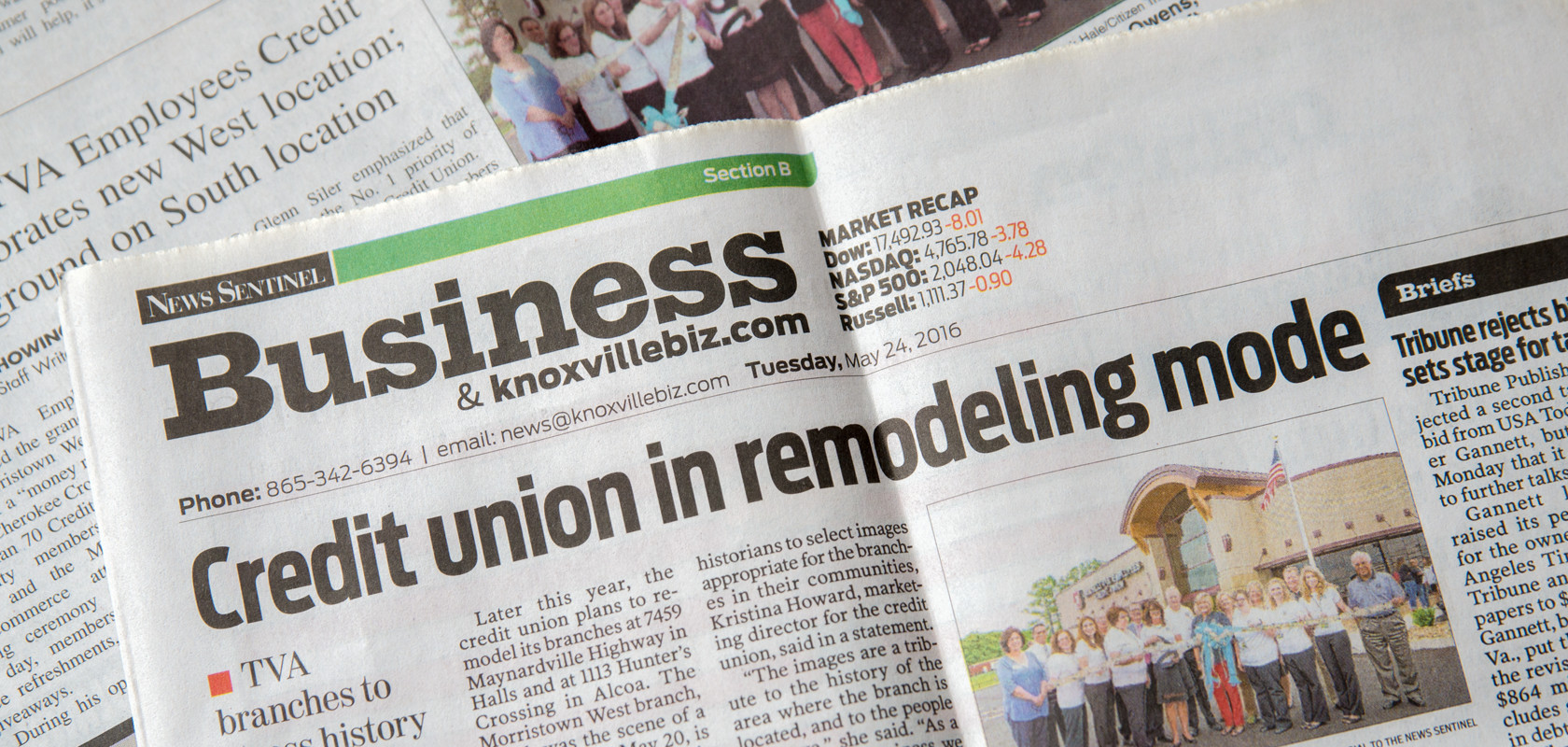
Public relations can also be incredibly cost-effective. Our efforts in an on-going design and public relations project with Knoxville TVA Employees Credit Union paid off when a story on the opening of a new branch in Morristown, Tennessee, landed on the front page of the Knoxville News Sentinel business section (circ. 119k+). Since public relations is often a more economical way to increase brand recognition, we prepared and distributed press releases to journalists in the area. Cost-wise, this action created high exposure at a low cost, rather than advertising the new branch in the paper.

Sometimes you just need public relations to make people aware of your existence. One way to do this is through social media. Having the right mix of fun, engaging, serious and educational content on social media promotes shareability and increases views and engagement. When we were asked by the Augusta Convention & Visitors Bureau social media team to come up with a strategy for increasing its visibility on social media, we created a plan that would reflect the brand while serving as a go-to communications channel of choice for all things Augusta.

Almost six months later, the Facebook page alone has seen an increase of 375 percent in organic impressions and an increase of 120 percent in page likes compared to the prior six months.

Interested in learning more? Contact us today to find out how we can maximize your marketing efforts.

The Importance of Market Research

Posted on by Chris Talbert

Before any website goes live or any brochure is printed, before the concept is developed or the website’s wireframe is put together, before a single designer or web developer go to work, we first come up with a plan. Sure, that seems obvious. However, sometimes developing that plan requires a type of research many companies don’t consider. Through market research, we can gain incredibly useful insights that drive the rest of our work and render better, more focused campaigns.

When we partnered with the Boy Scouts of America to help launch and market STEM Scouts, we conducted online surveys, web usability testing and focus groups with parents and children (the target audience) to determine how they viewed the program and what would encourage them to respond more positively. The results defined the STEM Scouts program itself as well as guided us in creating a more integrated marketing campaign.

We conducted similar research for UT Extension to develop a campaign that would encourage healthy living in four counties in Tennessee. Through in-person and online focus groups and surveys, we interviewed people to find out what it was like to live in those counties, what it would take to change unhealthy behaviors and what are some of the barriers to healthy living. We even did an ethnography study, asking people to journal and take pictures of their daily life. The research helped us develop a few branding concepts, which we were able to test in a focus group. The BE MORE Campaign resonated the most with the target audience.

For Tennessee Tech University, we sought to discover how people perceive the university and how that affects their decision to apply. We interviewed high school seniors and Tennessee Tech freshmen, as well as Tennessee Tech faculty and staff through in-person and online focus groups and surveys. The research helped provide foundational information and insights to better understand the target audience, its decision-making process and its recognition of Tennessee Tech and other area colleges. We then developed and tested three different campaign ideas to originate solid recommendation that would best resonate with the audience.

Market research is essential to uncovering your target audience’s perception of your brand. Not only does it assess the quality of your current marketing efforts, but it also ensures consistent and effective interactions at every touchpoint in the future.

How to Design Websites for Optimal User Experience

Posted on by Chris Talbert

When we create websites, we strive to make them more than just an attractive place to read content. We tackle every stage, including design, with the user in mind. Why? Because this is what grows brands. Recently, we redesigned the outdoor education program website, Outward Bound. One of the goals for this website is to encourage the user to sign up for an outdoor education course. Here are a few things we learned as we worked toward that goal:

Research every angle
Sure, we reference design community websites and look at various trends that relate to our particular client, but we also put to use our own internal research. We dig deep into getting to know our clients and their needs. For Outward Bound, our technical director worked with the client to do a complete audit of the previous website, seeking to understand what worked and what didn’t work. Our designer and UX architect developed the initial wireframes for the site. We received valuable feedback from the client to revise these early stages to ensure the rest of the process went smoothly.

Test, test and test again
We value a team approach. This often means multiple eyes on the same project—from every member of the DS team taking a look at the initial wireframes and preliminary designs to collaborating with outside experts. In the case of Outward Bound, we worked with a UX specialist to test users on different sections of the website. Some A/B testing  was used to compare versions of the website to determine which ones performed better. We reviewed videos and screenshots of participants using the website, which helped guide us to a smarter design.

Expect changes
Even the smartest designs aren’t perfect. The research and testing phases allowed us to think more holistically about the website. Sometimes that brings up more questions than answers. To answer the remaining questions, we needed to develop design iterations so we could consider all the possible options. And, since we do value a team approach, many eyes reviewed those design iterations to help us make the best choice.

Make it easy
What we learned in these beginning stages helped us develop the final design. To guide users to the end goal (in this case, course registration), we employed simple but incredibly useful tools to make getting there quicker and less complicated. Photos give users a quick look at the story of Outward Bound without requiring them to read. Clearly defined buttons and big calls-to-action help convert a user to an Outward Bound customer.

Our work with Outward Bound will guide how we approach future clients. Even if you aren’t designing a website, keeping the experience of your customer in mind is an essential part of any successful business.

3 Ways Blogging Helps Your Business

Posted on by Chris Talbert

A lot of my time here at Designsensory goes into being creative for our clients, telling their stories and connecting people to their brands. Away from the office, I tend to do the same for myself, constantly thinking of ways to share who I am as a designer and mother. Overwhelmed by a million different project ideas in my head, I decided to start my own personal blog, Designerly.

So far, blogging has helped me organize and document my creative thoughts and projects into one place. A great tool for keeping me mentally focused, it has motivated me to take action on the many “one day I will” projects. I also hope to build an active community with my readers that will inspire creativity for both them and me.

Personal blogging gives me a viable way to share my passion. For this reason and many others, your business can also utilize this powerful tool to build a deeper connection with your clients.

Shares Your Knowledge. Shares Your Passion.
When your company writes a blog, you are allowing your readers to see a different, more personal side of your business, and this opens up a two-way conversation. More importantly, you are allowing readers to learn more about the individuals on your team.

Lets Your Team Contribute.
Employees are often siloed, with little collaboration between coworkers. A company blog provides a space where all can take ownership, adding layers of viewpoints to the voice of the company. Your business is made up of people first—much more than services and products. A blog is an easy way to showcase the vibrancy and success that culminates from the contributions of all the people and elements. Showcasing your appreciable assets from  a skilled team that brings years of experience and knowledge to the table can lead to new work.

Open Up Opportunities.
A company blog creates opportunities for collaborations and partnerships, and it adds pages in SEO to assist in increasing web traffic. Sharing timely and relevant blog posts can enhance your social feeds with rich content. Be strategic about the content you write, and the majority of your posts will be evergreen. Anticipate attracting  people who are interested in working with you on projects that fall outside of your products and services.

Your company is already a contributor to its industry. Begin your blog, and share it with the world.

The Visibility of Disability in Super Bowl 50’s Advertising

Posted on by Chris Talbert

So you’re watching the Super Bowl? Well, you’re not alone. Last year the colossal television event averaged 114.4 million viewers per minute. Whether we’re heading over to the neighbor’s party to see if the Carolina Panthers will clinch their first championship, or just in it for the conversation and the cheese dip, we’re all looking forward to the ads.

Super Bowl ads likely bring back some fond memories, like the vintage Coke-drinking, jersey-tossing Mean Joe Greene or Always’ #LikeAGirl from last year. Picking a favorite? The options feel nearly limitless.

However, one DSer raises a good point: “If I had to pick, there are more than a thousand options over the course of 50 years. But what’s my favorite Super Bowl ad that’s inclusive of people with disabilities? Now the options shrink dramatically—to a handful.”

Our Director of Strategy, Josh Loebner, encourages everyone to increase the #visibilityofdisability in advertising by voting on the USA Today Ad Meter for two Super Bowl ads featuring people with disabilities. Watch the ads and read Josh’s take on his blog, Advertising & Disability.

Matt Montgomery: What I’m Designing for This Year

Posted on by Chris Talbert

In the new year, I find it helpful to look back at some design trends I used in my work last year and research ways other designers will approach their work in 2016. I wanted to share this list of some trends in user experience (UX) design that defined the web in 2015 and how they will continue to evolve in 2016.

Delightful, Humanized Moments
Designers and storytellers need to continue to find new ways to inject personality and life into their sites. Without these special moments, the web can feel quite dry. I expect to see expanded use of passive video backgrounds and warm photography that feels real and not forced. Savvy users quickly decipher stock images as cheap. Also, I hope to see more use of subtle animation where appropriate. A tasteful trigger or hover animation can help keep users engaged and delighted as they browse your site.

Personalization
Remember those choose-your-own-adventure books you read as a kid? Think of the future of interactive personalization that way. Well continue to develop increasingly personalized experiences and platforms for users to experience a brand, serving them different pages and content based on past browsing or shopping history. This uniqueness will lead to more meaningful interactions with users as brands seek to create special moments. This focus will force marketers to start building content around the individual rather than the larger demographic.

Material Design
In 2015, Google sought to create a unified design language that combines classical design principles with the possibilities of technology and science. The key principles of this language are material serving as metaphor; bold, intentional, flat graphics; and motion that provides meaning. This philosophy is best exemplified in many of Googles apps and operating systems. I expect to see these principles show up in more sites in 2016. You can read more about Material Design here.

Beyond Screen Design
With the influx of wearables, designers must push themselves to design for experiences past the screen. Interactive will become more ubiquitous in our daily routines. Startups are creating wearables that range from stick-on sensors that measure vital signs to measuring ephemeral factors like how much time you spend with the people you love. Id expect to see more innovation in the smart home market as well. My wife and I made the jump to the Nest platform last year, so I can say that, once you can control your heating and air unit from the comfort of your bed, theres really no going back!

These are just a few things to consider for your web presence in 2016. More than anything, I recommend always focusing on the user first. As long as a happy user is your number one goal, everything else should fall into place. Maybe, with this philosophy, youll create a new trend that will come to define 2016. Now, lets go make a better web.

6 Marketing Trends To Watch For 2016

Posted on by Chris Talbert

Be bold. Be unique. Be limitless. Be human.
Trend lists abound this time of year, showcasing not only what worked in 2015, but what made the biggest headlines, the biggest blunders and what could be the next marketing must-haves  in the New Year.

We’ve compiled our own trend list and we’ll get to that shortly, but one thing to consider is that many other marketers are going to be reading and acting on these and other forecasted trends. This is an opportunity to embrace the same trends other marketers will want to capitalize on  while still standing out.

Whatever you pursue within these trends or otherwise, we suggest you add a mantra to your marketing mix. Be bold. Be unique. Be limitless. Be human.

Be bold.
Marketing should never be passive, timid or just going with the flow. No matter if we’re talking about a visual identity or integrated marketing plan, be bold in your decisions and actions.

Be unique.
Nonconformity is a virtue for marketers wanting to stand out from the crowd. Corporate boards, committees and maybe even your own conscience may take creative to a conservative place, but there is always an opportunity to be unique in a way that elevates engagement.     

Be limitless.
Shift thinking from limited budgets and lack of time to ideas and actions that, regardless of dollars committed or hours invested, will advance your marketing goals.

Be human.
While every component of marketing and communication is inclusive of some type of technology, don’t let that technology blur the significance of being human. Hand-lettered typography, minimal retouching on photography and a person’s voice at the other end of a customer service call are just a few examples of embracing organic, emotive and human touches.

With this marketing mantra in mind, here’s our roundup of trends for 2016.

  1. Activating Micro-Moments in Mobile: Google is now defining micro-moments within larger moments throughout our customer journey. This fleeting time can be pivotal during purchase decisions, and mobile devices play a crucial role. Google suggests considering four key moment types that represent a full range of user needs: I want to know moments; I want to go moments; I want to do moments; I want to buy moments. Find out more about micro-moments here.
     
  2. Video Everywhere: eMarketer predicts investment in digital video ads will top TV ads in 2017. This means marketers need to consider digital ads, and how video will play a role, as well as the roles video will play in campaigns. Video as content can be edited and repurposed from a paid digital ad to a social post, to content on a website and a traditional TV spot. Contently shares other futurisms here.
     
  3. Design for Employees: Fjord, the in-house design team for Accenture, reported that investing in the employee experience was the fastest growing category of work for its firm across many industries. We understand that customers and their commitments are vital to your success, but employees are just as significant. Communication tools are playing a larger role in fostering collaboration, accountability and connectivity. Here at Designsensory, we’re hoping to improve our internal process and client engagement through Mavenlink, a new collaboration platform, and we’ll have more to come on that later. Learn a bit more about this and other trends from Fjord here.
     
  4. Add Layers of Realities: Both virtual reality, which is an immersive reality experienced through a headset, and augmented reality, which provides an added layer of information, visuals or other information, are becoming more mainstream and incorporated into branding. Some agencies even have in-house labs set up to test equipment and campaign components. Here’s more on this trend and others in a recent Forbes article.
     
  5. Listen to the Value of Podcasts: Podcasts are huge—and because this platform is still relatively new—brands have opportunities to take the lead in sponsoring content through traditional advertising within podcasts or in creating owned content of whole shows or segments. Here’s more on podcasting from the NiemanLab.
     
  6. Be Quiet . . . Sometimes: Getty Images shared that this quiet trend focuses on making space for consumers to breathe and reconnect in a cluttered marketplace, engaging our emotions and spirit with visual haikus. Here’s a commercial from Kit Kat that puts the spotlight on absolutely nothing. Check out more Getty predictions here.

5 Things You Must do on Social Media

Posted on by Chris Talbert

Whether you’re starting from scratch or breathing new life into your old accounts, here are five things that will get you on the right track for social media according to our social media specialist.

  1. Research your audience. If you’ve chosen to use Pinterest to target men, which, according to Pew Research Center, captured 13% of online men compared to 42% of online women in 2014, you’ve got an uphill battle on your hands. While this gender imbalance is no surprise and serves as a broad example of picking the right social media platforms, Pinterest can be a strong channel for your business to reach a subset or niche audience of men. For example, a high-end men’s clothing brand would likely perform better, since men use Pinterest as a visual bookmarking system with an intent to buy. It’s important to understand your business and audience in your selection process. Your audience will change over time, and realignment may be necessary.

  1. Keep your brand consistent. Let’s say you’ve decided to go with Facebook and Instagram, currently ranked first and eighth respectively for social media platforms according to market share. Make sure your usernames, profile pictures and bios are the same or similar. After you’ve built a relationship with a follower on Facebook, make it as easy as possible for them to recognize you on Instagram. Consider it this way: You visit a new grocery store and look for your favorite cereal. When you find it, your cereal has a new logo, the box color has changed and its description isn’t in familiar language. It’s not bad, just different. Do you still buy the cereal?

  1. Be tactical in your messaging. It’s a hard balance—the right amount of the right content at the right time. To add to the complexity, the solution is different for each social media platform. Consider the focus of content, the frequency of posting and the dead zone for each social platform. These numbers may vary across industries and organizations but should serve as benchmarks for successful posting.

  1. Organize your content. The value of killer content is greatly reduced when it goes out a week late, and worthless if it never goes out at all. We recommend a content calendar to ensure you’re hitting your important dates, giving all of your accounts attention and aren’t repeatedly posting content that performs poorly. This is typically a simple spreadsheet that details what you will post, on what day and time, and to what platform each month, but can certainly be more in-depth.

  1. Manage it all. After you’ve populated your content calendar, you’ve got to get it online. Take time to research a social media manager that will adequately meet all of your needs and is easy to use. Three primary functions you’ll want in any software are scheduling, monitoring and reporting. Respectively, these functions allow you to draft and schedule a post for later, keep track of multiple accounts simultaneously and access in-depth analytics.

Best Practices for Email Newsletters

Posted on by Chris Talbert

“Out with the old, in with the new.” This attitude seems to be an overarching mentality in our society. Today’s ever-changing technology landscape posits people as quick to write off the “archaic” and eager to adopt the latest, greatest trend. However, an example of electronic communication with staying power—one that has proven its worth—is email. 

The e-newsletter is another form of communication that has maintained popularity since its inception. Readers’ appreciation for the e-newsletter format can be attributed, in part, to the format’s palatable “bites” of content. Due to an endless stream of information—readily available to anyone with an Internet connection—vying for our attention, we readers are becoming increasingly discriminating. Readers grow listless when searching for the exact content they want. We want curated content, summarized into a finite package from a credible source. 

While businesses continue to focus their efforts on social media and forgo email marketing, studies have shown that email is 40 times more successful in acquiring new clients than Facebook or Twitter.

Our goal at Designsensory is never to cloud our subscribers’ inboxes with unwanted mail, but for each individual to find value in our work and the case studies presented in our e-newsletter. With this in mind, here are few best practice tips to keep in mind for your e-newsletter.

E-Newsletter Best Practice Tips
A newsletter must be substantial in terms of length and content. There’s a delicate balance to keep it from being too short or too long.

A piece with a high word count, say 1,000 words, well-written and informative, can reveal the writer’s level of expertise on the subject. However, verbosity shows a lack of regard for the reader’s time. We recommend one article of 500 words, with succinct, informative pieces comprising the remainder of the newsletter.

Keep the format of your newsletter visually appealing, streamlined, focused and mobile-friendly. With the latter, bear in mind that 41 percent of emails are opened on a mobile device. We suggest using graphics when possible. Ensure that the ALT-text for your graphics is descriptive as well, for readers who have images disabled or for those using text-only browsers. You may want to read your webpage text aloud—including the ALT-text—to test how readers will comprehend the page information. 

Remember: Email-based marketing is permission-based marketing. Make it simple for potential subscribers to opt in and for current subscribers to unsubscribe whenever they choose. 

After hours of writing, editing and tinkering with your newsletter, the last place you want your great content to end up is in the spam folder. Avoid running into spam filter issues by following the tips of a tried-and-true email marketing service provider, such as MailChimp. And, ask your readers to add the email address tied to your newsletter to their contact list, assuring it hits the primary inbox every time.

Finally, while being on the recipients’ contact list will improve delivery rates, it is important that tone and delivery time—same time, same day, every time—stay consistent to properly meet readers’ expectations.

We, at Designsensory, continue to push ourselves to stay on top of best practices in all facets of our business and aim to share what we’ve learned with those invested in our work.