Author: Chris Talbert

Roane K14 Education: Shaping a Better Future

Posted on by Chris Talbert

Roane Alliance has been advocating for needed change in Roane county. The collective vision for the local youth is one that provides quality education for high school students looking to go to college or trade school—opportunities that, in turn, build a strong workforce and economy.

As part of a new effort to combat the alarming number of opioid-related crimes and deaths in Roane, supporters proposed a K14 education system that includes the development of a new school academy. Designsensory was proud to join in the initiative earlier this year and created an emotional video, which serves as a pledge to Roane community members to support the effort and usher in a brighter future for their children.

So, what is a K14 education, and what exactly is going on in Roane to spur this substantial shift?


What: K14 Paves The Way

Traditional schools range from kindergarten to 12th grade. As you might have guessed, a K14 education requires a further look into college level courses, and at its minimum requirement, students would graduate high school with at least two college courses under their belt. At its maximum, students could graduate high school simultaneously with an associate degree.

This would be a first for the state of Tennessee, and it would mark a huge win not only for our state but for Roane County communities. It’s a huge step forward for a county that struggles to maintain their younger workforce and is falling behind in the wake of competitive schooling.

The new school would provide benefits like modern efficiencies that save money and energy; modern safety against school intruders; potential new housing developments and retail growth; and new company relocations.

Why: Education Drives Progress

The importance of education has never been more evident than now. Studies have shown that low education levels often lead to poverty, drug addiction and crime. Therefore, to start combating the opioid crisis, and rebuild the crumbling foundation that Roane built strong many years ago, they want is to educate children in a way that prevents future generations from falling into the trap of the current epidemic.

Statistically, beyond opioid and drug addiction, Roane is seeing a large decline in their population—an outlier among the growing communities it’s surrounded by, like Knox, Blount, Loudon and other counties. Younger generations are leaving the area for better jobs and opportunities, and Roane wants to provide quality education and work opportunities as an incentive for their community members to stay and thrive.

How: Small Changes

To show how affordable it would be for citizens, we calculated the investment for each Roane County individual to have this school built—$50 per person a year over a collected amount of years. That’s less than five bucks a month. The return on investment would be watching the community rise above the crises it faces. Roane can, in reality, pay for the new school in a variety of ways—none of which have a major impact on taxpayers—including: a wheel tax, a sales tax increase and economic growth. Roane, and now Designsensory, encourages YOU to be a steward of our children’s futures.

If you want to continue the conversation in Roane, visit roanek14.com and continue to learn more about the issues and how education will take the county one step closer to solutions and economic expansion. Of course, dispel misinformation. We’re excited to continue helping communities in our great state, and we are even more excited to see other communities join in the effort. 
5 Considerations For Building a Delightful Website

Posted on by Chris Talbert

It’s not uncommon for brands to go through a website redesign every two to four years. Whatever the reason for starting a digital makeover, there is a process that should be followed—especially when considering a completely new design and development platform. Here are five considerations, from our experience, that we recommend you take to heart:

Usability Testing
First off, you need to have at least one main goal for the website. It’s easy to put the cart before the horse when you have big plans for how the website should look. However, remember that redesigns are not about you; they are about your user. We recommend starting with research to determine current challenges in the way people use your site. Methods such as journey mapping, User Experience (UX) teardowns, user testing and more can help answer important questions: Can your users purchase tickets on their phones? Is it easy to sign up for your newsletter? Is important content buried in the site? We can find answers to these crucial questions by looking at the site’s users, and we can tailor-make a website that meets and exceeds their expectations.

Also, if you don’t already have Key Performance Indicators (KPI) in place, now is a great time to start. Setting up these measurable indicators (e.g., number of checkouts, etc.) is one of the best ways to measure if your goals are being met.

Content Strategy
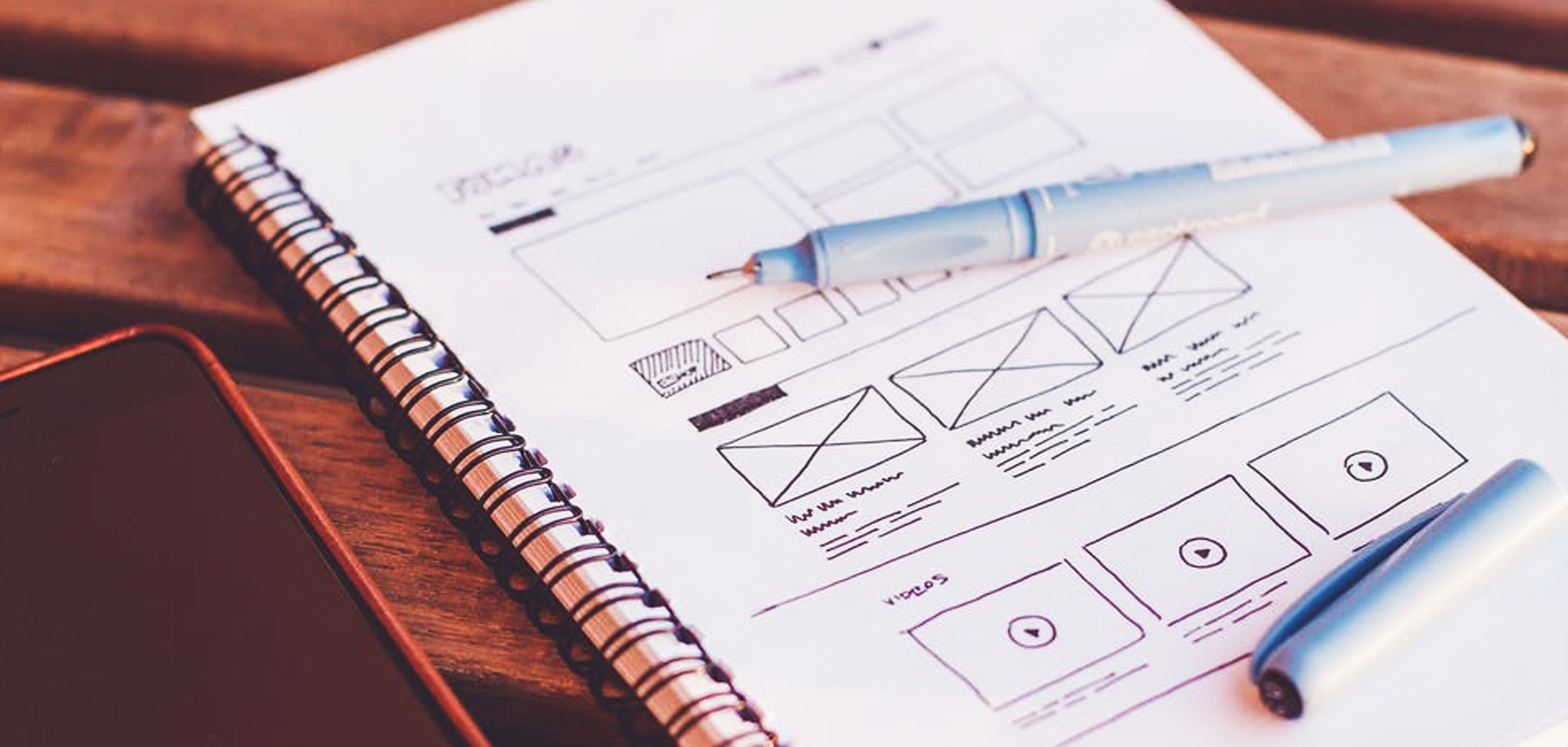
In order to develop a strong content strategy, start with an audit. Determine what pages, copy, images and other elements should stay and which ones should go. From there, create an Information Architecture (IA), or sitemap, that aligns with your new goals. Equally important is user flow, helping organize your site in a way that moves users down the funnel. If your main goal is sales, information should be organized in a way that highlights your eCommerce through product displays and convenient shopping cart access. Content strategy includes everything from creating audience personas, page nomenclature, hierarchy of content, consistency of tone and voice, Search Engine Optimization (SEO) and much more. The focus, overall, should be on prioritization of content.

Visual Aesthetic
Assuming everything is informed and organized, the excitement of design can begin. Still, design is based on solving problems. That said, 75% of users admit that they base website credibility on aesthetics, which is a user’s first impression. Having a trained designer who will look at the research and create valuable solutions based on that information is the key to creating a new website that converts. Work with a designer and discuss their proposed design recommendations and process. With more and more users experiencing your brand on their phones, we design all of our sites to mobile first and progressively enhance up to desktop. This ensures a seamless look across all devices—and design fundamentally involves the look and feel of the user interface. In short, craft a design system that brings your brand’s unique story to life in a way that is engaging and informative to your users.

Technical Flexibility
Hopefully you’ve decided on a platform to build your site on before now, based on conversations with your team and whomever is developing your site. It’s vital to get a flexible Content Management System (CMS), meaning developers can easily add and change code and content can be edited by your team on the backend. Something to remember here is third party tools and how they appeal to the brand and new website look, if they’re not already integrated with the chosen platform. Let’s use the shopping cart feature as an example. If you don’t use Magento, Shopify or another eCommerce solution for your site, you will need to link to one externally. Ensuring that you use something that has design customizations enabled will help maintain an all-encompassing brand experience—this goes for external blogs, booking channels, login portals and other tools with which you may integrate. If you use something that’s not seamless, it distracts from the design decisions your team has made and, ultimately, reflects poorly on your brand. Lastly, we live in the age of iPhones and Androids, so find a CMS solution that handles responsive design seamlessly but in a way that is ADA compliant—being inclusive shouldn’t be optional.

Measurement & Media Promotion
Now it’s time for the finale! Or, in reality, the beginning. Launching a website is never the end, especially in terms of measurement, promotion and iteration. Media, whether organic, shared or paid, should be on your radar when your site launches to drive traffic. A paid media campaign—from display to social—will not only garner awareness for your brand and its website, but it can also bring in untold impressions and, with time, conversions. You’ll need a media expert to walk you through tracking codes, landing page usage and other data measurement capabilities. Whatever you do, don’t let your website sit alone.

Your site needs routine check-ups and measurement reports post-launch to make sure that it is continuing to reach users in the most effective ways. Consider Heat Mapping to see if users are clicking on important buttons and forms linked to your newly formed KPIs. You can always use A/B testing on your headlines and images to aid in conversion optimization. There are various measurement tools, so don’t be afraid to get in the trenches and improve the site as you go!

Launching a website is a huge undertaking that requires the use of experienced marketing creatives. Your website’s success depends on a dedicated team, organization and time. With the proper timeline and workflow, you can bring beauty to your brand and users. Use these considerations as a framework, but if you get caught up in the minutia, we’re always here to help. Happy website-making!

Dog Park Dash: Building More than 100 Dog Parks in Tennessee

Posted on by Chris Talbert

After a long-standing relationship with PetSafe® on its Bark for Your Park program, an initiative that awards dog parks to communities around the country through a grant system, weve partnered with The Boyd Foundation to bring the same goal a little closer to home.

The new program, called Tennessee Dog Park Dash, is a multi-year commitment toward making Tennessee the most pet-friendly state in America. Through the program, The Boyd Foundation will award a $1 million annual donation for building and enhancement of dog parks in communities across the state.

The Boyd Foundation is guided by Randy Boyd, alongside his wife, Jenny. In our history with PetSafe® and the Tennessee Department of Economic and Community Development, weve worked closely with Randy Boyd, who is the founder and former commissioner. Jenny Boyd is passionate about promoting animal welfare, has worked alongside her husband to make Knoxville the most pet-friendly city and is proud to play a significant role in expanding efforts to communities across Tennessee.

In its first year of a three-year initiative, Tennessee Dog Park Dash will fund 36 dog parks across the state through a grant program, with one additional park awarded through an ongoing community contest. 

The Boyd Foundation grant program will award $900,000 to Tennessee communities, evenly distributed across the state’s three grand divisions. The final $100,000 will be awarded through a contest to find the most pet-friendly community. Contest funds will be awarded to one community that applies for the grant, engages in events centered around charitable contributions for pet organizations in need and, as a community, goes above and beyond competitors to show pet pride.

As part of our work on Tennessee Dog Park Dash, well be supporting the program with strategy, development, design, marketing and communications. We look forward to sharing more updates on the initiative as it happens. Today marks the official launch, and we’ve already seen traction from state and local media and submissions. You can check out the landing page for the program yourself—dogparkdash.com.

Let the dash begin!

March at Designsensory: “This Is What You Live For”

Posted on by Chris Talbert

It’s Bristol Baby!

Bristol chose us as their new creative partner for 2018, and we kicked the relationship off with a pretty quick digital, social and video campaign to promote their Spring race on April 15, 2018. We’re ready to win the race with this account and show off the amazing things that the last great colosseum has to offer visitors. Running under the tagline “This is What You Live For,” the campaign kicked off last month.

Launch of “BSA YPT”

Boy Scouts of America launched the Youth Protection Training online program earlier this month, which is a mandatory training for all BSA registered volunteers. The BSA is dedicated to creating and maintaining a safe environment for youth and families. This training covers various forms of child abuse and maltreatment, including sexual abuse, emotional abuse, physical abuse, cyber-bullying, neglect and exposure to violence. The goal of this training is to be able to recognize, respond and report certain behaviors in children and, ultimately, create the safest space for a child in a youth-serving organization such as the Boy Scouts of America.

New Staffers Ahoy!

We’re excited to welcome our newest crew members here at Designsensory, including Kate Ambos, Senior Account Manager, Kara Kagarise, Project Manager, Caitlin McLawhorn, Copywriter, Riley Lemon, Marketing Intern and Caroline Beach, Client Services Intern. Kate comes to us from New York, where she was Brand Director for Fly Nyon, and is taking lead over several of our accounts, such as Zoo Knoxville. Kara is joining the project management team, aiding account managers in the planning, scheduling and coordination of projects. Caitlin brings us her creative spirit with former agency experience and, gasp, time at the White House. Riley is helping out with business development and social media efforts across the board, sharing his fresh perspective with our strategy and marketing teams, while Caroline helps out our client services team.

The Results are In

Our team had another successful year of gold at the Addy Awards—a.k.a. Adpocalypse. In addition to the awards we brought home, we want to again congratulate Josh Loebner, who won the McCabe Silver Medal—AAF Knoxville’s highest individual award—for his lifetime of achievement in advertising and advocacy for disability within the industry. Here’s how the work we submitted placed:

Best Of

  • Print – Osprey Point – Print Collateral

  • Out of Home – Tennessee Department of Economic and Community Development (TNECD) – “Remastered” Poster Series

Judges Choice

Gold

Silver

Bronze

You’re Not a Fake: Battling Imposter Syndrome

Posted on by Chris Talbert

At Designsensory, we take pride in investing and cultivating young talent, like interns, new college graduates or people transitioning in their professional career. We’ve found that most every creative, especially these new professionals, experiences feelings of insecurity or undeservedness. This culmination of self-deprecating behavior called Imposter Syndrome can pop up during promotions, larger projects, meetings with public figures or a myriad of other situations. What if I’m a fraud? What if I can’t do the job? Regardless of that inner voice, you can combat these feelings with reality, and here are a few ways to do so:

Stop Comparing

The temptation to compare yourself with others is one that expands beyond the workplace. Before you give way to it, remember that everyone has a different journey and experience. What may seem like a highly competitive background to you might not seem like it to others. The world we live in is about perspective. Just because your perspective can’t see a reason for your success does not mean you are not qualified for a promotion, a difficult project or something else that brings you more freedom and/or responsibility.

Start Thinking

It’s highly unlikely that you’ve gotten where you are without leg work. Think on the things you’ve accomplished throughout your career, however long or short. Reframe your brain to see the successes as well as the failures. Although failure is a great learning experience, resist the urge to dwell on things of the past too long. Reread some encouraging messages or compliments, and take pride in knowing you learned from great mentors and are on your way upward.

Stop Doubting

If you’re like me, you overthink everything and occasionally doubt the efficacy of your work. However, no one is suddenly going to wake up and realize you are not fit for your job. Trust in your boss to recognize your strengths and weaknesses. Progressing is not being perfect at everything, but it certainly shows you have skills worth building on. Doubt is for the birds.

Start Talking

Now that you’ve tried to control the way you perceive yourself, talk to a close confidant about your thoughts. They will help put your mind at ease. They have worked with you, they know your ethic and your ability, and they will tell you the words you need to hear. Should they give you areas of improvement, file those away and work on them daily to boost your confidence. One more note: try to mentor someone. You’ll be surprised by the things you didn’t know you know.

Embrace It

Internalize your successes by repeating them out loud. If nothing else, embrace the fact that whether you feel like you deserve something or not, you have it. Take advantage of the opportunity and move on. Everyone at some point has been in your shoes, no matter how experienced they may seem. Take in the now and stop worrying about the past or the future.

If nothing else works, know that Imposter Syndrome is a symptom of success. It might be a long-term struggle to overcome your feelings, so don’t feel discouraged. Most importantly, be yourself and showforth a can-do spirit. 


Finding Inspiration When You’re at a Creative Roadblock

Posted on by Chris Talbert

Somewhere in the world, as I type this blog, someone’s gazing out a window—retreating from a world of cerebral overload. The quest for inspiration is one that many find intimidating, but it’s vitally important to care for yourself and your creativity. If you’re having troubles of your own in the creative department, here are a six popular things you can do to get inspired.

1. Go Outdoors

Nature is a tried and true way for anybody to get their brain fired up. For one, relaxation will filter out the negativity affecting your ability to process information. The more you do things you love outside, the more you will recover mentally—leaving plenty of room for inspiration to pop in.

2. Read / Research

Maybe it’s obvious, but reading and researching can inspire an idea quickly. Try reading social media posts, online books, websites, magazines, novellas—everything. It should probably be relevant content, but I won’t lie and say I haven’t found help from unlikely sources.

3. Travel

Going somewhere specific, even if it’s a nearby city, always inspires me in some way. When I travel, I see things I would have never seen, meet people I never would have met, and do things I never would have done. Try new foods. Shop at new places. Traveling is inspiring.

4. Get a Hobby

Find a craft or hobby that you enjoy. Some people thrive doing photography, others enjoy painting, sewing, playing instruments, physical activity, or, for our resident associate creative director, pottery. It doesn’t have to be grand, but it does need to be something that gives you butterflies and daydreams. Whether or not it’s related to your project, doing something tactile that you love will inspire you to break free.

5. Creativity Board

This is your own personal mood board. Find inspirational pieces on Pinterest, Behance and other sites that showcase beautiful work. Once you start seeing creativity from others, you won’t have any trouble delivering. Sometimes, being around the right people at the right time (even digitally) can bring out the deepest and most inspired thoughts.

6. Do Nothing

Yes, you read that correctly. Very often for me, after reading a strategic or creative brief, I have an overwhelming amount of information that can stifle my creative process. However, this brain overload can be used to our advantage as creatives. Once you have packed your brain full of everything you could possibly know about the subject matter at hand, forget it. Do nothing. Stop thinking about it. Nine times out of ten, the best ideas come when you don’t expect them. That eureka moment will come to you, so stop chasing it.

Now that I’ve used the word “inspiration” ten times or more within this blog, maybe you have some of your own. When the pressure to be great is high, find things that relieve it. The worst possible scenario is to stay stressed. Enjoy the process, and go with your gut. If you’re just not creative, then you know how to find us!


February at Designsensory: The Fireside Chat

Posted on by Chris Talbert

Each month, we share a collection of new projects and happenings here at the Designsensory office. This month, learn about some of our recent video work, professional development roles and other exciting announcements.

Nassios & McLaughlin Get a Commercial

Tim McLaughlin and Mike Nassios are dedicated to what they do and stand apart from other competitors in their field. So, when the time came to communicate their expertise to the Knoxville community, they opted for a commercial unlike other personal injury attorneys.

The idea? To playfully illustrate how dedicated the two are to their craft. The commercials show Tim and Mike answering their phones, checking emails and focusing on winning—as opposed to listening to art direction or reading their lines. This mentality makes for an interesting shoot for our “production crew,” comprised of local acting talent, on the day of the shoot.

The look and feel are intended to emulate mockumentary-style pieces, a la The Office and the ESPN Office video series. The commercial will air on traditional channels locally, and run digitally with :60, :30 and :06 spots. Keep your eyes open.

Showcasing the Leading Tech and Entrepreneur Conference in the Southeast

Another video project to make its way across our desk, we recently finalized an anthem video for the LaunchTN event 36|86. Last July, we attended the conference and spoke with attendees and presenters. The result is a half-film, half-animated video that really gives credence to the innovative and forward-thinking culture of Tennesseans.

Teaching and Speaking

Matt Montgomery, Senior Graphic Designer, is giving back to a group of sophomore graphic designers. He kicked off his run as a teacher at the University of Tennessee last week. This semester, he’ll teach everything from the IoT (Internet of Things), responsive mobile design and experimental web design techniques.

Our director of strategy Josh Loebner will also continue his stint as a UT lecturer this semester. You can find him on campus bringing juniors and seniors up to speed on media and communications. Josh also visited the studio at WBIR the morning after the Super Bowl to give his take on the best ads from the night for the second year. You can check those out.

Giving a Voice to the American Fan

Our marketing intelligence division, Lancaster Research, has many offerings. One of which, FansVoice, has produced incredible insights into what drives fan opinion and action. These findings are contained in a new report by Lancaster Research called Voice of the American Fan. Read a sample from the report and learn about our research capabilities here.

Fireside Chat

Every January, we gather together to reflect on the past year and look down the road ahead of us. Lovingly called “Fireside Chats” internally, the conversations typically span an afternoon and cover everything from major wins and milestones to improvements on process and employee benefits. We find that this transparency and open communication keeps everyone on the same page and invested in their coworkers, projects and the company culture. This year’s chat brought some interesting developments that we look forward to sharing with you soon.


Is Email Dead? Never: 4 Ways It Has Kept Up

Posted on by Chris Talbert

The first email was sent out in 1972, and the world of emailing exploded in the 90s. We now live in a much more technologically advanced world. So, is email now dead? With large rises in smart phones, handheld devices, VR and so much more, you might think so. However, email is still a huge part of marketing communication. Here are a few ways email has kept up in the world of ever changing benchmarks, and how you can use this tool to effectively market yourself and your products.

1. Mobile-Friendly

Like all smart platforms, innovative email providers have gone mobile. I would strongly suggest you use that to cater to a mobile-friendly world, since more than 48% of users check email on their mobile devices. Users have access to their emails in the palm of their hand, and they use that routinely. So, whether your campaign is good or bad (we’re betting good), it will most likely get significant recognition. Once you have an email platform that is mobile optimized, youll be on your way.

2. Targeting Capabilities

Targeting your audience is easy to accomplish through email marketing. Setting up segmented lists has never been more practical. Whether you accumulate emails through landing pages and form functionality, or not, you are creating a database of qualified leads. Not only can you get right down to business with audiences, you can also test the efficacy of campaigns with platforms like Mailchimp, Constant Contact or Emma. The real question is, how often will you send the emails and to whom? Remember, leads and customers have two very different needs, so at least two automated email setups may be necessary—with targeted content, of course.

3. Flexible Platforms

Email has gotten smarter in the last decade. Platforms have become a staple to email marketing because of the responsive design capabilities that they share. Not only can you optimize content with links to articles, blogs and more, but you can add images to help display your brand. Be careful, though, because you don’t want your design to go overboard. Studies have shown that shorter, text-only emails can be more effective. Go with your gut. Also, use a tool that has great social sharing capabilities—without sharing features, you miss out on extended reach and visibility.

4. Analytics

Before implementing an email marketing campaign, ensure your tool has integrated marketing analytics capabilities that can show you things beyond lead information. A great analytics tools will help you with the aforementioned social situation. Tools that show you social mentions, for instance, will generate a more tailored list of leads—you can send more targeted emails to subscribers who mention you on social. Additionally, an effective analytics tool will compare your numbers with benchmarks and allow you to adjust your strategy accordingly.

The advantages of using email marketing are numerous, and email should never be ruled out as a tried and true marketing device—and it shouldn’t be used without an integrated marketing strategy. Email experts go above and beyond with different platforms and in ways you might not imagine. That’s us. If you have questions or ideas, drop us a line.


On Set Etiquette: Creatives in Production

Posted on by Chris Talbert

There comes a (sometimes scary) day in every creative’s life when video concept meets concrete production. The client has approved the concept, the writer has penned the script, the creative director has thrown some mustard on it, and the production coordinator has set a date. Today’s the day this vision comes to life, and you’re left with sweaty palms.

So, just what happens on this glorious day? Well, that depends; sometimes, it’s better not to know all the things that can happen. Instead, I’ll tell you what should happen and things to watch for when you’re standing around on set without a clue.

1. DO: Bring the right stuff

Maybe this goes without saying, but if you’ve helped create the script, bring extra copies along. No one wants to be guessing what the voiceover is, or if someone has the final version. Frankly, things can easily get misplaced. Also, dress for comfort because it’s going to be a long day. A pro tip is to pack a bag as if you’re going on a day trip: tissues, lip balm, phone charger, sunscreen and sunglasses (if it’s an outdoor shoot), and other things you need during the day. Lastly, bring other work to do during long waits.

2. DON’T: Help the production crew

Unless asked. It can be tempting to reach out and help. However, you have no clue how to set up lighting. And trust me, you don’t want to be the one who threw off the production schedule. Ask if you can help prep the talent, or go over any last minute notes that may need to be clarified. Check with the art director about helping with wardrobe or scene set-up. Get close without getting too close.

3. DO: Use your voice

If something is coming together in a way that you don’t understand, express your opinion. The worst thing that can happen is that someone overrules your decision; the best, you just amplified the work and your reputation. Mic drop. It’s literally your job to keep the creative as sharp as possible. A writer, for example, should have no problem making minimal voiceover changes if the reading doesn’t sound natural.

4. DON’T: Know it all

The amazing thing about being on set is the opportunity to learn from others. Every production day is different, with an amazing group of producers, directors, photographers, sound engineers and so on. Take this time to absorb what they know and apply it to future situations. I’m not saying ignore #3, but do it wisely. Sometimes other people’s ideas work better. That’s what collaboration is all about.

5. DO: Have Fun & Wrangle

There are things you can do to help out, like grabbing a water for the director who is bending his back in a way that hurts his football injury from 1989. Just do it. Also, why not keep the talent comfortable, get to know the people around you better—perhaps it’s the client—and have a little fun? If you have multi-day shoots, this is vital. Everyone is near burning out, so keep up the energy. Speaking of client, sometimes they don’t know what to do, so just keep them busy and assured.

6. Finally, LISTEN.

The production people telling you what to do know what they’re doing. Look around at the amazing people in your corner. Take those moments of frustration and throw them out the window. At the end of a shoot day, you all either clink glasses or go home knowing that you had a productive day. Now just wait for the final product.