Author: Chris Talbert

To Market: What to Know About Branded Video Content in 2020

Posted on by Chris Talbert

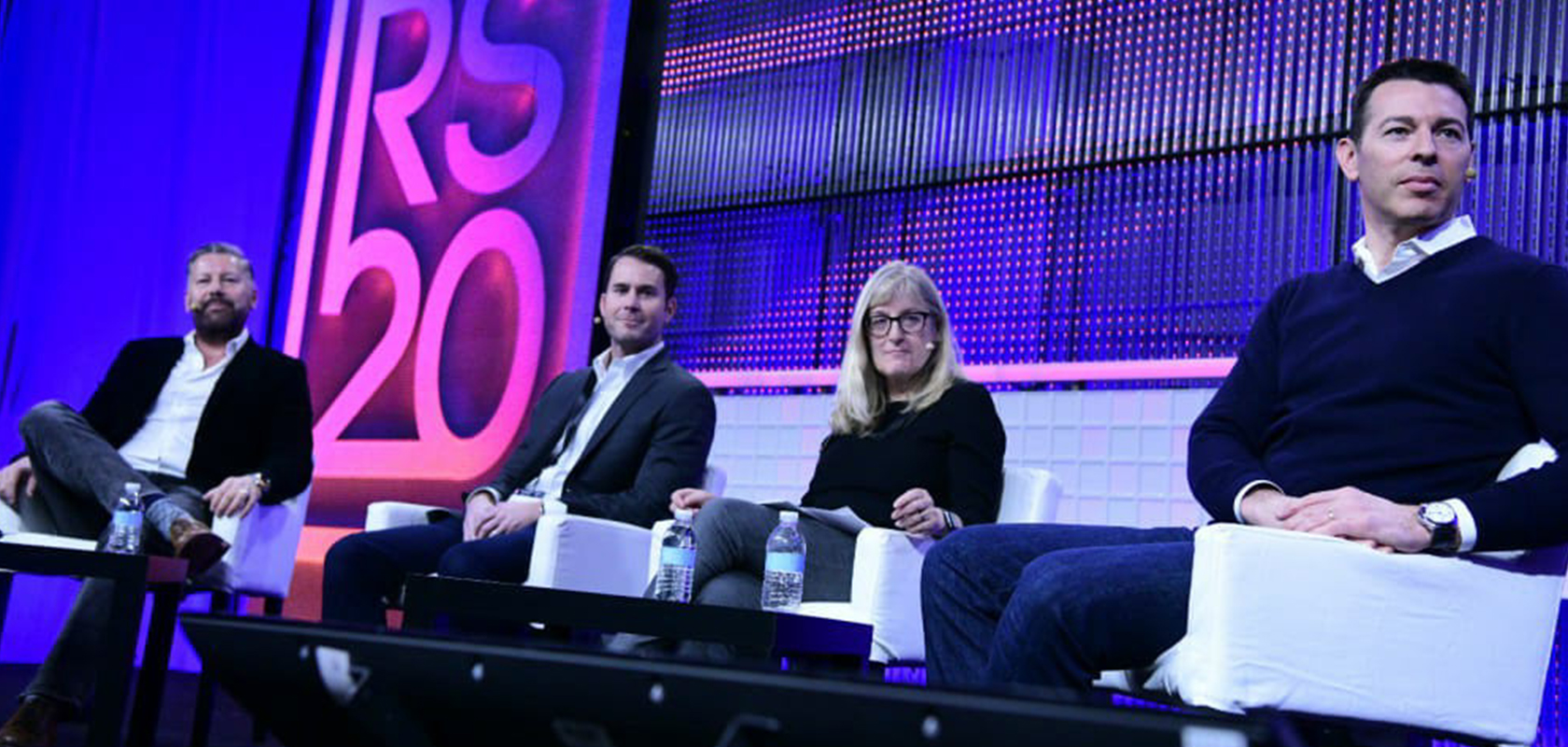
This story begins in New Orleans, LA, the last week of January 2020 at an annual cable television market known as Realscreen Summit. I’m in my hotel room, the stopwatch app open on the nightstand in front of me as I prepare to rehearse a pitch. Two minutes flat. I have two minutes flat. 

Next to my phone sits … a beignet. Beignets do not fall within my New Year’s resolution. But note that I said it’s the end of January 2020.

If you’re anything like me, the end of January rather predictably involves re-working my initial New Year’s resolutions into slightly more realistic goals. After all, resolutions are – at their core – tactics. If our ideas aren’t aligned with the reality of our needs and daily demands, they will ultimately fail … regardless of how appealing they may have originally seemed. Simply put, a resolution’s fate relies far more on “viability” than vision, ambition or dedication. 

Developing an ability to sniff out, steward and sustain “viability” has always been critical to the role of Executive Producer or Showrunner. But, in recent years, as the content landscape has morphed in response to the implications of an evolving digital marketplace, this skill has become absolutely vital. 

To better understand the increasing importance of viability, it helps to first understand the challenges being addressed within the broadcast world. I’m guessing the term “cord-cutting” comes to mind for many of you, but, as popularized as the term is, it’s misleading. Sure, significant proportions of viewers are choosing to access content through a different means than the ubiquitous cable outlets we once held so dear … but the majority of those audiences are still loyal to their favorite channels and/or they’re utilizing OTT (Over The Top) services, which still deliver linear broadcast programming through alternative technology. 

In other words, networks aren’t really losing viewers or the licensing premiums associated with those viewers; instead, it’s the network’s relationship to broadcast advertisers that are imperiled.

This is where the true value proposition of digital comes into the conversation — data. You see, broadcast insights are fairly limited, especially when it comes to advertising. For example, advertisers have few triggers to determine whether a viewer is paying attention during a broadcast commercial break, whereas digital placements within an AVOD (Advertising-based Video On Demand) platform – e.g. YouTube – allow advertisers to track how long you watched a piece of content, if you clicked through, where you clicked and if you returned (not to mention paving the way for re-targeting or reselling the information to related industries and brands). By comparison, broadcast advertising is significantly more expensive, more difficult to evaluate return and less targeted.

This evolving competition impacts content creators in three primary ways: the need to brand, to co-produce and to generate a broadcast-to-digital circuit. 

Brand 

In lieu of the granular analytics digital media can provide, successful broadcast channels aim to pitch advertisers against the backdrop of a distilled, pre-qualified audience. These audience profiles are cultivated through focused programming slates and produced within certain parameters, along with the network being mindful about incorporating intuitive brand partnerships when possible. For content creators, it means crafting pitches that are customized to the tastes, partnerships and formats that are succeeding on each network. 

Co-Productions

Speaking of partnerships, intuitively attaching brands to projects – even identifying means of integrating extended experiences like e-commerce — is an emerging trend that further offsets risk for the network partner. This is especially true if the brand can bring some level of financing to the negotiation as well. Overall, networks have smaller budgets for licensing or commissioning conversations than they have in the past. As broadcast ad revenue has decreased and the scope of distribution options that a network is responsible for has increased, the viewer’s appetite for originality has increased as well-meaning networks have more content to develop and less budget to develop it with. Branded content allows both the network and the brand to harness the momentum and reach of the other while engineering a more dynamic business relationship than was possible within traditional advertising models. 

Broadcast-to-Digital Circuit

As I mentioned earlier, networks haven’t really lost viewers as much as they’ve started engaging with those viewers through more platforms, such as the large number of direct-to-consumer services that went live in the latter half of 2019. In an ideal scenario, networks simply increase engagement with a viewer across multiple screens, rather than cannibalizing one platform for another. For example, Food Network Kitchen allows viewers to extend the channel experience into both their meal preparation and grocery shopping, all while burnishing the viewer’s affinity for network content on both broadcast and social media in the process. For content creators, taking a bit of time to sketch out opportunities for extending your IP across multiple platforms creates more opportunities for your content to gain a following while building a stronger business case for your series and minimizing network risk. 

What all of this boils down to is that networks have always expected Executive Producers and production companies to entertain—that much is a given. But, increasingly, the expectation is to collaborate with partners both upstream and downstream from production on how that content will also prove viable within the evolving network business model. 

Which brings us back to me rehearsing pitches the night before the Summit, after which I promptly ate that beignet. Because even though beignets weren’t originally in my New Year’s resolution, it sure did sweeten the deal of working late into the night. 

34th Annual Emmy® Awards: STEM Scouts Wins Excellence in Animation

Posted on by Chris Talbert

We are thrilled to announce that our work on STEM Scouts’ “Make the Future” Social Media Campaign won Excellence in Animation at the 34th Annual Emmy® Awards on Feb. 15. The Nashville Chapter of the National Academy of Television Arts and Sciences (NATAS) announced the winners at its annual gala, which was held at the Schermerhorn Symphony Center in Nashville, Tennessee. 

The STEM Scouts “Make the Future” Social Media Campaign empowers today’s youth by emphasizing their future potential and motivating them to dream big. This campaign was designed for today’s youth to discover the wonders of science, technology, engineering and math (STEM). 

The various elements of the social media campaign highlight STEM opportunities and careers that will have a major impact on the future. The visuals feature pair together photography, 3D renderings and motion design.

We want to extend our congratulations to the amazing people who made this campaign come to life: Joseph Nother, Creative Director; Taylor Walters, Executive Producer; and Ben Maxey, Designer.

The 34th Midsouth Regional Emmy® Awards is dedicated to the advancement of the arts and sciences of television and the promotion of creative leadership for artistic, educational and technical achievements within the television industry.

Three Marketing Trends to Watch for in 2020

Posted on by Chris Talbert

I’m late to the 2020 welcome wagon, but here we are and welcome aboard! A new year brings new trends in marketing, and I’m going to go through a few of my best guesses for what we’ll see (and continue seeing) from our favorite brands.

Social Media Content Shifts

Changes in social media are like the sands of the sea—innumerable. From what I’ve seen in 2020, there seems to be a shift in the style of content that people are sharing, especially on Instagram and Youtube. Over the last few years, we’ve seen hyper-stylized content being produced, but now I’m seeing more authentic pieces surfacing. Less studio lighting, more natural light. Less Photoshop, more reality. This doesn’t mean that curated pieces won’t be popular, but this trend is attached to Millennials’ desires for truth. No one wants to see perfection all the time. It’s depressing. This year is all about the makers and their stories instead of superficiality. 

Another social media trend on my radar is shopping. If you’re like me, it’s now instinct to click on a photo to see if you can purchase any of the items. Instagram and Pinterest, in particular, are seeing rises in purchases directly through their platforms. And why not? After all, convenience is key. Want that new couch from that pop-up shop across the country? No problem. Brands like Nike Sportswear, Warby Parker, Nordstrom and more are loving the trend, and I don’t expect it to see decline any time soon.

Technology-Powered Communication

If you’ve seen Ex Machina, you know we’re doomed for failure when it comes to Artificial Intelligence (AI). But maybe not. As a 2020 trend, AI isn’t manifesting in the grandiose ways that were once predicted. A major trend continually growing is chatbots and voice assistants. Calling a car or checking a savings account is as easy as texting—just look at Lyft and Mastercard, who offer SMS transactions.

Voice assistants like Siri, Alexa and Cortana have been on the rise, and they’re only getting more streamlined across various businesses and industries. Websites are integrating with voice search technology too, creating a whole new spectrum of brand voice.

Oh, and what about planning and designing interior spaces? Hello, Ikea Place. Thanks to AI, you can now download an app and see what furniture looks best in your house. Some apps allow you to see paint colors and floor options as well. Feeling like Judy Jetson yet?

Digital Video Storytelling

Last on my list, but certainly not least, is digital video content. For a generation obsessed with experiences, it makes sense that we are seeing a rise in immersive video (like Interactive 360º). Augmented Reality (AR) and Virtual Reality (VR) have played a role in attracting new audiences to unexpected places and things, like musicals, international destinations, outdoor activities and sports games. And though it’s not easy to produce, it pays off in the end.

Also on the rise for the last couple years, and I predict will continue growing, is live streaming. Brands have expanded far beyond a simple Facebook Live video and recognized the ephemeral spirit that producing live content can foster. It’s the new radio or TV, where people can gather around to watch and share special moments in life. Brands can then save their videos for a multi-platform placement strategy.

For storytelling, a big trend for 2020 is User-Generated Content (UGC). Coke mastered this idea with their “Share a Coke” campaign that buzzed with personalization, and it’s taken off ever since. It’s easier to ask users to share their photos or video content with a rallying cry, and those assets are free marketing vehicles for your brand. And though UGC can sometimes produce duds, the best can be incorporated into your videos for paid media placements, putting the persona into your brand personality.

And that’s it! There are so many trends that will continue blooming over the year, so pick the ones that fit best with your brand and its goals. The advantage of having an agency like Designsensory on your side is the ability to step back and see when and where to use trends within your marketing and media plan. Get with us to craft a new 2020 vision.

January at Designsensory: Trends and Travel in 2020

Posted on by Chris Talbert

The start of a new year is always an exciting time for us at Designsensory. We’re fresh off of some much-deserved time with our families and diving into new and exciting projects with our clients. 2020 isn’t just a new year—but a new decade. It’s hard to imagine anything topping our last ten years, but we have a good feeling about what’s on the horizon. Let’s start with the month of January, shall we? Read on to find out what we’re up to.

Making New Connections

As usual, we’re kicking things off with our national conferences and speaking events. DS Director of Strategy Josh Loebner recently returned from Corpus Christi, Texas, and Birmingham, Alabama, where he spoke to chapters of the American Advertising Federation and American Marketing Association regarding disability and diversity in advertising, the workplace and greater marketing community. Josh is our subject matter expert on accessibility and inclusion.

Our Creative Director and Account Manager, Chris McAdoo will travel to Houston next week for the American Public Gas Association (APGA) Marketing Conference. Chris will participate in various workshops and speak to event-goers on social media and marketing in his session “Nobody’s Listening and Everyone is Angry.”

Taylor Walters, our Director of Studio Productions, will travel to New Orleans on the 27th for Realscreen Summit 2020—attended by almost every major cable network and distribution firm in the country. Producers and Directors will have the chance to pitch series ideas and packages for potential development, so it’s pretty exciting to have some representation there. (Told you we had a good feeling about what’s next.)

We’re not done just yet. Our research team—now Designsensory Intelligence—will head to the National Sports Forum in Atlanta next month to connect with industry business leaders and share our latest American sports fan insights and trends. We have a few other related offerings up our sleeve that we can’t share just yet, but if you’re at the conference, stop by our booth and say hello.

Work to See in 2020

You might remember our rebranding efforts and influencer campaign with Visit McMinnville from last year. We’re excited to say we’ll be continuing our work with them through social media, email marketing and website content creation.

Also joining the client list is Old Dominick Distillery in Memphis. We’ll be helping the brand ensure consistency and tone of voice from a visual and copy perspective on social media, developing a new website for the brand and supporting the team in its 2020 marketing initiatives.

Our research team began work with Knoxville Smart Trips last summer to gain an understanding of the people that choose alternative forms of transportation around town and why they choose it. Now as we head into the spring season, we’ve built an entire marketing campaign around the results. We’re pretty excited about the projects to come.

Odds and Ends to Tie Up 2019

Better late than never, as they say. We celebrated our Designsensory Holiday Party earlier this month. This year, we gathered back in our Founder, Executive Technical Director’s basement for a little karaoke and open bar action. Videos were taken, drinks were had, memories were made.

Please also help us welcome our new design intern Henry Burgin. Originally from Nashville, he’s currently a design student at the University of Tennessee, Knoxville, and will graduate this spring. Another intern here at Designsensory, Mariah Reid, is extending her stay with us through the spring and her graduation. Mariah has supported the PR and Social Media team since last May, and we can’t thank her enough for it.

If you’re interested in an internship opportunity, check out our careers page or reach out to one of our team members.

Finally, and this is the announcement many of our clients look forward to this time of year, we’ve completed our submissions for the local Addys, or American Advertising Awards. Check out the full list of everything we’ve entered this year!

Making Sense of Information Overload

Posted on by Chris Talbert

Research, analytics, data, data and more data. In the world of marketing, we are bombarded with information, and the need for even more keeps growing. To many, all of this information can be too massive and unwieldy. Mention the need to gather and process all of this information and some people look like the proverbial deer-in-headlight.

The first way to reduce this literal information overload is to gather and curate data that your business actually needs. I can’t tell you the number of occasions I am asked to add questions to a project because it “might possibly be nice to know that.” My general response is NO! When asking survey questions—whether online, in a designed app, in a telephone survey or even during customer intercepts—brevity is important. Ask only questions that uncover the truths you want and need to know in relation to the goals and objectives of the project or task.

And that is true as you look at all data available to you. Pull what is relevant, study it, uncover the learnings and understand what action is necessary from what you have learned.

The next step you can take earlier on in the research process to reduce the overload is to always start by knowing what you want to learn or what hypothesis you need to test. Truly define your goals. Those goals serve as your touchstone in all things relative to the project. And there are so many touchpoints that collect individual information is downright scary!

Finally, if you have access to a market researcher or data analytics professional, I suggest you engage their services to guide you. It’s an investment that can pay dividends to business performance short-term and mid-term.

When Sir Francis Bacon stated in 1597, “Knowledge is power,” I’m pretty sure he had no idea of the vast information that would be at our beck and call in 2020, but he did recognize that we are better off absorbing information to make better decisions—personally and professionally.

Information is there for you. Just take the time and move slowly if necessary, but lean into information utilization and be careful not to swallow the entire cake—small but deliberate bites will do.

5 User Experience Design Trends to Watch in 2020

Posted on by Chris Talbert

UX 2020 Design Trends 

As we welcome the new year, we’re also welcoming more User Experience (UX) design projects here at the agency, and we expect 2020 to be a year where UX only becomes more important in the world of marketing.

We sat our User Experience Director, Matt Montgomery, down to discuss what he believes are going to be the most important trends in UX in the coming year. But, before we get there, let’s recap what UX is and why it’s so important.

What is UX Design?

According to a study from the Oxford Journal Interacting With Computers, the goal of UX in business is to “improve customer satisfaction and loyalty through the utility, ease of use and pleasure provided in the interaction with a product.”

Simple enough. However, in terms of how UX design actually achieves that, it’s all about understanding how people interact with a brand and its products on its website and other digital platforms—like apps, software, tools and more—by analyzing their usage and optimizing through visual design for better results. Interaction design, visual design, usability and human-computer interaction are only some of the disciplines that make up UX design.

Because UX is a human-centered concept (putting the human perspective first in all stages of the design process), one of the key aspects of the discipline is performing research to understand how users think and what their needs are. To highlight what the process of UX might look like when redesigning a website, Matt offered three tactics typically used during the research phase.

  1. Interview the User: One of the best ways to discover a user’s needs is to simply interview them. In an interview, you can dig into a user’s opinion of a brand or product, discover what it is the user needs and uncover what can be done differently to satisfy them. Interviews are a great way to obtain qualitative data from users, whether it be face-to-face, phone calls or even email interviews. The data you acquire will be more accurate than surveying.  

  2. Usability Studies: Usability studies are an excellent way to discover problems as they happen. Oftentimes, users are asked to go through the process of purchasing a product or navigating a website, which will reveal where they have their frustrations. This allows researchers to pinpoint the problem and use that feedback to better the product, site or brand. 

  3. Analytics and Heat Mapping: Today, the world of marketing relies heavily on data and analytics to better serve and to identify the “what over the why.” Analytics, provide quantitative information containing what social pages people interact with the most, website traffic, bounce rate, click-through rate, where users are, who they are and what their interests and behaviors are. Heat mapping is a unique way to track what content users are interacting with on a given web page. This includes how far they scroll, what elements they click on and how users are engaging with important calls to action. It is an invaluable tool in optimizing websites when every conversion matters.

Top 5 UX 2020 Design Trends 

Finally, Matt provided us with his top 5 trends for UX design in 2020.

  1. Personalization is Key: Personalization is a key factor in being able to reach users. In 2020, more sites will try to cater to personalized personas as a way to meet the user’s needs and wants. 

  2. UX is a “Team Sport”: Gone is the day of the solo designer. In 2020, great UX requires a talented team of cross-disciplined individuals and minds. It is imperative for teams to brainstorm together and develop impactful ideas, strategies and plans.

  3. Mobile E-commerce Will Continue to Rule the Day: 2019’s Black Friday purchases resulted in 2/3 of all sales on mobile devices. Therefore, it is critical for brands to have a strong online presence and not just be mobile-friendly, but be mobile-first. With more people purchasing on phones, social media will continue to dominate the way users handle the web. 

  4. The Rise in Inclusive Design: In 2019, 4.8 billion people actively used the web, which is more than 58 percent of the global population, so it is safe to say that the internet plays a major part in our day-to-day lives. With that being said, brands need to be inclusive and accessible for all. Even today, brands struggle with accurately providing accessibility for those with disabilities. With that being said, online accessibility and inclusive design will be a major factor for UX in 2020 to provide website accessibility for all, making sure anyone can connect. 

  5. Increase in Data-Driven Approaches: The process of creating a user-friendly product relies heavily on data-driven results to better understand the audience’s needs and wants. Modern technology and research methods allow us to analyze data from where one lives to their favorite hobby. In 2020, data-driven approaches will continue to increase, not only in UX but agencies and corporations alike. UX can fold in data results to develop and guide specific business strategies that are tailored to answer the question, “What are users asking for?”

Importance of Teaching UX Design 

Matt will take these design trends into the classroom this year. In his third year of teaching Interaction Design to graphic design students at the University of Tennessee, Matt aims to share what he has learned through his years of UX to create an energized experience for all of his students. The class focuses on teaching graphic design for new technologies, which in turn, provides skills on how to develop designs that work for other people. 

Students are exposed to human-centered design approaches and how to take data results and improve designs to what the user wants and develop patterns that work. “The most rewarding part of teaching is when students reach that ‘ah-ha’ moment,” Matt said.


December at Designsensory: Spark Something

Posted on by Chris Talbert

Holiday Cheer, Far and Near

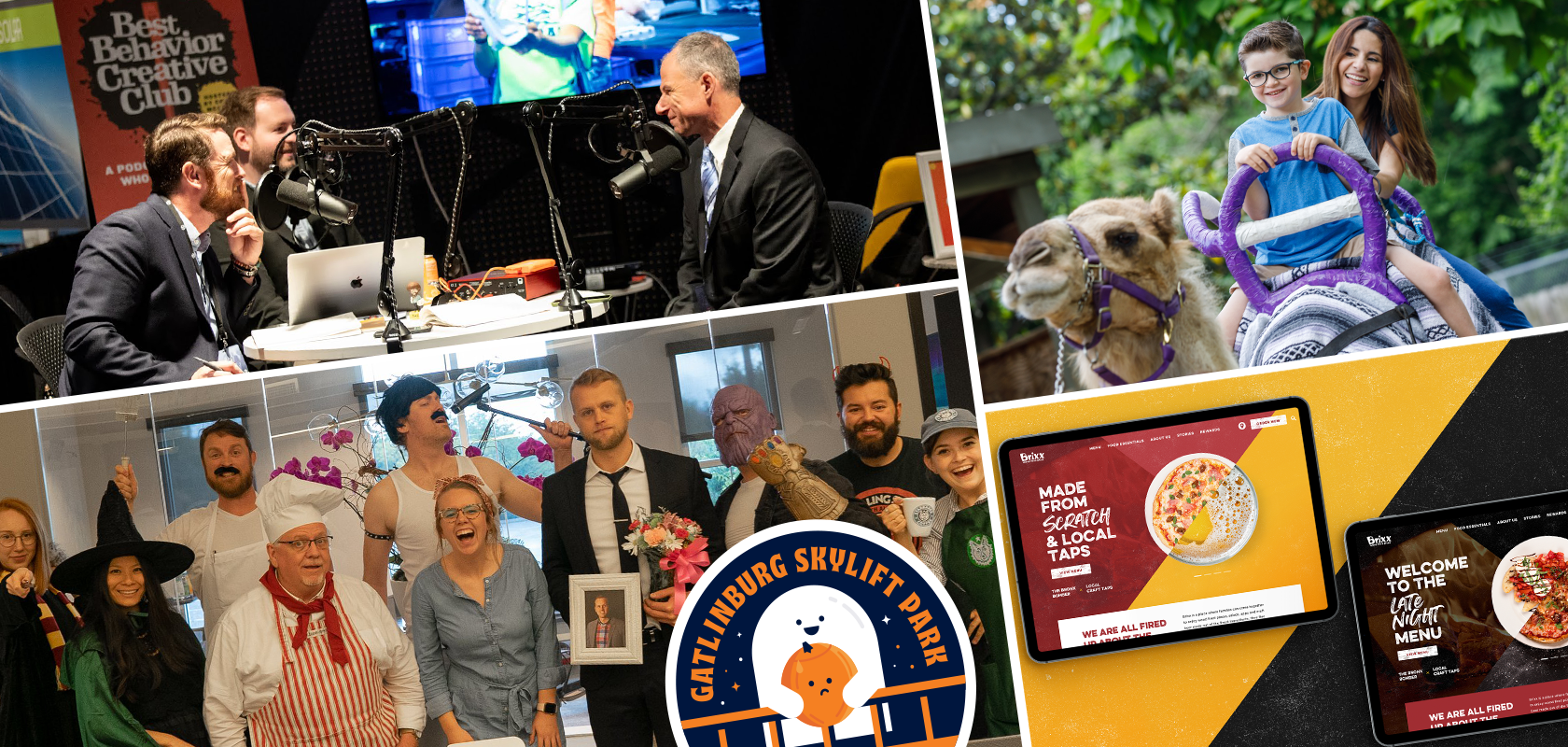
It really is the most wonderful time of the year here at Designsensory. Our annual holiday campaign has “sparked” pure happiness around the office. We are celebrating the season with an original craft cocktail recipe from our spirit connoisseur, Ryan Lee, and a holiday edition of our podcast, Best Behavior Creative Club, with Chris McAdoo and Brad Carpenter (and a few tiny DSers as well.) Oh, and familiar with TikTok? Yeah. We had some fun with this one.
 

In everything we do, we hope to spark creativity, joy and love, and we look forward to sharing it with our clients, friends and family year after year. Take a look at more of our seasonal activities here.

This is always an exciting time in our client work as well. Our annual annual pass campaign for Zoo Knoxville is underway, and this year we’re featuring one of the zoo’s most famous residents, Einstein. The hilariously charming actress is encouraging all zoo lovers to buy an annual pass in a series of quirky social videos and paid digital placements.

Have you crossed North America’s longest pedestrian suspension bridge yet? If not, what better first time than when it is covered in colorful archways and thousands of twinkling lights? That’s what we thought. We partnered with our friends at the iconic Gatlinburg SkyBridge to bring a little cheer for its first holiday season in East Tennessee. The Lights Over Gatlinburg event runs through January 31. Go check it out!

A Few Presents for the Office

Like any of our agency news roundups, we have some office updates to share. Our tech team is growing! Colby Johnson and Chris Talbert join the Designsensory team as Technical Developers.

With an art teacher for a mother and two brothers who own a design firm in Chattanooga, Colby comes from an artistic family. This creative drive helped Colby find his passion for development as it satisfies his need to create and allows him to practice his problem solving skills. Passionate for good design and craftsmanship, Colby joined Designsensory where he hopes to hone his development skills, grow his professional relationships and work on interesting projects.

Chris joins us from Johnson City, where he attended East Tennessee State University and worked for seven years as a developer at a local studio. With project management, client relations and training experience alongside his array of technical proficiencies, we’re excited to have him.

Cheers to a sparkling holiday season and a Happy New Year in 2020. We’ll talk soon!

Spark Something Crafted: How to Make a Pomme Pilot

Posted on by Chris Talbert

Our office will celebrate just about anything — birthdays, babies, big wins and big weddings. So the holidays are more than enough reason to keep that trend going.

One Friday a month we all gather in the office around 5 o’clock to catch up, learn a little something and drink cocktails together. We’ve done French 75sManhattansPalomas, and lots of other tasty tinctures. 

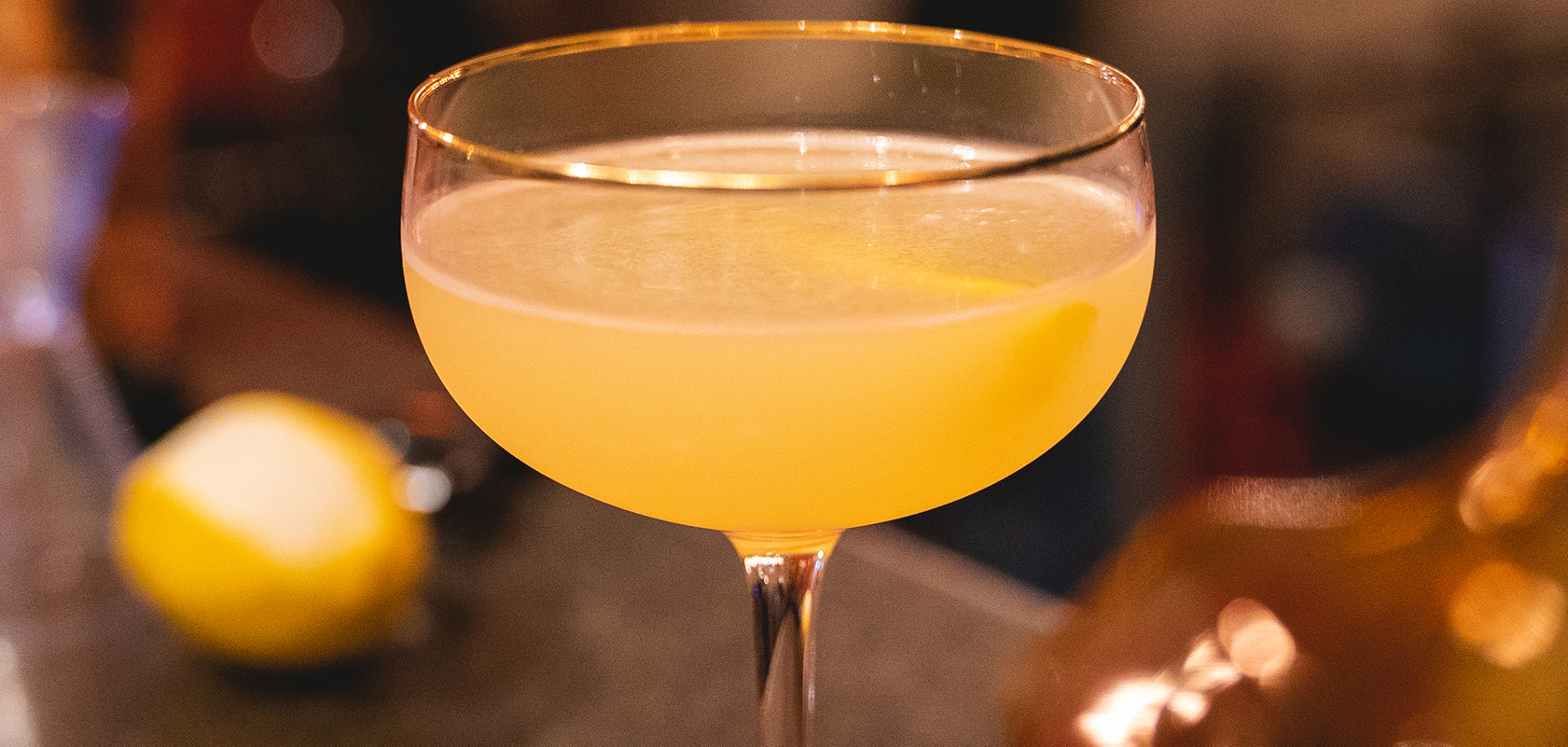
In December, we created a new custom drink, which brings to mind sweet apples blended with thyme and cinnamon spice, to warm the bones and share with friends of the agency. Let’s walk through the ingredients themselves, then we’ll dive into the recipe for our crafted cocktail, the Pomme Pilot.

Rye Whiskey: In the United States, this is whiskey made from at least 51% rye, distilled to no more than 160 proof (80% alcohol) and barreled in new, charred, white oak barrels at no higher than 125 proof (62.5% alcohol). Our recipe uses Old Forester 100 Proof Rye, but Old Overholt Bottled-in-Bond or Rittenhouse would work well, too.

Calvados: An apple or pear brandy from Normandy. Fresh apples are pressed and fermented into a dry cider, which then gets distilled. The distillate is aged for at least two years in oak casks, et voilà, you’ve got Calvados. Our choice was Berneroy VSOP. You could also use Applejack here; look for Laird’s.

Apple Cider: An unfiltered, unsweetened, non-alcoholic beverage made from apples. Our recipe used Honeycrisp cider. You can substitute for apple juice, but be sure that it’s also unfiltered and unsweetened since regular apple juice may throw off the balance of sweetness in the drink.

Thyme Cinnamon Simple Syrup: Simple syrup is just that: simple. A 1:1 mixture of sugar and water, heated just until the sugar dissolves. To make plain simple syrup – called for in hundreds of cocktails – that’s the end of the process. In this case, add 10-15 sprigs of fresh thyme after pulling the mixture off the heat and allow it to cool. Remove the thyme and strain into a bottle. To add just a bit of spice, drop a cinnamon stick or two into the syrup. 

Lemon Juice: If you guessed that lemon juice is the juice that comes from lemons, you nailed it. Fresh citrus juice is always preferable but there are some good bottled alternatives to be found at a reputable grocery store.

Aromatic Bitters: A mystery concoction of alcohol, herbs, spices, roots, et al. A few dashes add spice and roundness to a cocktail. While you might not notice their presence in a cocktail, you’ll definitely notice their absence. Our recipe uses Fee Brothers Old Fashion Aromatic Bitters, thanks to the more pronounced cinnamon and allspice notes in the Fee Brothers variety. Classic Angostura bitters are a fine substitute, but Fee’s is preferable.

Now, let’s get down to brass tacks. How do you make this thing?

Pomme Pilot

Ingredients

  • 1 oz. Old Forester 100 Proof Rye
  • 1 oz. Berneroy VSOP Calvados
  • .75 oz Honeycrisp apple cider
  • .5 oz fresh lemon juice
  • .5 oz thyme-cinnamon simple syrup
  • 2 dashes Fee Brothers Old-Fashioned Bitters

Instructions

  1. Add all the ingredients into your cocktail shaker of choice
  2. Add ice
  3. Shake for 10-15 seconds
  4. Double strain* (using your primary strainer in conjunction with a second strainer) into a chilled coupe glass
  5. Twist a lemon peel over the top, and drop in a sprig of fresh thyme

*Note: Double straining isn’t strictly necessary, but with fresh citrus juice and lots of tiny ice chips floating around in your shaker, straining your drink over a second fine strainer will keep any lemon pulp and ice shards out. Those little flecks of ice might not seem like a big deal, but they’ll continue to melt in your drink, diluting the cocktail as you go and changing the character of the drink.

Give it a try and let us know what you think! We hope a little bit of liquid cheer makes your holidays that much happier.

November at Designsensory: A Time to Give Thanks

Posted on by Chris Talbert
‘Tis the season. To be thankful, that is. We have some of the best clients, the most talented employees and projects that are incredibly fulfilling. Let’s look back on some of our favorite moments in November so far — and ahead to the rest of the year. Can you believe 2019 is almost over? There’s so much more to cover! Read on.

Thankful for our DS team members. 

We have a handful of DSers doing some pretty awesome things here this fall. Our teams and talent are leaving yet another great conference feeling inspired and excited for the projects to come. We traveled to Nashville for the Tennessee Department of Economic & Community Development (TNECD) Governor’s Conference to meet with some of our clients and learn from some of the best in the industry. Of course, we had to line up a few more interviews for our Best Behavior Creative Club podcast while we were there.

Our Director of Strategy, Josh Loebner, just returned from the TravelAbility Summit in San Francisco, where he spoke on the subject of advertising and accessible tourism. The summit brings together the travel industry and disability experts and innovators to close the accessibility knowledge gap. Josh serves as a member on its advisory board and also recently wrote a chapter in the Routledge Companion to Disability and Media, first edition. Congrats Josh!

We are always on-the-go! Next week our Director of Research, Chris Wise, will travel to Nashville for the Tennessee Electric Cooperative Association’s annual meeting to present findings from a statewide perceptual and communications study with consumer-members of Tennessee’s electric co-operatives.

Let’s give thanks to our creative (and hilarious) DSers that dressed up for our totally made-up, unofficial Halloween costume contest.

Thankful for our clients. 

From South Carolina to the Tennessee Valley, we’re looking ahead to the Southeast Tourism Society’s Shining Example Awards in the spring and have nominated some of our tourism clients for top honors regionally in the industry. The nominations are officially in—fingers crossed for our partners!

Our friends with the Gatlinburg SkyLift Park have been very busy since the grand opening of the longest pedestrian suspension bridge in North America, and they show no signs of slowing down. Earlier this month, they hosted dozens of eager locals for a SkyBridge Pumpkin Toss to benefit the Sevier County Food Ministries. With a $5 donation, participants were given the opportunity to drop their pumpkins off the record-breaking bridge attraction—measuring 140 feet above the ground at its highest point. Our mega-talented Senior Designer, Katie Marshall, designed an adorable sticker for the event. Check it out below!

There are more fun events coming soon to the Gatlinburg SkyLift Park, but you’ll have to tune into our next agency round-up for that.

Speaking of the gorgeous gateway to the Smokies, we have some big tourism news to share. We’ve just signed on to be the agency handling all digital and traditional media for the Gatlinburg Conventions & Visitors Bureau, and we’re thrilled to hit the ground running this month.

Our Wildly Fun partnership with Zoo Knoxville continues, and we can’t wait to help reveal and market all the exciting things coming in the next several years. Designsensory will continue to serve as Zoo Knoxville’s Agency of Record (AOR), and we couldn’t be more thrilled to support one of Tennessee’s leading attractions. Stay tuned!

Pizza makes for a great Thanksgiving dish, right? We recently designed and launched a new Brixx Wood Fired Pizza website with updated imagery and a light mode and dark mode, which changes over automatically at night. To truly capture and convey the experiences that blend fired up flavors, local communities and family, we brought together an ensemble team of researchers, photographers, designers and developers. Check out this delicious site at brixxpizza.com.