Category: Articles 🔎

Making Sense of Information Overload

Posted on by Chris Talbert

Research, analytics, data, data and more data. In the world of marketing, we are bombarded with information, and the need for even more keeps growing. To many, all of this information can be too massive and unwieldy. Mention the need to gather and process all of this information and some people look like the proverbial deer-in-headlight.

The first way to reduce this literal information overload is to gather and curate data that your business actually needs. I can’t tell you the number of occasions I am asked to add questions to a project because it “might possibly be nice to know that.” My general response is NO! When asking survey questions—whether online, in a designed app, in a telephone survey or even during customer intercepts—brevity is important. Ask only questions that uncover the truths you want and need to know in relation to the goals and objectives of the project or task.

And that is true as you look at all data available to you. Pull what is relevant, study it, uncover the learnings and understand what action is necessary from what you have learned.

The next step you can take earlier on in the research process to reduce the overload is to always start by knowing what you want to learn or what hypothesis you need to test. Truly define your goals. Those goals serve as your touchstone in all things relative to the project. And there are so many touchpoints that collect individual information is downright scary!

Finally, if you have access to a market researcher or data analytics professional, I suggest you engage their services to guide you. It’s an investment that can pay dividends to business performance short-term and mid-term.

When Sir Francis Bacon stated in 1597, “Knowledge is power,” I’m pretty sure he had no idea of the vast information that would be at our beck and call in 2020, but he did recognize that we are better off absorbing information to make better decisions—personally and professionally.

Information is there for you. Just take the time and move slowly if necessary, but lean into information utilization and be careful not to swallow the entire cake—small but deliberate bites will do.

5 User Experience Design Trends to Watch in 2020

Posted on by Chris Talbert

UX 2020 Design Trends 

As we welcome the new year, we’re also welcoming more User Experience (UX) design projects here at the agency, and we expect 2020 to be a year where UX only becomes more important in the world of marketing.

We sat our User Experience Director, Matt Montgomery, down to discuss what he believes are going to be the most important trends in UX in the coming year. But, before we get there, let’s recap what UX is and why it’s so important.

What is UX Design?

According to a study from the Oxford Journal Interacting With Computers, the goal of UX in business is to “improve customer satisfaction and loyalty through the utility, ease of use and pleasure provided in the interaction with a product.”

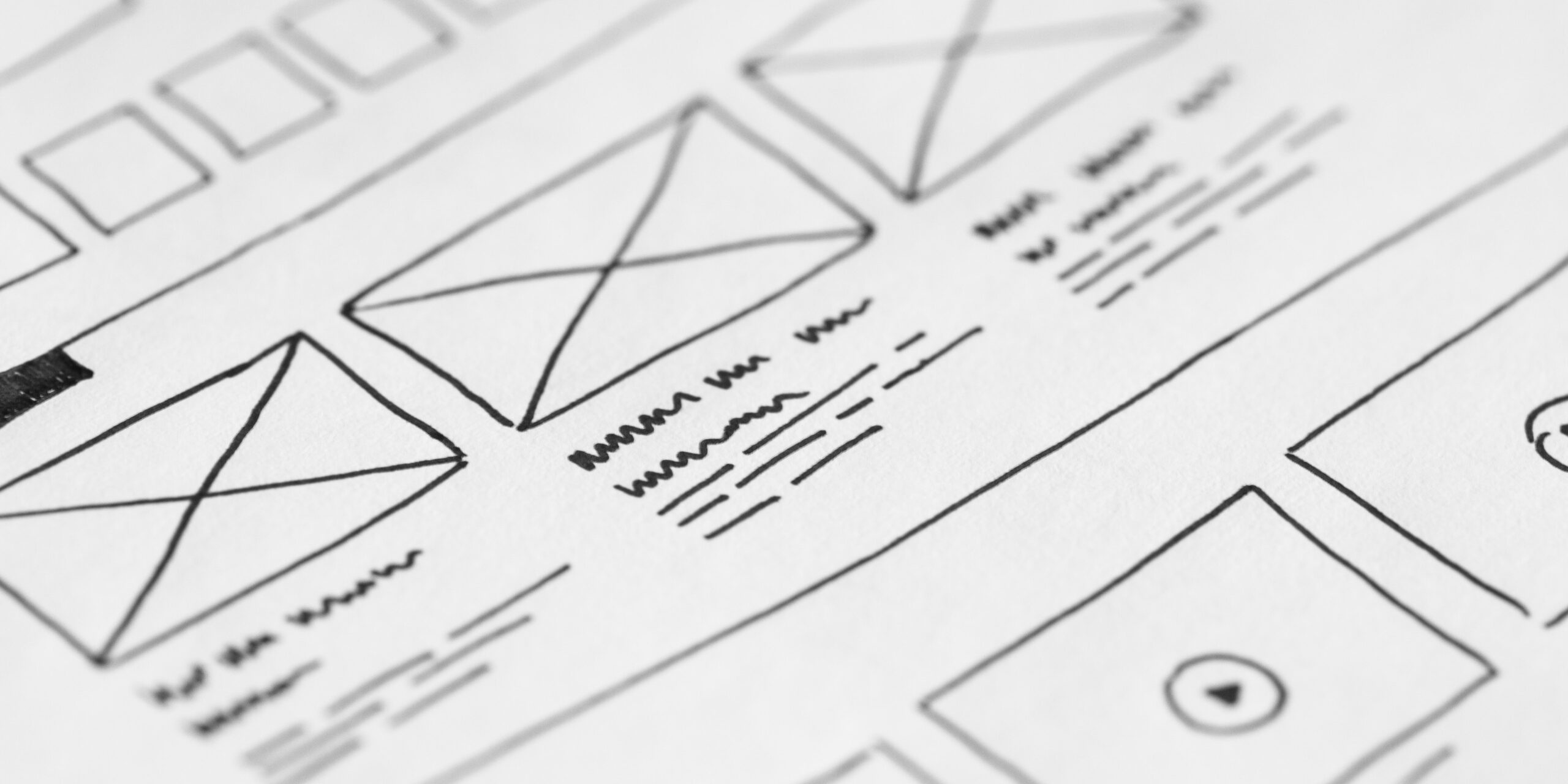
Simple enough. However, in terms of how UX design actually achieves that, it’s all about understanding how people interact with a brand and its products on its website and other digital platforms—like apps, software, tools and more—by analyzing their usage and optimizing through visual design for better results. Interaction design, visual design, usability and human-computer interaction are only some of the disciplines that make up UX design.

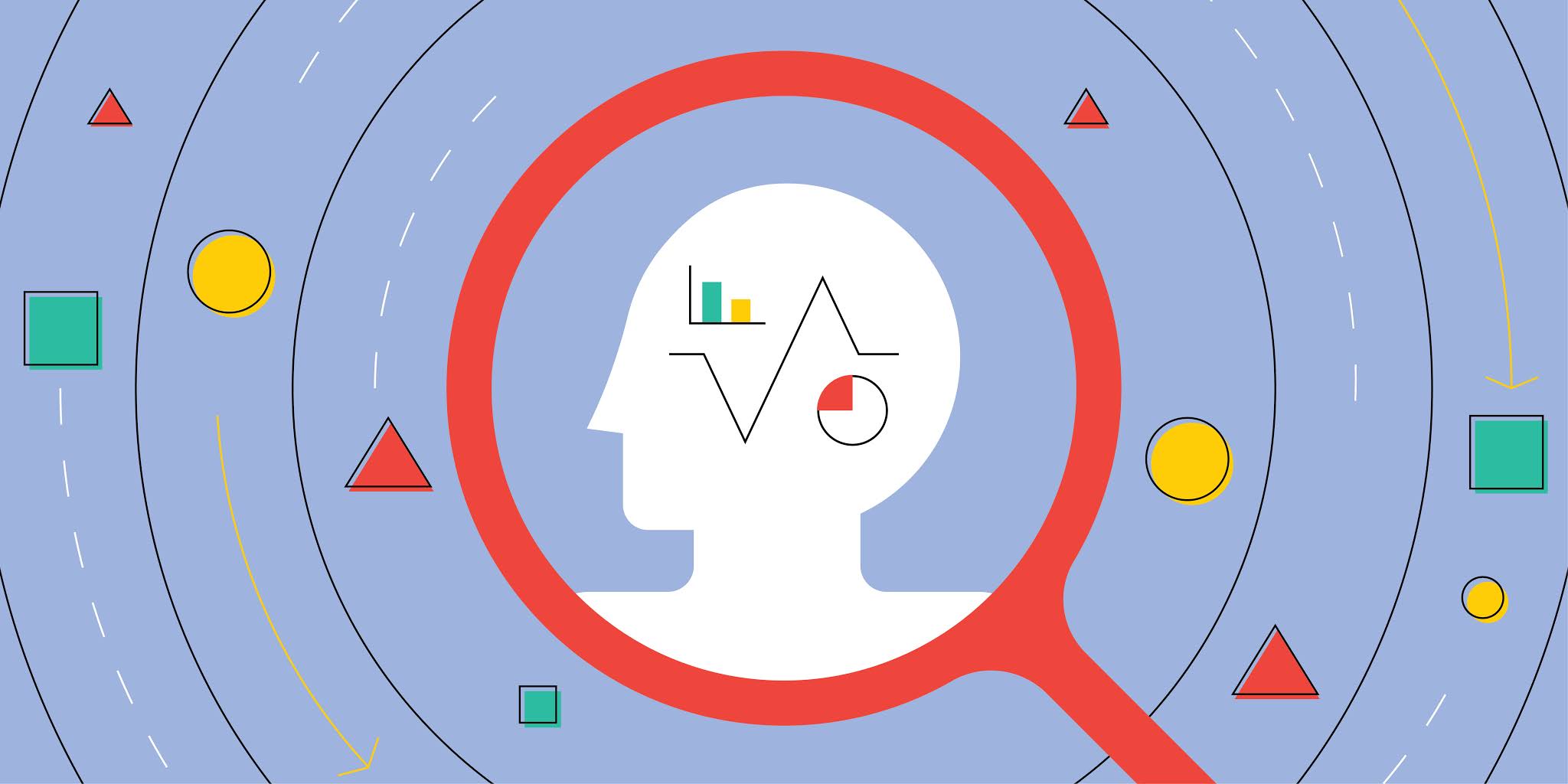
Because UX is a human-centered concept (putting the human perspective first in all stages of the design process), one of the key aspects of the discipline is performing research to understand how users think and what their needs are. To highlight what the process of UX might look like when redesigning a website, Matt offered three tactics typically used during the research phase.

  1. Interview the User: One of the best ways to discover a user’s needs is to simply interview them. In an interview, you can dig into a user’s opinion of a brand or product, discover what it is the user needs and uncover what can be done differently to satisfy them. Interviews are a great way to obtain qualitative data from users, whether it be face-to-face, phone calls or even email interviews. The data you acquire will be more accurate than surveying.  

  2. Usability Studies: Usability studies are an excellent way to discover problems as they happen. Oftentimes, users are asked to go through the process of purchasing a product or navigating a website, which will reveal where they have their frustrations. This allows researchers to pinpoint the problem and use that feedback to better the product, site or brand. 

  3. Analytics and Heat Mapping: Today, the world of marketing relies heavily on data and analytics to better serve and to identify the “what over the why.” Analytics, provide quantitative information containing what social pages people interact with the most, website traffic, bounce rate, click-through rate, where users are, who they are and what their interests and behaviors are. Heat mapping is a unique way to track what content users are interacting with on a given web page. This includes how far they scroll, what elements they click on and how users are engaging with important calls to action. It is an invaluable tool in optimizing websites when every conversion matters.

Top 5 UX 2020 Design Trends 

Finally, Matt provided us with his top 5 trends for UX design in 2020.

  1. Personalization is Key: Personalization is a key factor in being able to reach users. In 2020, more sites will try to cater to personalized personas as a way to meet the user’s needs and wants. 

  2. UX is a “Team Sport”: Gone is the day of the solo designer. In 2020, great UX requires a talented team of cross-disciplined individuals and minds. It is imperative for teams to brainstorm together and develop impactful ideas, strategies and plans.

  3. Mobile E-commerce Will Continue to Rule the Day: 2019’s Black Friday purchases resulted in 2/3 of all sales on mobile devices. Therefore, it is critical for brands to have a strong online presence and not just be mobile-friendly, but be mobile-first. With more people purchasing on phones, social media will continue to dominate the way users handle the web. 

  4. The Rise in Inclusive Design: In 2019, 4.8 billion people actively used the web, which is more than 58 percent of the global population, so it is safe to say that the internet plays a major part in our day-to-day lives. With that being said, brands need to be inclusive and accessible for all. Even today, brands struggle with accurately providing accessibility for those with disabilities. With that being said, online accessibility and inclusive design will be a major factor for UX in 2020 to provide website accessibility for all, making sure anyone can connect. 

  5. Increase in Data-Driven Approaches: The process of creating a user-friendly product relies heavily on data-driven results to better understand the audience’s needs and wants. Modern technology and research methods allow us to analyze data from where one lives to their favorite hobby. In 2020, data-driven approaches will continue to increase, not only in UX but agencies and corporations alike. UX can fold in data results to develop and guide specific business strategies that are tailored to answer the question, “What are users asking for?”

Importance of Teaching UX Design 

Matt will take these design trends into the classroom this year. In his third year of teaching Interaction Design to graphic design students at the University of Tennessee, Matt aims to share what he has learned through his years of UX to create an energized experience for all of his students. The class focuses on teaching graphic design for new technologies, which in turn, provides skills on how to develop designs that work for other people. 

Students are exposed to human-centered design approaches and how to take data results and improve designs to what the user wants and develop patterns that work. “The most rewarding part of teaching is when students reach that ‘ah-ha’ moment,” Matt said.


5 Ways to Make Job Interviews Less Awkward and More Accessible

Posted on by Chris Talbert

As a regular contributor to Adweek, I’m able to speak about diversity and inclusion to a much larger audience. Below is my most recent article “5 Ways to Make Job Interviews Less Awkward and More Accessible”  in its entirety.

October was National Disability Employment Awareness Month and the perfect time to look among staff at agencies and advertisers and consider how disability is represented beyond portrayals in campaigns and, more importantly, within the workforce.

Disability is gaining visibility in the ad industry, with many of the Cannes Lions winners featuring disability inclusion in their work. Caroline Casey, founder of the Valuable 500, a nonprofit driving global businesses to commit greater disability inclusion, recently hosted the panel Disability Inclusion: A Valuable Conversation. This positive momentum will continue as more disabled creatives, programmers, strategists and others compelled to advertising are welcomed into the industry as young professionals and those already employed are promoted to leadership positions where they can continue advocating for inclusion.

Hopefully hiring managers, human resource teams and everyone on the job hunt are aware of ethical, moral and social boundaries and etiquette when it comes to interviewing a marginalized person, whether that person in the hot seat is a woman, person of color, queer or a combination of any of those groups. But what if that person has a disability? A big barrier for many employers to consider hiring someone with a disability is the fear of perceived unknowns, such as unknown costs, unknown physical barriers and unknown distractions, among other considerations. Many of these unknowns may be brought up by hiring managers during the interview process as reasons for not selecting a viable candidate that has a disability.

The situation facing people with disabilities on the job market is so unique that the A&E Network premiered The Employables, which, according to the network, is a “groundbreaking new docuseries [that] follows job seekers with conditions such as autism or Tourette Syndrome as they work to overcome obstacles and find fulfilling employment.”

Hiring managers and disabled job seekers should consider the following disability-specific tips to make interviews less awkward and more accessible.

Ask about a company’s inclusion practices

Reach out to diversity and inclusion employee resource groups in an agency to gain insights. Ask questions on sensitive areas and other points to lean into. Or simply connect with one (or several) disabled staff members at the company that are open and comfortable to share a conversation about day-to-day agency experiences and how disability fits in to better guide the hiring process.

Meet with professional groups that advocate for diversity

Connect with industry professional organizations that help to foster greater inclusion in the workforce, such as the American Advertising Federation’s Mosaic Center for Multiculturalism, where anyone that is hiring or looking to be hired will find diversity and inclusion information.

Attend disabled student mentoring group events

Seek out disabled student mentoring organizations such as Lights! Camera! Access! 2.0 and consider attending one of its media, advertising and entertainment mentoring summits, which include guidance on self-disclosure and how to leverage your disability to sharpen your competitive edge.

Research an agency’s overall approach to disability

Understand how diversity and inclusion is, or isn’t, part of the agency’s culture and where disability fits in. Consider the most recent Cannes Lions winners that included disability in some way and which agencies led those creative campaigns. Dig deeper to find out how disability commitment is promoted within agencies and advertisers beyond inclusive ads.

Show, don’t tell, your strengths

Show how disability, diversity and inclusion bring out strengths of adaptability, ingenuity, creativity and commitment, all traits any hiring manager in the ad industry would agree are worthy of a candidate’s consideration. Be comfortable weaving disability into the narrative in a positive way to define your passions, personality and purpose. Often, there is a strong bond between disability and creativity, and in those instances, boldly include it at the forefront of the conversation.

One example of an individual connecting creative and disability is James Rath, who is a legally blind video producer. He wove his talents and disability together and produced Tommy Hilfiger’s inclusive ad and accessible campaign.

Disability isn’t one-dimensional. Disabled creatives and advertising staff don’t need to be segregated to only focus on disability-specific campaigns or creative elements unless that is an agreed-to role, such as a user experience specialist focused on accessible websites or an inclusive design strategist. Disabled staff will share a depth of insights to guide disability-specific campaigns, but also know that disabled creatives will bring bold ideas to any brainstorming session or boardroom meeting.

Because we took this month to celebrate, educate and value disability employment awareness, take the time to plan and discover how disability can be purposefully and proactively woven into your agency’s career recruitment efforts on an ongoing basis throughout the year. Be a champion for diversity and disability inclusion and a leader in your workforce to open the door, break the glass ceiling and welcome individuals from a group that has been marginalized, misunderstood and often invisible in advertising for so long. Look beyond diversity and inclusion quotas to the powerful qualifications and passions of so many creators in the disability community.

Long-form Content is a Whole Meal

Posted on by Chris Talbert

In a world where video content is king, strategy needs to be the crown jewel. What that really means is that, to build an effective content calendar, you need to know what types of content you should be making and at what lengths. With a landscape that is increasingly distracting, you might think that short-form is the leading lady. However, a quick look at the best content strategies in advertising (and especially on social channels) will argue a different point. Let me enlighten you.

First, let’s define what we mean by long-form. 

In the digital world, and specifically when talking about broadcast or digital advertising, long-form is anything over 30 seconds. Who knew? We’re not always talking about 20-minute clips when we say the word long-form.

When we talk about short-form content, we’re talking about 10 seconds or less, and then mid-length is in between. YouTube offers up some terminology that I’m going to steal here: Bite (0-0:10), Snack (0:10-0:30), Meal (0:30+). And thus, long-form content is the most filling. You’ll want to include long-form content in your strategy for that very reason. A careful incorporation of each of these will produce the most effective ROI for your brand.

Next, let’s discuss some content frameworks. 

Instead of just creating for the sake of creating, using a content framework can get everyone on the same branded page. There are three different types of content (actually four, since we added one) we use here at Designsensory when determining a content strategy for clients. 

  • Halo: Halo refers to a larger segment of content that introduces your brand at a very high level. It could be a TV or streaming series or movie. (Halo is a content option that lets your brand speak for itself).

  • Hero: This content type is specifically for informing or catching attention. Think of it as your big-picture, awareness content. (Side note: hero can be great short-, mid-, and long-form content).

  • Hub: Hub content is a shorter series format that is more focused on product or service. It includes in-depth content specific to your audience’s interests. (Again: This lends itself to a longer storytelling approach).

  • Help: This might be self-explanatory. Help content is answering questions that your users have for your brand. We’re talking tutorials, how-to’s, customer service, etc. (Last side note: notice which videos are doing well and at which length. Rinse. Repeat).

Now, let’s wrap it all together.

Each of these formats can expand into unique long-form setups. The more people are willing to watch long-form, the more invested they are in your brand. In essence, I’d always recommend getting a media plan from an expert (you know, like Designsensory), but you should always be exploring ways to establish your brand and its content in a sustainable way. Start with a strong concept and stay consistent. Then, as you’re pushing it out, or placing it in the digital world, keep a track record of what’s working and what isn’t. The key to success is adjusting to your users, but ensuring you place different content lengths is also pivotal.

Before we go, enjoy one of my favorite pieces of hub content, Undercover Lyft. And, of course, an indescribable brand favorite: Apple. They do a solid job of segmenting their hero content from hub and help. We also do a hero, hub, help model when advertising Bristol Motor Speedway and Zoo Knoxville, from awareness videos and micro campaigns to a digital series. Go create great (longer) content!

Inclusive Design & Website Accessibility: Going Beyond Just Meeting ADA Compliance

Posted on by Chris Talbert

Writing for Adweek is a wonderful opportunity to share ideas and insights on inclusive design, advertising and disability to a larger audience. Below is the article “Agencies Need to Implement Accessibility Measures When Designing Websites” in its entirety. Is your website accessible?

Virtually every brand has a website, but many fall short when it comes to disability inclusion and accessibility.

While a handful of agencies and advertisers are leading the charge for online accessibility, there’s still confusion, misunderstanding and sometimes ambivalence that could easily shift with disability insights and best practices for developers, content creators and clients when building or updating websites.

The web was designed to give everyone access to information, but not everyone who goes online has the same abilities. To make a more user-friendly internet for everyone, including people with disabilities, Americans With Disabilities Act (ADA) compliance and web content accessibility guidelines, or the WCAG 2.1, have been developed.

Currently federal, state and local governments, public universities, schools, hospitals, airports and airlines are mandated to have accessible websites. Even if your clients aren’t on this list, having an accessible website still makes sense.

Adding a level of complexity are the thousands of ADA compliance lawsuits filed against everyone from mom and pop businesses to Fortune 500 companies if their websites aren’t accessible. Some brands have made compliance updates, while others fight to keep their websites segregated.

For example, Domino’s petitioned the Supreme Court to overturn a lower court ruling mandating ADA compliance updates to their website and app. None of the 2020 presidential websites are ADA compliant, and many Cannes Lion winners—even some with campaigns focusing on disability—don’t have accessible websites.Simple and proactive website accessibility fixes will pivot brands from appearing in court to appealing to new users.

Furthermore, far too many tourism websites dedicate content to pet-friendly lodging, attractions and restaurants. While I’m a dog lover, I also know that people with disabilities and their families and friends want info about accessible tourism.

Some brands, though, are ahead of the online accessibility curve, such as grocery chain Albertsons. Grocery Store News reported on the brand’s improved websites and apps, which allow blind and visually impaired people to more easily interact online.

Simple and proactive website accessibility fixes will pivot brands from appearing in court to appealing to new users. To get started, here’s a 10-point introductory list that will allow a website to be more perceivable, operable, understandable and robust for all users.

Color contrast

Adjust color contrast for content clarity for people with visual impairments such as color blindness and/or low vision.

Fonts

Create live text for ease of scaling text size and font style for readability for people with dyslexia and other neurodiversity or visual impairments.

Responsive design

Ensure sizing and functionality across desktop, laptop, tablet and mobile devices.

Photography

Allow for representation of disability inclusivity in photos and provide legibility, proper alt tag descriptions and descriptions of in-photo text on the website.

Video

Provide audio descriptions and closed-captioning and allow for representation of disability and transcripts.

Hyperlinks

Allow links to provide enough of a description for those using an assistive screen reader so they understand where the link goes.

Buttons

Use buttons and clickable elements with color, style, text descriptions and hover states that can allow for ease of clickability when using a mouse or keyboard.

Menu

Provide logical UX best practices that can easily guide people to disability information.

Terminology

Ensure content uses disability-friendly words and phrasing.

Technical development

Use code for HTML tags, header hierarchy, title tagging and alt text and other coding best practices.

If an advertiser or brand has a physical location that meets accessibility requirements, such as ramps, braille signage, grab bars in bathrooms or other amenities, it makes sense that their website be accessible, too. And for purely digital brands, website accessibility means the chance for more users to engage and convert.

So, what’s the next step? A Google search for website accessibility will bring up dozens of options for downloadable software, automated monitoring and AI-driven compliance tools to audit websites, but I believe compliance software is only one part of the solution. Educating creative teams on accessibility and inclusion, welcoming customers with disabilities into the website development process and considering agency talent recruitment of people with disabilities as developers, content creators and other positions will ensure voices are heard throughout the process.

Lastly, don’t have your creative teams and clients check off the website accessibility compliance boxes. Instead, recognize the value, loyalty and passion that people with disabilities will bring when agencies and advertisers establish a creative commitment across the digital landscape and beyond.

Agencies Need to Better Connect Disability With Diversity and Inclusion Efforts

Posted on by Chris Talbert

Through his articles in Adweek, Josh conveys industry-leading insights, thought-provoking commentary and pragmatic ideas for readers to consider and make their own. His latest continues on the path guiding greater inclusion of people with disabilities in the advertising industry.

With the 2020 Paralympics just around the corner, brands will soon start to plan and develop disability-inclusive campaigns. But are conversations about employing people with disabilities also top of mind among those agencies and other advertisers?

For some campaigns and brand activations, the Paralympics are a regular commitment that powers up every four years, and for others, this will be a first foray into disability inclusion. While much of the focus will center on disability portrayals in the creative, now is the time to consider disability beyond the campaign and also as a component of ongoing diversity and inclusion within talent recruitment programs.

As a disabled person in the industry, I’ve seen some advancement, but many conversations are stilted with minimal insights and sputtering commitments. I applaud the ad community for taking a stronger stance on diversity in so many facets, but disability continues to be marginalized mostly to topics surrounding ad creative, with little industry education or agency employment dialogue.

Not considering outreach toward people with disabilities among employee candidates continues decades of second-class citizenry, misinformation and stereotyping toward a group that many still consider unemployable.

In an industry that celebrates creative iconoclasts, hiring managers should consider people with disabilities for out-of-the-box ideas and as daily problem solvers. Recognize that many break the rules and the mold regularly and repeatedly, things brands want to achieve every day. One in four people (or 61 million) Americans are disabled, and many could translate into employees in the advertising industry. Whether talking about a career move or consumer purchasing power, people with disabilities can make a big advertising impact.

Collectively, Americans with disabilities have an annual disposable income of $188 billion. Beyond the bottom line and dollars spent, advertising has the power to drive brand affinity and social justice.

Employing more people with disabilities means agencies and brands won’t simply be thinking about inclusion every few years surrounding the Paralympics or during a particular month celebrating a certain cause, but instead have daily advocates and ambassadors willing and able to share advice and creative ideas toward greater inclusion. Other minority groups aren’t put on pause to only be discussed and included among infrequent campaigns during sports spectacles, and neither should people with disabilities.

More people with disabilities will be in ads when more people with disabilities are hired in the advertising industry. This can be the year when more conversations, conviction and commitment takes place to elevate advertising and disability.

Why Design Needs Strategy

Posted on by Chris Talbert

When Van Gogh painted his “Sunflowers,” I doubt he did much digging into the how and the why of sunflowers. His painting was meant to be beautiful and that’s about it. But you can bet that when the UK’s Guardian newspaper won a 2018 D&AD Pencil for its rebranding effort, there was a hefty dose of strategic thinking that went into it. But why do design teams need to trouble themselves with things other than making stunning designs? 

Well, ideally, design and strategy have a symbiotic relationship. 

Strategy without design principles is lifeless and cold. Design thinking breaks strategic planning out of its robotic box and drives innovation and creativity. The greatest benefit of applying design thinking to strategy is that it focuses on the end, keeping the user in mind at all times. Applying design principles brings a touch of humanity to processes and procedures that can sometimes be absent in strategic planning. Iteration and testing are central to design thinking, and those concepts can elevate a good strategy into a truly great one. 

On the other hand, design without strategy is simply art. Now, as one of the pillars of western civilization, hopefully we don’t have to speak in defense of art. But in advertising and marketing, art is just a foundational piece. Rare are the times when an agency can afford to make things just because they’re beautiful. Those beautiful things need to have a purpose. They need to drive action, change behavior or move the needle–depending on your preferred phrase. Art for art’s sake doesn’t achieve what we need it to achieve, and that can be a hard sell to a client.

Here’s where strategy comes in to save the day.

When you’re able to point to the strategic process that led to your team’s design decisions, it gives credence to the choices you made. When the crucial moment comes that you’re presenting designs to stakeholders and decision-makers, the case for your designs is much stronger if they rest on a foundation of solid strategic thinking. Writers, artists and designers understandably sometimes want to listen to their instincts and let the muse take over. But, in a room filled with people who may not know much about design, strategy wins the day. When you can communicate that you chose a color because it represents a certain business vertical, or you chose a type treatment because it reflects a crucial pillar of the brand’s identity, those stakeholders are much more likely to feel comfortable with the design.

Our design teams begin every project with a strategic process that digs deep into the DNA of our client’s brand. That discovery process results in a dual strategic and creative brief that will serve as a strategic anchor for every creative decision that we make. What comes out of that is real magic. We get to launch beautiful things into the world but, more importantly, we get to produce beautiful things that work. And that’s the sweet spot.

Under the Influence: Influencer Marketing and Why It Matters

Posted on by Chris Talbert

The evolution of social media has given rise to a new kind of celebrity: the influencer. Influencer marketing campaigns are the hottest thing in the marketing world, and with good reason: they work.

Designsensory has had exciting results with influencer programs for several clients and projects, including Remastered, Tennessee Valley Uncharted, Bristol and McMinnville, Tennessee, and the Tennessee Aquarium in Chattanooga. We have used influencer tactics in a variety of ways. Some were paid and produced content, while others were co-created or influencer-generated with little to no remuneration. 

For Remastered, episodic videos tell the stories behind great Tennessee brands such as Prophetik haute couture clothing, Lodge Cast Iron, Jack Daniels Distillery, Saint Blues Guitars and Barrett Firearms. Both influencers and the brands themselves promoted the series, generating 2.3+ million views, $1.8 million value in earned media, more than 20,000 posts, shares and views through direct brand interaction, and more than 3,000 click-throughs from targeted executives.

We’ve just begun a branded content campaign for others, and we’re excited to show those to you soon!

What It Is

Influencer marketing is a modern hybrid of the old-fashioned celebrity endorsement with contemporary storytelling across various media. Influencer marketing goes far beyond the implications of the 30-second celebrity TV commercial.

Within every industry and every special interest area, there are well known influencers who speak directly to businesses and consumers in their area of expertise. From Instagram fashionistas to YouTube travel gurus, from sports bloggers to corporate leaders, influencers have targeted audiences that number in the hundreds of thousands, or even millions.

Influencers are powerful ambassadors for your brand, people who have spent time, thought and energy patiently building their followings. Their followers know that they are more than pitchmen paid to sell products; they are defined by the choices they make and perceived as authentic storytellers with a strong point of view.

Influencer marketing is about credibility, leadership and imagination. It’s a people-to-people approach, human and accessible.

The spectrum of influence runs from celebrity endorser at one end to brand avatar, household influencer, handheld influencer, and, finally, micro influencer.

Creating an influencer campaign is more than turning a social media star loose to talk about your product. Research, strategy, planning and careful matching of product with influencer are key.

Among the various ways to activate an influencer are: Conversation and collaboration; product or experience reviews; live content; unboxing; contests/giveaways; and cross-promotion.

Layering tactics with a variety of influencers can raise the level of your success. influencers and micro-influencers can participate in different ways to drive different responses within the engagement “funnel.” 

Loeffler Randall, a high-end accessories and footwear brand, has achieved a strong following with artists, fashionistas and bloggers by leveraging the creativity and personality of its team of ambassadors. These ambassadors are “cool girls doing cool things,” a creative and diverse group of women leading interesting lives, featured front and center on the company’s blog with the hashtag #LRambassador.

What It Isn’t

Influencer marketing is not about paying a celebrity to talk about your product. Influencers are, as a rule, not about the quick payoff. They are storytellers who immerse themselves in the experience they bring to their audiences.

Even when a company chooses to go with a traditional celebrity, the approach is usually very different—and very targeted. For example, Lagavulin Whiskey had a very niche audience in mind when the company made a 45-minute video featuring Parks and Rec star Nick Offerman. Offerman’s silly-but-serious demeanor and cult appeal were perfect for this offbeat video of him sitting by the fire, slowly sipping the whiskey. It was a quirky choice that paid huge dividends, with 2 million views in a single week and a jump in the brand’s channel subscribers from 5,500 to 23,000.

Why It Matters

Influencer marketing is so much more than the next big thing. It’s about the biggest bang you can get for your marketing bucks. According to Statista, in 2016, each dollar spent on influencer marketing returned an average earned media of $11.69 (across all industries).

Timing can be a crucial element of an influencer marketing campaign. For example, the online shopping app Wish launched its #timeonyourhands campaign in the run up to the wildly popular FIFA World Cup. Humorous spots featured famous soccer stars whose teams didn’t qualify; players posted the videos on their own social media accounts and interacted with each other as they found ways to pass the time not playing. Superstar Neymar’s video alone generated more than 2 million views on Instagram—in just two hours.

How to Choose Your Influencer

Who are these influencers, anyway? Most of them are just regular people with a passion—for travel, fashion, science, pop culture or anything else. But they speak with a level of authority that gives them credibility with large numbers of followers. Some influencers are the brands themselves. Nearly 40 percent of survey respondents have indicated they follow brands on Twitter. Of those, 60 percent said that they followed brands to learn about products as opposed to entertainment.

What makes an influencer influential? In a recent study in the Journal of Consumer Marketing, the authors’ research shows that credibility is based on “trustworthiness, expertise, similarity and attractiveness.”

A one-size-fits-all approach does not work in influencer marketing. It’s crucial to choose the influencers who match your targeted demographic and your brand values. They are more than popular people on social media. And sometimes, they aren’t exactly people. Mercedes turned to Loki the wolfdog for some beautiful, immersive and authentic storytelling about traveling snowy mountains in a Mercedes.

Regardless of whether your influencer has four legs or two, it’s important to choose someone who uses the same channels your target audience frequents, has the same fan base and is relatable to that specific audience.

Once you’ve chosen the influencers for your campaign, don’t try to put a round peg in a square hole. Be sure to tie the campaign’s structure, tone and details to the specific skills, personality and style of the influencers. 

Final Thoughts

Influencer marketing is simply a smarter, more authentic way to market your product within your audience segments. Be sure to qualify your efforts with key performance indicators: for influencer marketing, we look at three things: engagement (likes/shares/follows); sentiment (changes in end-user brand affinity/attitude); and conversion (economic behavior). For more information on influencer marketing, reach out to us directly. Happy days!

3 Reasons We Love Adparlor’s Ad Mockup Generator

Posted on by Chris Talbert

AdParlor is a tool that prides itself in providing sophisticated media buying and creative services to “enhance paid social and display campaigns.” While we don’t use all their services, we spend a good amount of time on their free mockup ad generator for our Facebook, Twitter, Instagram and Pinterest ads. Here are three reasons we love it, and why you should consider putting it into your process when creating digital and social advertisements.

Platform Cheat Sheets
AdParlor is a one-stop shop when it comes to generating mockups for your paid social advertising. Every platform has a different character count, word placement and image requirement. With AdParlor, instead of hunting down cheat sheets for every platform’s particular advertising specs, you can access just about every ad type there is for each platform and follow the instructions to ensure your plans fit within certain parameters—from Facebook and its image, video and carousel ads to Pinterest’s promoted, article, product, place, movie and recipe pins. And now you see why you’ll need a cheat sheet…

Creative Adjustments
Now that you have specs, you can insert your copy, images and/or video. The great thing about AdParlor is that it gives you a preview of the ad you’re creating in newsfeed, right-hand and mobile modes—something that can’t be as easily or precisely mocked up in Photoshop. If the copy is too long or short, you can adjust directly within a text box that live updates. You should also put in additional effort to upload your or your client’s logo.

For you designers out there, you all know paid social advertising limits text on images to 20%. AdParlor provides you with a 20% text grid to make your job a little easier.

Free Mockups
As with any creative, presentation is key to relaying your intentions to the client. Once you’ve inserted the advertisers name and logo, and the copy, images, CTA and link, you can hit “Download Mockup” for a quick preview in all modes—i.e., mobile, right-hand, newsfeed. This is the part where we grab the .png files and use them in a keynote presentation or a simple zip file for internal approval processes. Suggestions and changes are easier to note when the whole team can visualize what they’ve just made.

If you’ve ever tried communicating digital and social ad creative across account management, designers, writers and then media teams, you know the simplicity of this tool is nothing to snub. There’s something tangible about mockups that brings all our minds together and drives a better creative process. Now that you know about AdParlor, give it a try and elevate your own process. For questions on content strategy, best practices for design and types of placements, I know a guy.