Author: Chris Talbert

What’s an Author Doing at an Ad Agency?

Posted on by Chris Talbert

Here’s a riddle for you: What is a writer with no ad agency experience doing in a mesh-backed rolly chair at Designsensory? And typing away on her laptop in the open-concept office, no less. Is she lost? A professional stowaway? Too hyped up on caffeine from the Keurig in the office kitchen to notice she’s not actually freelancing in a coffee shop downtown? Given the eccentric nature of writers, that’s a possibility.

But, no, this writer actually works here. Although I have only a few months’ worth of agency experience now tucked under my belt, I came into the job of copywriting for Designsensory with ten years of freelancing experience. I’ve written everything from whitewater rafting adventure blogs to personal essays ruminating on superstition and salvation in Appalachia. I’ve even published two novellas (the third is forthcoming!) on mermaids in rural Florida.

Although agency work might seem like a departure from my normal activities, there is much in my bag of experience that translates well into what I do at Designsensory. For example: 

Professionalism

The ability to publish comes with a strong respect for deadlines and teamwork. Out on my own, tethered to my professional world with nothing more than a wireless modem, I had to cooperate with editors and publishers, all with different requirements, to turn out the best work possible.

Grit

You can’t beat real-world experience. Personalities of employers and readers, tone of each commissioned piece, the ins and outs of different content management systems, specific requirements for each submission … sometimes just not bothering to pay attention to one detail, such as what to type in the email subject line, can cost a writer the whole gig. There isn’t a set of rules for dealing with all the quirky things that pop up out there. Which brings me to another point, possibly the most important point of all, the reason an author like me is brought on board to a successful, creative ad agency:

Voice

You can’t teach voice. Voice actually comes from fine-tuning one’s ears, paying attention to each interviewee or eavesdropping (sometimes even unintentionally) to pick up inspiration for a character. Or, listening to the wants and needs of a client. Writing to a carefully-curated image, writing to a mood. Branding is, at its core, mood provocation. Finally, voice is aged with a fine patina of years, earned from one thing only—putting down one word after another, over and over again.

People make major career changes all the time, and quite successfully. Maybe this post will inspire you to hire outside the box for your own company. Granted, you shouldn’t interview airline pilots in search of a brain surgeon, but, for example, a past champion skier might turn out to be a successful movie producer-turned-graphic-novel-author. The takeaway here is this: If your company could use a creative boost, take a look outside the boundaries of what you already have.

Mood Boarding: What it is and How it Helps Build Design Concepts

Posted on by Chris Talbert

We do a lot of technical work here at Designsensory, but even the most logical, tangible part of what we do is driven by something completely intangible: emotion. Branding is all about emotion. It’s all about the pursuit of that magical, sometimes elusive gut feeling you get when the right words pair with the perfect image on an optimal platform.

Before we ever get to that end goal, there is a mountain of work revolving around emotion. What feeling are we going for? How do we evoke that? How do we communicate it to the client, other designers collaborating on the project and, ultimately, to the wider audience bearing witness to the final product?

Mood Boarding

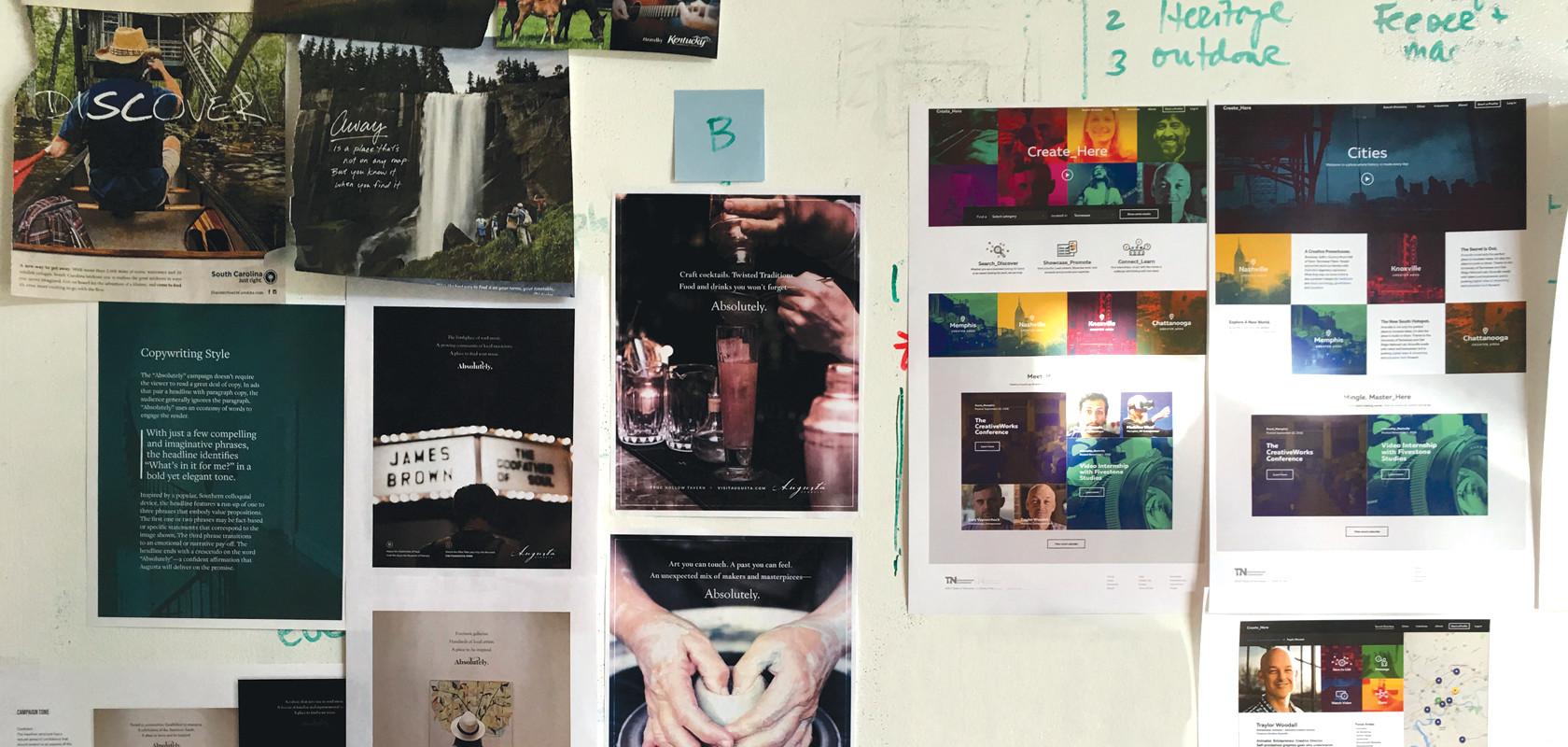
Enter: the mood board. It’s a visual representation of the stylistic direction for the project. It allows both clients and designers to weigh in with a quicker, deeper understanding than words alone can bring. This organized collage of images, colors, fonts and phrases saves time in both production and explanation, and allows for easy initial feedback on what does and doesn’t work.

Mood boards bring about a meeting of the minds among clients, designers and internal project collaborators. Mood boards are not about rendering something specific, but about gathering consensus on direction.

How is it used?

Client-facing and internal mood boards serve the same purpose: they get us all on the same page. We use mood boards early, as a colorful invitation, but we can introduce them later to direct a new aspect of the project or narrow our focus. 

Mood boards work intuitively and quickly, so they allow us to present several stylistic directions to the client. We often create something safe for the brand, but we include something that might be uncharted territory as well. In this way, mood boards allow us to showcase our range of creativity, and sometimes the client might surprise us by loving the unconventional direction.

The mood board is helpful for branding options, too. For example, in creating the flex branding system for Roane Alliance, we created a mood board with examples from other companies for the branding system we envisioned. The mood board brought texture to how the interconnected logos could be used, and helped the client choose the final branding system.

Mood Board = Springboard.

Because mood boards are heavily built on imagery, they convey more in few moments of presentation than an entire written or spoken presentation. Cartoon imagery might convey a playful or even edgy tone, while saturated photographs draw in the viewer. These things do more than inspire the client to choose a branding direction; they provide a working guide for the design and content team. The mood board becomes the springboard for the design process.

Mood boards help us cross the finish line, too. Even when we present the final product to the client, we reference the mood board. It’s the common thread in our communication, showing how the spark of an idea transforms into a full-on presentation.


#TBT: 5 Brand Lessons from Destiny’s Child

Posted on by Chris Talbert

Let’s cut to the chase. The music industry knows a little something about branding, and here’s some of your favorite songs by Destiny’s Child to prove it.

Say My Name

What’s in a name? Shakespeare was onto something here. As much as we fight against arbitrary labels, they help guide us through the world in which we live. We read and hear names on a daily basis. People, places and things. For “brands,” in a very loose form of the word, nomenclature becomes a sense of iconography that lives in our minds forever. Simply adding or leaving out letters in your brand name can have a large impact on your uniqueness. Place a solitary “.” on your website or collateral, and watch the world enjoy your outright rebellion against letters. But, even then, what are you going to be called? Dot? Period? Point? Think about your brand name very carefully before deciding on a word or symbol. Your brand name will always be remembered by someone, even if you change it down the road. 

I’m a Survivor

Longevity is the secret sauce to your soup of success. Now that you have a great name, you need to make sure it becomes well-known and beloved. Let’s talk in Darwin terms, here—survival of the fittest. If your brand can’t eat the other brands for dinner, you have a problem. Seriously, you want to make sure that your product, service or company gives people that good “gut” feeling. We’ve seen many brands go down the drain—Oldsmobile, Pan Am, Circuit City, Kyocera, Compaq, Kmart, Aerópostale, Big Lots, Blackberry, Goody’s—and even though some of these still “exist,” they are mere shadows of their former selves. They have been overshadowed by bigger brands like Ford Motor Co., Wal-Mart, Apple, Belk, Dillard’s, Nike, Coca-Cola, Subway, McDonald’s and many others that are keeping their marketing tactics fresh. If you can’t be a front runner, dig your grave now.

Cater 2 U

Listen, you better write a love song for your customers. To a degree, catering to your audience is exactly what keeps them coming back for more. Does Apple sell fried food? No. They give users what they want—yearly updated iPhones, Macs, iPods, watches and accessories. However, note that they’re taking smart risks by changing up features that users love—e.g., they gave headphone jacks the boot and unveiled the AirPods. Apple can manage risk because they are a veteran brand, and they provide new products and solutions for every concern their users have. With every new change they present, they are setting a standard for other brands. They are the standard. They don’t change to fit their customers only, they also make their customers change to fit them as a brand. It works both ways once you’re that influential. 

Emotion

Connecting with your audience is the best brand move you can make—you won’t get far without an emotional appeal. Creating a brand atmosphere that’s engaging will help you connect with multiple audiences. Brand reveals, debut parties, online forums and thought leadership are a few things that are helpful in building that personal connection. Think about Disney; nearly everyone globally knows the brand. As a parent or child, we fall in love with this brand over and over again. Walt Disney had a tough start, but once he solidified his role as the premier animation house, the brand skyrocketed. He changed up the movie-making process. He let his emotion become the brand driving force, and it became something that millions of people all over the world love and cherish, and copy, today. And emotion is so largely impactful that Disney has made a movie about it called “Inside Out.” Live and learn.

Bills, Bills, Bills

Let’s talk money. You’re in the business of selling, regardless of what you do with the money. You have to sell to survive financially. Invest in extensive research before pricing your product or service to make sure it’s viable. Look to competitor markets. Consumers, myself included, often overpay for products we like because brand appeal can sway the buyer’s wallet. But in general, if the price of your product or service doesn’t match the quality, you’ll lose big. Beware of market segmentation. For example, if you’re looking to enter a luxury market, be prepared to provide a higher quality product and customer service; and look into a public relations plan that will help you reach the world’s elite.

With that, I hope you have some advice in your head and a song in your heart. Brands take time to nurture and grow, so have a little faith in the beginning of your adventures. If you’re struggling to get yourself out there, or if you’ve hit a lull in your branding efforts, reevaluate your brand in terms of visualization and content strategy. Make sure everything is working together and not causing dissonance. And, if you need, Designsensory is always here to help harmonize your brand. Contact us today!

18 Things We’re Thankful for This Year

Posted on by Chris Talbert

Can you believe it’s already November? 2016 has flown by! From new clients to new hires, we’ve got a lot to celebrate this year. In honor of Thanksgiving, we took some time to reflect on what we’re most thankful for this year.

1. Our Clients

When we come to work each day, we have the opportunity to work on some amazing projects with amazing people. Without our clients, we are nothing. Hats off to them!

2. Flexible Work Hours

Can I roll into work at 10 a.m.? No problem. Further evidence that Joseph and Brandon are the best bosses.

3. Each Other

Teamwork makes the dreamwork. United we stand, together we fall. Whatever feel-good phrase you want to use, without each other, we couldn’t create awesome work for our clients. High five, everybody.


4. College Football

We still love the Vols—despite their numerous attempts to send us into cardiac arrest this season. (Except for Susan. Susan cheers for Georgia. We love her anyway).  


5. Sports, in General 

We aren’t picky about the sport; Trash talk is good for the soul. Right, Tom? 

6. Puppies

PUPPY BREAK.

7. Wine

No after-work celebration is complete without our favorite wines and home-brewed beers.


8. Popcorn

The study munchies don’t end in college. Creatives get them too, and popcorn does the trick.


9. Coffee, Dr. Pepper and All Things Caffeinated

What’s the key to creativity? Caffeine. 

10. Utilize

It’s our favorite power word.

11. Our Family

We’d be remiss if we didn’t mention the people standing behind every great man and woman at Designsensory. Without their love and support, we wouldn’t be where we are today.

12. Creativity

We’re thankful to be blessed with 30+ creative minds that work together to create everything from websites to posters (despite the occasional distractions from one another).

13. New Technology

The best part of working in an integrated agency is the freedom to explore the latest and greatest technology to help our clients be successful. Or something like that. …

14. Books

We love to read and learn new things. Check out our monthly installments of “What We’re Reading” for our favorites.


15. 15 Years of Business

If you’ve been following along with our blog this year, you’ve probably seen the number 15 pop up a few times. Beginning in August 2016, Designsensory began a year-long celebration of its 15th year of business. Here’s to 15 more!

16. Good Grammar

We see your word crimes, and we’re here to help. 


17. Snapchat

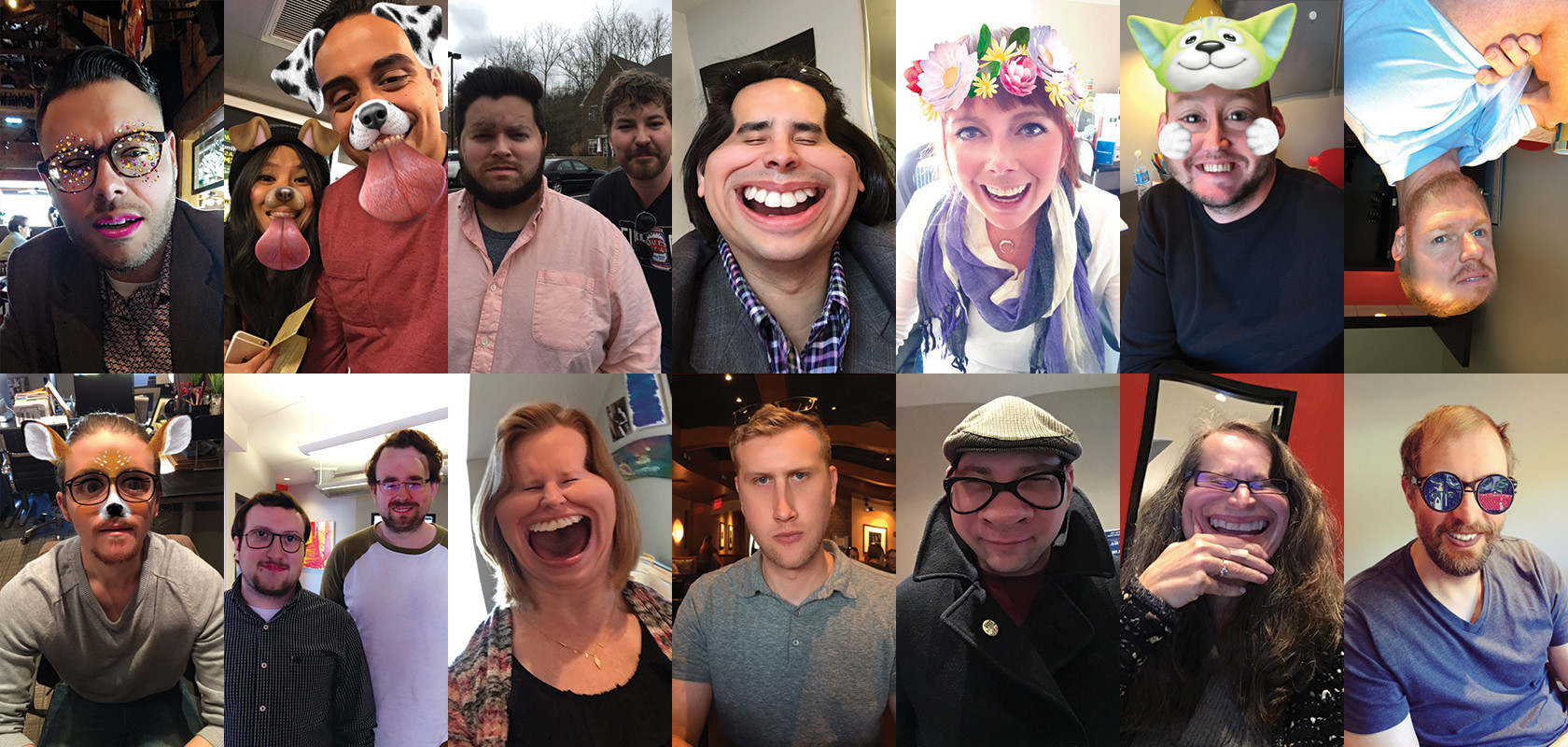
In case you hadn’t already gathered from our header image, we love a good Snapchat filter.


18. Beyoncé
 

Just … because. 


What are you most thankful for? Drop us a line on Facebook or Twitter and let us know!

7 Tips for Curating a Great Instagram Feed

Posted on by Chris Talbert

A picture is worth a thousand words. For marketers, Instagram brings your brand to life and showcases it from unique perspectives. Instagram is all about posting great photos, but you don’t need to be a professional photographer to curate a great Instagram account. All you need is your smartphone, the Instagram app and a few tips and tricks.

Remember the rule of thirds

Ever wonder what those grid lines are that appear when using your camera phone? These are to help you frame your pictures using the rule of thirds, meaning you shouldn’t center your subject in the frame. Instead, divide your photograph into thirds, vertically and horizontally, and place your subject at one of the intersecting points.


Give photos context

Even though a picture is worth a thousand words, you still need to give it context. Keep it short and sweet (just a sentence or two), making sure to explain what’s happening in the photo. Also, take advantage of Instagram’s location feature to add more context to your photo. For example, if you’re snapping photos at the local farmer’s market, make sure you tag your location, use a relevant hashtag and provide the user with relevant information such as the hours of operation. If you’re photographing a historical landmark, consider using the official history sign as an element in the image.


Don’t get “photobombed”

It’s easy to forget to check what’s going on in the background when you’re focused on capturing the moment. Remember, the background can make or break your photo. Before you hit “capture,” take a moment to examine all parts of the frame for distracting elements—like a telephone pole coming out of a subject’s head. If you’re taking photos in an area where lots of people are around, avoid the infamous photobomb by taking several photos and choosing the one with the least distracting background. 

Consider the composition

Make your photos stand out by considering elements that could give your photo better composition. This could mean using a doorway to frame your subject, lying on the ground and shooting up, experimenting with depths of field or using the natural lines in the environment to appeal to the eye. Check out the photos below that exemplify certain aspects of composition.

Perspectives: Above and Below


A photo posted by Your Take (@yourtake) onApr 18, 2016 at 7:04pm PDT


A photo posted by Las Vegas (@vegas) onApr 26, 2016 at 9:25pm PDT


Depths of field: Large and Small 


A photo posted by Your Take (@yourtake) onMay 26, 2016 at 1:29pm PDT


Framing 


Leading lines 


Capture people—and emotion

Make sure you aren’t focusing on large groups of people (or, even worse, the backs of their head). Try capturing small groups or individuals, because your goal is to showcase people having a good time! This is what’s called the “decisive moment”—when all the above elements come together to create a powerful photograph.


Of course, capturing emotion isn’t just limited to humans. 


Involve others

Though it’s focused on photos, Instagram is still a place to create community, just like other social media platforms. Create a community on Instagram by:

    • Tagging People and Businesses: Be sure to always tag relevant people or businesses in the photo, or mention them in the caption. Don’t forget to tag your location as well.
    • Using Hashtags: Develop a hashtag that represents your brand. Use it consistently and encourage others to use it. This way, you can easily find photos others are posting.
    • Sharing User-Generated Content: Download a third-party application that allows you to share photos when appropriate.

Editing

Instagram filters are awesome because they can sometimes hide the shortcomings of mobile cameras, but don’t go overboard. Choose a filter that accents your photo. And, remember, filters aren’t required! Sometimes the natural beauty of a photo is the only filter you need. #nofilter 


A photo posted by USA TODAY (@usatoday) onMay 31, 2016 at 8:35pm PDT


Elements of a User-Friendly Website

Posted on by Chris Talbert

According to Intechnic, if content is king, then usability is queen. It doesn’t matter if you have fantastic content on your website if users cannot find what they’re looking for. On the blog today, we’ve got five tips for creating a user-friendly website.

Concise, “Scannable” Content

Most people tend to skim web content rather than read it word for word, so it’s important to make sure your web content is “scannable.” Do this by keeping paragraphs short, breaking information up with headers/images and keeping the language simple. As a rule of thumb, keep the writing on your website at a 5th-grade reading level.

Speed

If your page takes four seconds to load, 25 percent of users will abandon the page. That number jumps to nearly 50 percent at the 10 second mark. Why is that? Well, simply put, people are impatient. To speed up your website, make sure your images aren’t oversized, and the site is free of flash players and excess coding. Test your website’s usability with Google’s PageSpeed Insights tool.

Good Design

Contrasting colors, good use of white space and a clear font are all things to consider when designing your website. Looks count when it comes to website design; users are likely to leave your website if it appears to be straight out of 1999. It’s also important that your website is intuitive so users don’t become frustrated. That brings us to the next tip…

Logical Navigation

The key to organizing large amounts of information is simplicity, and, to do that, you need a good navigation. Every page on your site should be within two clicks from the homepage, and the best way to make this happen is with a simple navigation. Aside from strategic placement on all pages, your navigation should include all main pages, follow your sitemap and include a search bar.

Pro tip: Help users navigate your site, and find the information they’re looking, for by linking to relevant pages within your site as well as external resources. Plus, it is good for your SEO ranking.

Mobile Optimization

Just do it. It’s almost 2017.

Interested in investing in a new website for your brand? Contact us today!


8 Tips to Reach Millennials in Marketing From Ron Burgundy

Posted on by Chris Talbert

Millennials: Born between 1981 and 2000. One of the most targeted audiences in modern marketing, we are an enigma to the many companies trying to reach us—and why do companies want to reach us? Because there are 75 million of us … trailing just behind the Baby Boomers. 

The issue is that millennials are a diverse and difficult group to engage, and there are many unspoken rules that millennials follow when determining where to place their investments. So, if you’re one of those brands with a sugar tooth for millennial marketing, here are a couple of things to consider with the help of my good friend, Ron Burgundy.

We hate being targeted.

That’s right. We know what you’re stepping in, and we don’t like it. Targeting millennials needs to feel effortless. It needs to feel like you’re NOT trying too hard. To that end, your marketing should come down to the efficacy of your product or service. Ensure what you’re selling is really interesting, and you’ll have no problem selling it. A catchy tagline won’t fix a terrible product. 

Have a meaningful goal or purpose. 

Millennials don’t want a monopoly running the show … unless we’re talking about the board game, in which case I’ll gladly take over Boardwalk and Park Place before you. Brands that stand for something are the most appealing to us. With our generation, there’s sure to be a following no matter what that mission may be for you—as long as it’s genuine. Saving the forest is your mantra? Great. You’re an animal lover? Excellent. Within any target marketing scenario, you want to build a connection with the audience.

Be cutting-edge, but in moderation. 

Maybe this goes back to effortlessness, but don’t create something that creeps people out. No one wants to scan their retina to pay for their burger. We want something that is different yet viable. Cut through the clutter of competing products and their corresponding marketing efforts. We want a product that is useful and speaks to who we are and what we believe.

Don’t name drop.

Do not play this card. I am over seeing you parade celebrities around on your ads and in your magazines. Put them up. You want to know what we want to see? For the love of all things holy, we want to watch Angela Lansbury sing “Tale As Old As Time” while we cry and dance around in our living rooms that we can barely afford. Can we do that in peace, please?

Just be you.

If your product is great, word will spread. If you need help creating a plan to increase product sales, partner with an experienced agency that believes in your product enough to know how to accommodate your needs. Authenticity is the best way to attract millennials, so convey who you are and where you’re going to a talented designer. Then, watch your product come to life.

Don’t put us on hold.

This isn’t really a marketing tip, I just wanted to throw it in the mix for good reference. I’m talking to you, telemarketers. This actually speaks to a growing need for modern convenience. Millennials are just like everyone else—we will support brands that we know have better accessibility. Whether online or in a brick and mortar establishment, provide a great customer experience. In The Busy World of Richard Scarry (don’t sue me, DHX Media / Nickelodeon), efficiency is key. 

Testing, testing …

The key to effective marketing is to, first, test it. Conduct a focus group or online forum, and tailor your marketing around those results. Get help from a research professional. Without good research, you’ll be like every other company in the world hashtagging, tweeting and “hipstering” your way to embarrassment—to no avail.

Oh, yeah. One more thing.

Stay classy. That’s it!

If you want to better reach millennials, consult with someone like, oh, Designsensory, about the products or services you offer, and learn about research, design and marketing methods that would work for someone in your specific industry. Remember, millennials are not against you … just your bad marketing.

Celebrating Success: 2016 Roane Alliance Gala

Posted on by Chris Talbert

Our clients throw the best parties, and sometimes we get invited!

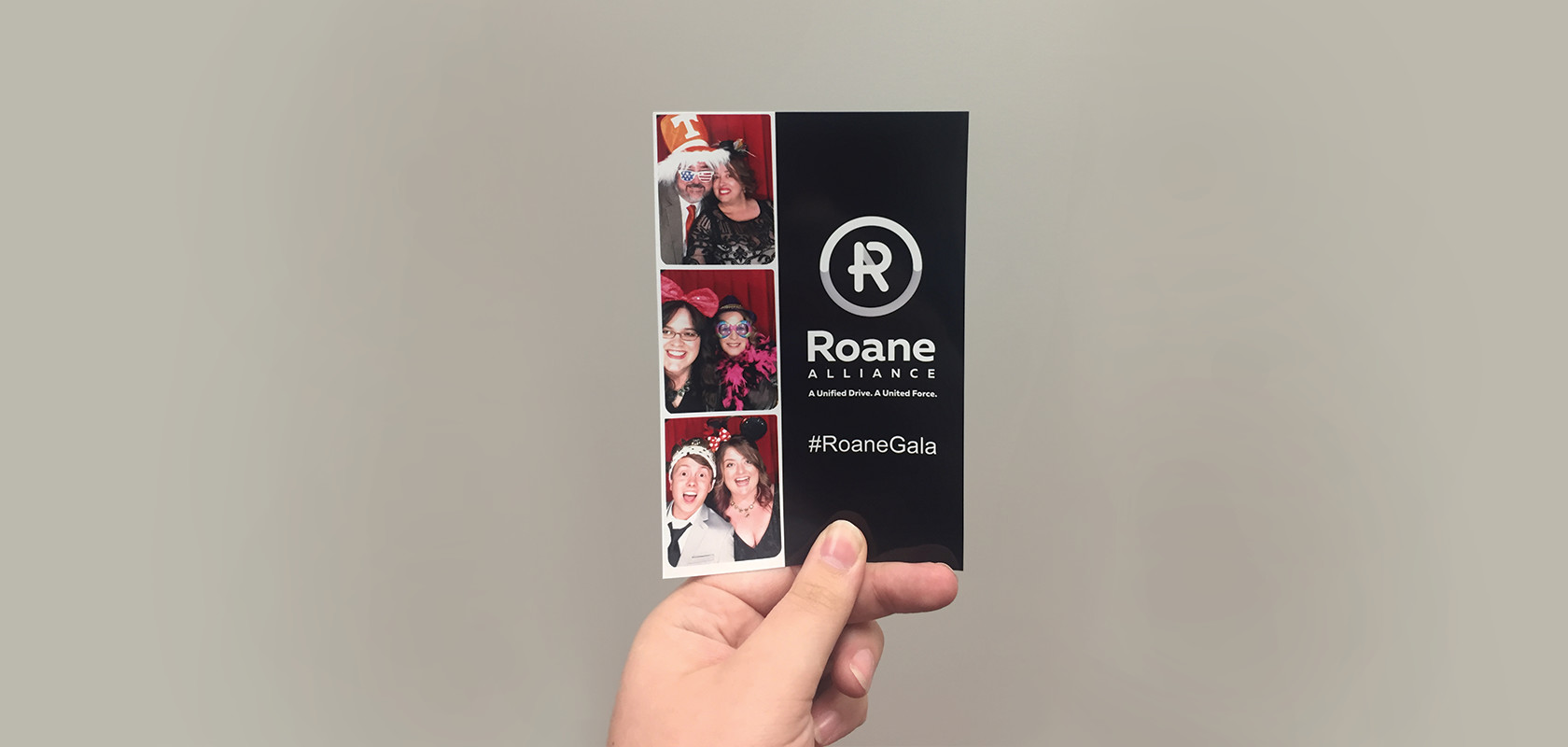
The first weekend in November, a group of DSers took a short road trip from Knoxville to neighboring Lenoir City in Roane County to celebrate and support the Roane Alliance at their annual Gala. We’ve been a proud partner of the Alliance for over a year now, collaborating to create print and digital collateral, a marketing plan and a website for each alliance partner.

We enjoyed an evening of wine, ice cream, fine dining, dancing and photo booths at the Volkswagen Distribution Center in one of Roane County’s business parks—we’re particularly proud of our mad dash through the photo booth.

We also enjoyed the live and silent auctions with Bear Stephenson, where several DSers got a head start on their Christmas shopping (for themselves or others, you ask? We’ll never know). Among the many items on the list were jewelry, a shih tzu puppy, a settlers hat from the Republican National Convention and many other surprising finds for Roane peeps. The Roane Alliance also honored David Webb, owner of Rocky Top Market, into their Hall of Fame. 

The highlight of the evening, for our team, was the debut of the economic development video produced as a part of the collaboration between our team and our friends at PopFizz.

We capped off the evening with DJ Sterl the Pearl, who raced over after the Vols’ win.

Congratulations to our friends at the Roane Alliance for another successful event. See you next year!


What We’re Reading in November 2016

Posted on by Chris Talbert

Dr. Suess said it best, “The more that you read, the more things you will know. The more that you learn, the more places you’ll go.” Here are some recent reads a few of our team members found inspiring in the month of November. 

Kristen Halverson, Content Specialist

In his book “Topsight: A Guide to Studying, Diagnosing, and Fixing Information Flow in Organizations,” Clay Spinuzzi explains why you should research your own organization, how to get others on board and how to execute the study. “Complex organizations develop complex problems, problems that might involve values, interpretations, culture clashes, roles, rules, confusing tools, and even unspoken habits … (that) are often undefined.” Achieving topsight into your organization will give you a unique vantage point and help you find the source of problems.

Krista Gilbert, Project Management Intern

Currently, I’m reading “The Confident Woman by Joyce Meyer, a book about how to live confidently in everything you do. Since I’m about to graduate college and start working full-time, I can’t help feeling a little intimidated by all of the new responsibilities and changes about to take place. This book has reminded me to be confident in all that I do, something I’d recommend it to all women in whatever stage of life they are in.

Susan Hamilton, Content Developer, Editor

Telex From Cuba” by Rachel Kushner caught my eye because I once knew a man who was swept up in the Cuban Revolution when he was just a teenager (Shot in a skirmish! Hidden in a cave! Smuggled out by a CIA agent! No, really.). This layered novel, set among an oddball community of expat Americans, is a reminder to pay more attention, to be more sensitive to the nuances of what coworkers and clients say and do (or don’t). Communication means everything in marketing. Miss the little things, and you’re bound to miss some of the big things as well.

For more inspirational reads, check out the rest of our blog.