Author: Hunter Foster

Smart Glasses are Having a Moment This Summer

Posted on by Hunter Foster

But this isn’t the first time. Back in 2016, while one of our team members was in New York, they tracked down a Snapbot, a bright yellow vending machine with a single blinking eye. And, after feeding it $129.99, it spit out a pair of glasses — the Snapchat Spectacles.

If you weren’t following tech news that year, or if perhaps I’m aging myself, Snapchat didn’t sell its first glasses online or even in stores. Hell, not even in a pop-up retail space. It dropped vending machines in random locations around the country and let online hype do the rest. 

And we bought in. We got two pairs, actually, and filmed some delightfully weird circular-format video, and mostly confirmed what everyone eventually figured out: they were fun, the aesthetic was a little corny, and nobody wanted to actually wear them around.

After a few months, it simply became a footnote in our relationship with experimental camera tech. When a new way to capture content shows up — GoPros, gimbals, drones, 360 cameras — we’re more than happy to try it all. A lot of it ends up in a drawer, but some of it changes how we shoot.

That brings us to right now, because for the first time in a decade of false starts, smart glasses aren’t a gimmick anymore. Meta has sold somewhere north of 10 million pairs of its Ray-Ban glasses (7 million in 2025 alone). We’ve got Kylie Jenner wearing a rhinestone-studded pair. iShowSpeed is jumping out of a plane wearing them. Smart glasses are here, and this time it’s not Google, not Snapchat — it’s Meta at the helm. 

So let’s talk about why this attempt is working, why every previous attempt face-planted hard enough to break those same glasses in half, why there’s real controversy brewing, and what any of it means for the work we all do.

Why did everyone before Meta fail?

The graveyard of smart glasses is instructive because almost every failure comes down to the same thing: they looked like tech or a toy.

Google Glass (2012) was the original sin. It was a titanium band with a prism floating over one eye — my personal favorite comparison is that it looks like a power scouter from Dragon Ball Z. It didn’t matter what it could do. Nobody wanted to be the person wearing it, and “Glasshole” entered the dictionary before the product even shipped.

Snapchat Spectacles (our beloved 2016 pair) had the opposite problem. They looked almost normal, a bit like something you could buy off a rack from a souvenir shop at any beach town, but with a big yellow camera ring on the corner that screamed: “I am recording you.” They went viral off marketing and novelty, then died. They sold 22,000 pairs in the first year. The pendulum would swing in multiple directions after that as, to this day, Snap is still releasing new iterations of the Spectacles. In 2018, they released Spectacles 2.0 (lighter frames, more colors). The very next year, they released Spectacles 3 (new design, HD cameras and some 3D tech). Yet another year later, they releasesed the Spectacles 4 in 2021 (another redesign, computer vision and new software). In 2024, the Snap went all in on Augmented Reality with the Spectacles 5, and is still at it, by the way — its new $2,195 AR “Specs” launched recently to a near-universal thud. They’ve picked a different offering, type of consumer and pricepoint than Meta.

Let’s look at GoPro, arguably the most successful “wear a camera” product ever, deliberately stayed in its lane. It was marketed as gear, as camera equipment. Something for ski runs and mountain bike trails, not brunch. That framing made it acceptable, but it also capped its potential.

Imagine you invited me to brunch and I had a helmet and an action camera or even an AR headset on (I’m not saying I won’t, by the way).

Anyways, the pattern across all of them was visible tech on your face reads as nerdy at best and creepy at worst and lack of mass market appeal. Nobody solved that until Meta partnered with the most powerful glasses company of all time, and some malicious users began to hide that they were recording.

Why Meta is winning now

Meta’s masterstroke was the 2021 partnership with EssilorLuxottica, the company behind Ray-Ban and Oakley. Instead of inventing a futuristic-looking device, they put cameras, speakers, and microphones inside a Wayfarer — one of the most familiar, most beloved frame shapes on Earth. The tech didn’t jump out. It disappeared into the fashion.

It’s been successful in three disctint ways:

  • Fashion first, tech second. Mark Zuckerberg has said, essentially, that these have to be glasses people want to wear even if the tech didn’t exist. That means celebrity co-created models (rhinestone details and Kylie Jenner). Or making a more capable version of what you already were wearing in Meta’s Oakley line, which targets the GoPro, outdoor, athlete crowd. Multiple styles for multiple identities.
  • Right fit, right time. The hardware is small, light, and fast enough. The photo and video output are high-quality, while the desire to create content is at an all-time high. The features list aligns to what people actually want in their daily lives — content capture, phone calls, music, voice commands and chat.
  • AI is the reason to believe. This might be the biggest shift — the emphasis on Smart. The pitch is no longer “record everything you see.” That’s the creepy version. The pitch is “your AI assistant can see what you see.” Ask it about the painting in front of you. Get live translations. Have it walk you through a recipe. The camera becomes a feature of the assistant rather than the point, which gives everyone a semi-socially acceptable reason to have one on their face.

And there are genuinely great use cases emerging. The most compelling story in this whole space is accessibility: blind and low-vision users pairing the glasses with Be My Eyes to have a volunteer (or the AI) read menus, sort mail, and navigate the world hands-free. Display versions can put live captions over conversations for people who are hard of hearing. That’s real change in the lives of people coming in the form of a (relatively) easily accessible device. 

Okay, now the uncomfortable part

Here’s the flip side, and the part users and marketers need to be aware of. We now have a recording device that’s nearly indistinguishable from a regular pair of glasses, and social norms haven’t caught up.

The glasses do have a privacy LED that lights up while recording. In practice? Many people don’t know what that little light means. And tutorials for covering or disabling it are all over TikTok. Entire genres of shock content — like creators secretly filming strangers without consent and posting the interactions — have built million-follower accounts on exactly this loophole. Interviews have surfaced where people only discovered they’d been filmed when the video went viral.

The legal landscape is a patchwork. Recording in public is generally legal in the U.S., but roughly a dozen states require all parties to consent to a recorded conversation — which matters if your content involves audio of people who didn’t agree to be filmed. Other places are moving faster: the EU’s GDPR requires explicit consent, South Korea mandates a loud shutter sound on phone cameras, and U.S. jurisdictions are starting to ban the glasses in courthouses and behind the wheel. Employers out there are writing “no glasses in meetings or bathrooms” policies as we speak.

There’s also a data question hiding under all of this. A Swedish newspaper investigation found that footage from users’ interactions were being reviewed by human contractors overseas — including deeply private moments people assumed only a machine would ever see. And Meta has reportedly (and allegedly) developing a facial-recognition feature called NameTag that would let wearers identify strangers on the street, a project that’s drawn opposition from more than 70 civil liberties organizations. 

In short, the opposition is: these glasses are normalizing surveillance, and your data may not be as private as you think. 

What marketers need to know

So where does that leave those of us making content and potentially embracing these wholeheartedly?

  • The POV format is real, and it’s only growing. First-person footage has an intimacy that b-roll can’t fake — it’s a huge part of why glasses content performs on social. For tourism, hospitality, and experience-driven brands, “see it through my eyes” is a genuinely useful creative tool. We’ve been experimenting with it since the Spectacles days, and this generation of hardware is the first that’s actually very production-friendly.
  • Consent is now a production line item. If you’re shooting glasses content in public — or briefing creators and influencers who will — build consent into the workflow. Releases for identifiable people, awareness of two-party consent states, no covered LEDs, ever. Treat it like a “real” camera. Backlash against creators who film people unaware should tell you everything about where public sentiment sits.
  • Vet your influencer partners’ capture practices. The creator who’s great at glasses content and the creator who built an audience on secretly filming strangers can look identical in a media kit. Ask how footage gets captured before your brand rides along in it.
  • Watch the adoption curve, don’t chase it. Even the most enthusiastic reviewers describe today’s glasses as, day to day, “glorified headphones.” Battery life measured in minutes for heavy AI use, headaches after long wear, and no killer app yet. Realistic mainstream adoption is probably five to ten years out. This is a start-experimenting moment.
  • And keep an eye on the ad layer. Every major platform shift eventually becomes an ad product. A device that sees what millions of people see, all day, is the most valuable targeting data ever assembled. When that inventory arrives, the brands who understand the format — and the trust issues around it — will be way ahead.

TLDR: We’ll still keep a pair in our camera bag. They don’t yet belong next to the Spectacles in the drawer. But this time, we’ll be a bit more careful before we hit that record button.

How Compelling Is Your Personal Brand?

Posted on by Hunter Foster

This article originally ran in the Knoxville News-Sentinel.

Most consultants and agencies in my field of marketing and communications focus almost exclusively on positioning and selling their clients’ products and/or services (of course).

However, as a result, they sometimes end up ignoring the development and strengths of their own brand. It’s a classic case of the “shoemaker’s children having no shoes.”

Sometimes the most successful third-party marketers are the worst at promoting themselves, and beyond consultants and agencies, this also applies to marketing and communications professionals within corporations. The reality of today’s fast-paced and demanding world is that the people who are best at messaging and promotions frequently don’t apply this same thoughtfulness and these same skill sets to themselves.

It’s important to think about “personal branding” at every stage of your career, regardless of what your chosen career field is. In addition to doing the job for which you were hired, it’s smart to consider how your accomplishments on behalf of your employer or client can also be beneficial to the mastering of your own professional brand and the communication of your growing skill set over time.

Start by thinking of yourself as a “product to be packaged and sold,” and ask yourself the following questions:

  • What are my primary strengths and “product differentiators?”
  • What are my accomplishments as a skilled marketer/communicator in my professional field thus far?
  • What have I learned to do that enables me to do these things outside of my current employment situation?
  • What words and proof points best describe my skill set?
  • How can I best articulate my Unique Selling Proposition?

It’s always a little tempting to over-embellish resumes and use a bit of exaggeration, which can lead your reader down a path that doesn’t truly reflect the realities of your actual experience base. So while you are attempting to put your best foot forward and present the most positive portrait of yourself, don’t stray too far from reality and from those attributes and accomplishments that can be backed up with facts and actual results.

No matter how content you are with your current professional situation, it is important to keep track of your ongoing accomplishments, how you have personally contributed to the growth and success of your profession or industry, and the ways in which you can best communicate your skill set.

Think of yourself as a “living, breathing marketable entity,” continually capture your ongoing successes, and think about how to best package and communicate them to your current and future key audiences.

Cathy Ackermann is the founder of Ackermann Marketing & PR, now a part of Designsensory.

The True Role of Public Relations Today

Posted on by Hunter Foster

This article originally ran in the Knoxville News-Sentinel.

What do audiences, customers, followers and content explorers want today? It’s an ever-changing landscape and is admittedly difficult and sometimes confusing for businesses to navigate, make decisions based upon, and measure relative to cost-effectiveness and end-game goals.

Yes, marketing is changing at an unprecedented pace. After years of distributing content that was previously difficult to measure (and perhaps even unwanted), public relations outreach has come back into its own. It is admittedly less flashy and eye-catching than other outreach efforts at times, but it can be viewed not only through its traditional lens of “third-party credibility,” but also through a related and equally critical lens of “sanity.”

In an era where evidently anyone can say anything anytime about most any topic and claim knowledge of that topic, public relations – at its best and “highest use” – can help cut through the clutter and false facts and can deliver believability. It’s now more important than ever for public relations professionals to do the job for which their profession was originally intended, which is to create honest ways to tell their key audiences what they need to know in order to make well-informed decisions.

PR professionals should not so much be actively selling products and services these days as they should be discussing truthfulness and creating messages for their key audiences that help them make informed decisions as to what products to buy, what causes to support, and where to put their resources. Today’s audiences want stories with underlying values that are honestly displayed and spokespeople who are believable and non-self-serving.

With local news coverage shrinking and fewer reporters than ever, it is incumbent upon these professions to play the role for which it was initially created – and that is to help produce stories with substance and develop spokespeople with credibility, not just loud voices.

With the increasingly important role that AI plays and its admittedly unique ability to bring instant information to the surface, it still cannot explain why a story matters. Human storytellers still have the critical role of curating information and using the tools available only to them to support independent thinking and decision-making.

Cathy Ackermann is the founder of Ackermann Marketing & PR, now a part of Designsensory.

Don’t Leave Marketing Up to the Marketers

Posted on by Hunter Foster

This article originally ran in the Knoxville News-Sentinel.

What?? Did I just say that? Perhaps — as a lifelong marketer — I should explain that statement.

What I mean is that marketing has become too important to exist within a corporate vacuum. In working with many different types of clients, we have a living laboratory in which to study what makes some organizations more high-performing than others when it comes to reaching and motivating their targeted customers and key audiences.

While much of a company’s success in selling its products and services obviously has to do with the quality of their products and their ability to meet a defined marketplace need, an increasingly important factor in that success equation has to do with how the organization approaches the actual task of marketing.

Every company needs to periodically step back and ask itself:

  1. What overall values and goals drive our brand strategy and customer outreach?
  2. What are the necessary capabilities we must have in order to drive true marketing excellence?
  3. And what internal structures and ways of working can we create to better encourage and support our success in this regard?

I would maintain that marketing can no longer be a discrete entity within a company, but rather, it must extend itself throughout the company, tapping into virtually every operational function.

It used to be that the researchers would study and invent a new product; chief financial officers would determine the financial model under which the product would be priced and financially measured; the manufacturing folks would actually make it; the operations side would manage it; and yes, then the marketers would position, promote and help it. It was a fairly linear process. This model, however, no longer works.

Marketing now must be more of a holistic function within a company. Its job is to deliver a seamless experience to the customers — one in which every person at every step of the corporate process is informed by smart data and is infused with a consistent brand purpose and a shared vision of how they want the ultimate customer to interact with the brand and the product.

Cathy Ackermann is the founder of Ackermann Marketing & PR, now a part of Designsensory.

Our Entries for the 61st Annual American Advertising Awards

Posted on by Hunter Foster

We’re so excited to share that our team has officially submitted several standout projects to the American Advertising Federation (AAF) Knoxville Awards.

Being based in Knoxville, Tennessee, we take so much pride in the work we produce for both local and national partners. This year’s submissions span a wide range of disciplines—from immersive branding and AI-driven social content to high-profile web experiences.

Here’s a look at our 2025-2026 Addy entries:

Zoo Knoxville – “Aviary: A World of Wonder” Campaign

  • Best of Show + Gold

For the launch of Max’s Aviary, we built a campaign celebrating macaws as nature’s most vibrant storytellers. Vivid, National Geographic–style portraits and evocative headlines invited guests to see these birds as dazzling, intelligent, and worthy of awe.

  • Credits: Ben Maxey, Chris Cable, Ilana Stark, Kate Ambos

Designsensory – Brand & Website

  • Gold

Our own flagship digital experience! Rebuilt from the ground up, the new DS website embodies our evolved identity: bold, intelligent creativity rooted in strategy. It functions as both a brand flagship and a high-performance business development tool.

  • Credits: Ben Maxey, Joseph Nother, Erik Vass, Ryan Lee

Raptor Coffee Social Media AI Content

  • Judge’s Choice + Silver

To match the bold character of Raptor Coffee, we brought their mascot, Wyatt the Raptor, to life using 3D modeling and cutting-edge AI technology. This project let us create high-volume, high-quality animated content that’s as layered as the coffee blend itself.

  • Credits: Ben Maxey, Hunter Foster, Ilana Stark, Joseph Nother, Chelsea Penticuff, Abby Webb

Bush’s Beans – Bluey Web Campaign

  • Silver

Collaborating with the global phenomenon Bluey, we developed a digital hub for Bush’s Beans that felt like an extension of the Heeler family home. Featuring interactive “sticker” animations and thematic recipes, the site successfully bridged the gap between fan engagement and in-store purchase.

  • Credits: Ryan Lee, Courtney Borgers, Colby Johnson, Kate Ambos

South Dakota Governor’s Office of Economic Development – “Open for Opportunity” Campaign

  • Silver

Tasked with attracting business and talent to the state, we developed the “Open for Opportunity” campaign. By featuring real people from successful companies instead of stock imagery, we built an authentic and persuasive narrative for the state.

  • Credits: Ben Maxey, Joseph Nother, Erik Vass, Ryan Lee, Chelsea Penticuff, Abby Webb

Our Other 2026 Entries:

South Dakota Governor’s Office of Economic Development – Branding

We executed a comprehensive brand architecture overhaul for the South Dakota Governor’s Office of Economic Development. The new system includes a modern brand mark inspired by Sioux tribal motifs, symbolizing precision and momentum.

  • Credits: Ben Maxey, Joseph Nother, Erik Vass, Ryan Lee, Chelsea Penticuff, Abby Webb

Arrowmont School of Arts and Crafts – Branding

Honoring 80 years of legacy, we reimagined the brand for Arrowmont School of Arts and Crafts. The new visual identity features the “Arrowmont Alpha”—a symbol designed for artist reinterpretation—and a modular design philosophy that echoes the creative process.

  • Credits: Erik Vass, Joseph Nother, Ben Maxey, Chris Wise, Ryan Lee, Barry Hylton, Chris Talbert, Courtney Borgers, Mary Blair, Jenna Newton

Good Gravity Entertainment – Branding, Video, Web

To launch our new unscripted entertainment division, we developed a modular, lunar-inspired “G” mark. The identity system is future-proof, anchoring everything from broadcast lower-thirds to responsive web layouts.

  • Credits: Ben Maxey, Joseph Nother, Erik Vass, Ryan Lee

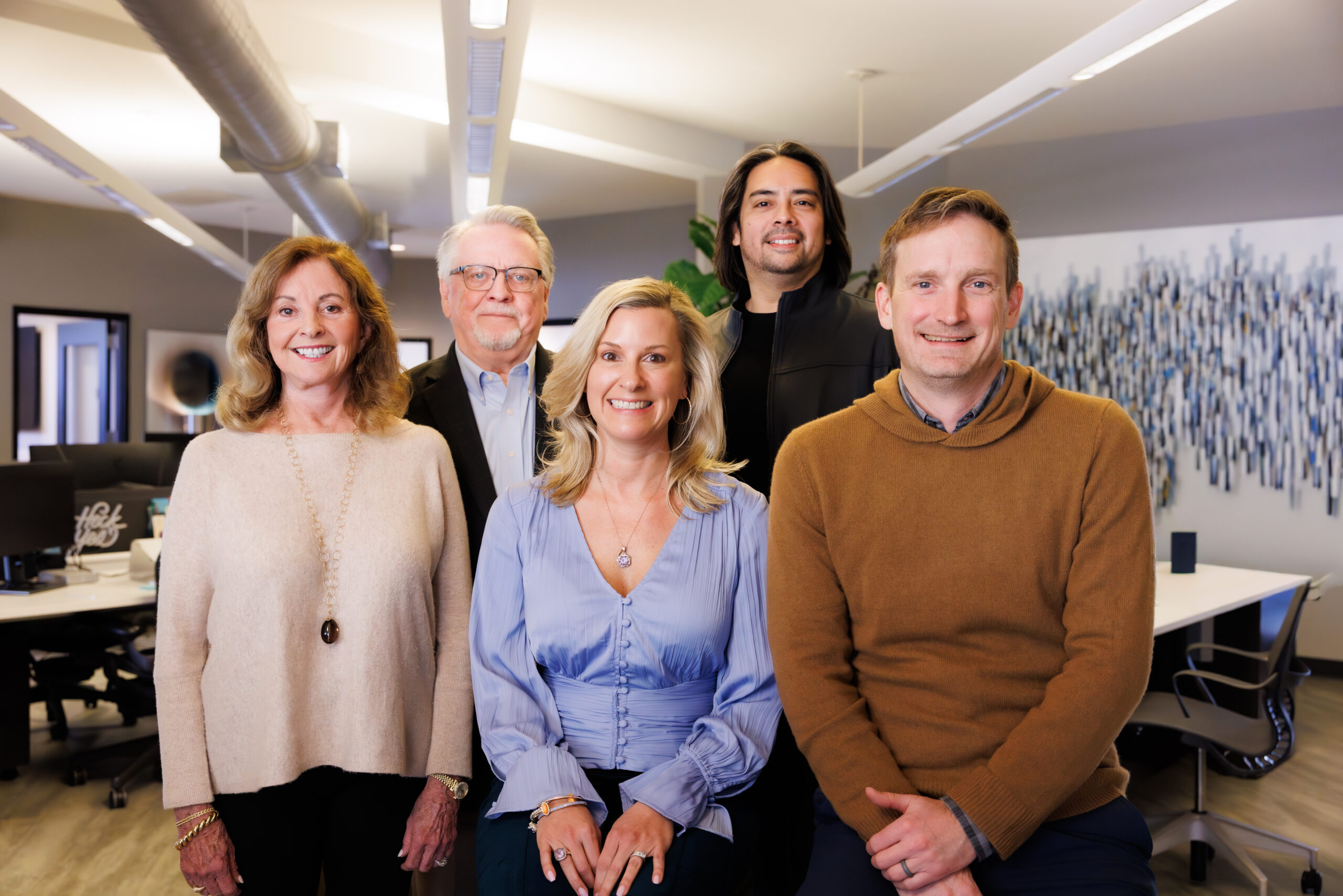
Designsensory Boosts Strategic Communications and Public Relations Capabilities with Ackermann Marketing & PR Integration

Posted on by Hunter Foster

The combined team expands earned media, advisory, and reputation offerings to meet the evolving demands of AI-driven communications

KNOXVILLE, Tenn. – February 17, 2026 – Designsensory, an award-winning branding, digital, and creative agency, today announced a strategic integration with Ackermann Marketing & PR, a nationally respected public relations and strategic communications firm with four decades of proven results. The combination brings together two industry-leading teams, uniting deep expertise in storytelling, digital innovation, brand strategy, PR, and design into one fully integrated agency under the Designsensory brand. 

Ackermann Marketing & PR, founded by Cathy Ackermann in 1982, has built a legacy as one of the most trusted and influential communications firms in the Southeast. Known for its excellence in strategic counsel, crisis communications, thought leadership development, and long-standing client partnerships, the firm has shaped brands locally, regionally, and nationally for more than 40 years.

Designsensory, co-founded by Joseph Nother and Brandon Rochelle, is recognized for its creative excellence, digital-first mindset, research-driven strategy, and award-winning work across industries including tourism, education, healthcare, and consumer brands.

Together, the firms will introduce a new standard for creative and strategic communications in the region and beyond, offering clients a rare combination of insight, innovation, and execution under one roof. As part of the transition, Ackermann Marketing & PR’s team and client relationships will move into Designsensory, creating a seamless path forward for clients while preserving the high-touch counsel and reputation-focused work the Ackermann firm is known for.

“As AI floods the market with more content, what brands need isn’t just more, it’s meaning,” said Joseph Nother, Co-Founder and Principal of Designsensory. “Earned media builds trust where automation cannot. By integrating with Ackermann Marketing & PR, we’re not only strengthening PR, we’re expanding its impact beyond earned media into branded content, original storytelling, and high-engagement channels such as events, experiential activations, and influencer partnerships. This is a strategic leap that pairs creative and digital depth with the credibility today’s audiences demand.”

According to Nother, the transition is designed to ensure continuity, while expanding the depth and breadth of services available through Designsensory’s broader creative, digital, media, and research platform. The combined firm will operate under the Designsensory brand, with expanded strategic services, deeper industry expertise, and a more comprehensive suite of capabilities.

With the integration, Erin Burns Freeman will join Designsensory as Vice President of Communications, leading the agency’s strategic communications and public relations practice. Freeman brings more than 20 years of experience advising brands, institutions, and executives on reputation management, crisis communications, thought leadership, and multi-sector strategic planning.

“This move allows us to deliver for our clients at a much higher level with more integrated, reputation-centered communications solutions,” said Freeman. “Joining Designsensory allows us to build on Ackermann Marketing & PR’s legacy with even greater creative power, digital capabilities, research insight, and storytelling depth. Together, we are creating an agency that is both deeply rooted and boldly future-focused. I could not be more excited for this next chapter, for our clients, our team, and the communities we serve.” 

Cathy Ackermann will support the transition in an advisory role to ensure continuity for clients and to help steward long-standing client relationships during the integration.

“Ackermann Marketing & PR has always been about impact, integrity, and partnership,” said Ackermann. “I have long admired the work and culture of Designsensory as they are creative, innovative, smart, and strategic. This move ensures that our legacy will not only be preserved, but elevated as it creates a unified agency platform that brings together our combined expertise to better support clients across industries and communities.” 

“With this partnership investment, Designsensory is well positioned to become one of the most comprehensive and forward-thinking marketing agencies in the region with national ambition.” Nother added. “I am excited to see what we will accomplish together.”

###

About Designsensory:
Designsensory is a full-service research, strategy, branding, digital, creative, and content agency headquartered in Knoxville, Tenn. Known for its innovation, storytelling, and data-driven approach, Designsensory partners with clients to solve complex challenges and drive measurable results across industries including tourism, education, healthcare, and consumer brands. The agency also includes sister brands Good Gravity, PopFizz, and Designsensory Intelligence (DSI), expanding its capabilities across content production, experiential marketing, and advanced research and analytics. For more information visit www.designsensory.com.

About Ackermann Marketing & PR:
Founded in 1982 in Knoxville, Tenn., Ackermann Marketing & PR is a nationally respected strategic communications firm known for its expertise in public relations, crisis communications, thought leadership, community engagement, and client partnerships spanning decades. Ackermann has helped shape brand reputations across the nonprofit, corporate, government, education, and financial sectors with integrity, insight, and impact.

Our 2025 Year in Review

Posted on by Hunter Foster

As we wrap up 2025, we can’t help but feel incredibly grateful. This wasn’t just a year of growth, it was about strengthening our foundation and getting crystal clear on where we’re headed. With our 25th anniversary coming up in 2026, we’re looking back at a year packed with major awards, strategic acquisitions, and partnerships that truly moved the needle.

Here’s what made 2025 one for the books.

Growing Our Team and Our Capabilities

This year, we made some big moves to level up both our work and our culture.

We brought on some serious talent – Stuart Hohl, Brian Fuson, and Lauren Schuster  – to join our Client Services, Creative, and Business Development teams, and they’re already bringing fresh energy and perspective to everything we do.

We also unveiled our agency rebrand, finally aligning our look with the forward-thinking work we’ve been creating all along.

But the biggest game-changer? Acquiring our sister production company, PopFizz. Bringing their incredible production capabilities in-house means we can move faster and push creative boundaries like never before.

Winning on the National Stage

Our work kept getting recognized in some pretty big places this year.

We took home a National Gold ADDY for our Wicked activation in Regal Times Square—a project that was equal parts crowdpleasing spectacle and behind-the-scenes execution.

And we won a People’s Voice Webby Award for Food Network Obsessed, which shows we’re leading the way in the ever-changing digital and audio world.

Building Partnerships That Matter

From our Tennessee backyard to regional powerhouses, our 2025 partnerships have been all over the map (in the best way):

In sports and entertainment, we deepened our relationship with The Volunteer Club by helping the NIL collective shift into its next era and partnering with them for the launch of a new University of Tennessee athlete interview broadcast series, Beyond the Orange.

We’re supporting The Memphis Chamber (the 2025 ACCE Chamber of the Year) on their innovative Digital Delta initiative, which is economic development work we’re really proud of.

On the tourism front, we’re deepening our roots in Gatlinburg by working with The Greystone Lodge. And, we partnered with the Tennessee Department of Tourist Development to launch a social media training program for counties across the state—something we’re excited to keep building next year.

Our media and experiential team has been busy with Discovery Park of America and Covenant Health, handling everything from influencer partnerships to traditional media buying. While our interactive and creative teams are continuing to grow our longtime relationships with Rock City and Bush’s Beans.

We also kicked off exciting new work with the Bowling Green Area CVB, helping tell their story in fresh ways through research and branding. And we’ve got a surprise up our sleeve—a whisky account we’re not quite ready to announce yet, but trust us, it’s worth the wait.

Where We’re Headed Next

As we head into 2026, a year in which Designsensory will turn 25, we know exactly where we’re focused. We’re leaning into AI to help us do more, faster. By automating the repetitive stuff, we’re freeing up our greatest asset: our people. The goal for 2026? Let technology handle the data and the grunt work, so our team can focus on what humans do best—the strategy, the empathy, and those wild what-if ideas that only people can dream up.

Beyond workflows, we’re also expanding our services to stay ahead of AI’s impact on digital marketing—things like GEO (Generative Engine Optimization)—while doubling down on what we’ve always done well: building interactive tools and systems now powered by AI.

Thanks for an Incredible Year

To our clients, our team, and our community, thank you! We’ve spent 24 years building something special, and heading into year 25, the momentum has never felt stronger.

Let’s keep breaking the mold in 2026. 

Aisle to Algorithm: From Shelf Space to Screen Space

Posted on by Hunter Foster

In 2024, U.S. brands spent nearly $80 billion on social, almost double 2020 levels. Add in TikTok’s rise, Instagram’s influence on food culture, and the explosion of influencers-turned-brand-founders, and the story is clear: the algorithm is now the new aisle. What people see, scroll, or binge is shaping their carts just as much as what they notice in-store. Shelf space still matters, but now screen space holds just as much weight if not more.

That’s a hard pill to swallow for many. For decades, CPG marketing was basically a street fight for shelf space. Endcaps, coupons (aisle dispensers, anyone?), and cardboard cutouts. If you won the aisle, you won the sale.

Shelf space still matters, but today the scroll shapes the cart.

The Old Model vs. The New Reality

  • Old world: Retail was king. You fought for visibility in-store, maybe layered on some coupons or a catchy jingle. Consumers still waited hours outside in the cold for Black Friday deals found in the latest circular only to be nearly trampled by a stampede of fellow bargain hunters.
  • Now: Consumers discover in a dozen places before they ever hit the aisle: Instagram recipes, podcast ads, YouTube pre-roll, TikTok influencers, and the relentless push of deals through a phone app.

In other words, the aisle is no longer the finish line. It’s just one of many pit stops in the consumer journey.

What “Aisle to Algorithm” Really Means

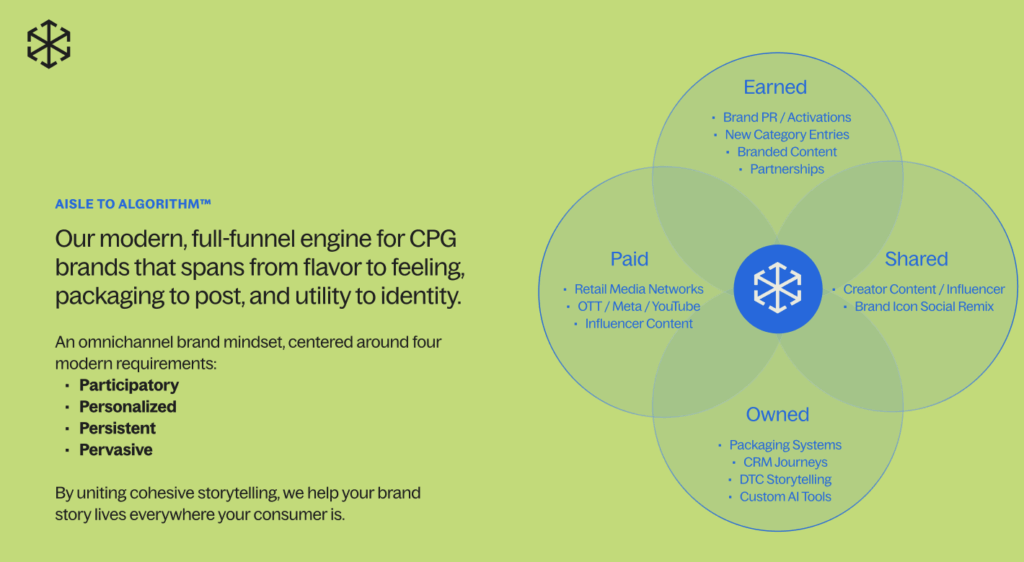
It’s not a buzzword, but it is catchy. Maybe even genius, if I do say so myself. Winning today requires brands to show up across four realities: Participatory, Personalized, Persistent, Pervasive. Let’s break it down:

Participatory: People don’t just buy products, they remix them, review them, and meme them. Your brand needs to be co-created or it won’t be celebrated. Think of it as giving consumers the pen.

Example: Olipop tapped into TikTok by inviting fans to remix their product in wellness routines and mocktail recipes, turning consumers into brand storytellers.

Personalized: Algorithms curate everything, from dinner recipes to what’s in their Amazon cart. Brands must lean into data-driven storytelling.

Example: Magic Spoon leaned on algorithm-driven ads to deliver custom flavor bundles to health-conscious millennials, showing how personalization can drive conversion.

Persistent: Once the cart rolls away, the story shouldn’t end. Smart brands live on in content, rituals, and moments people seek.

Example: Unilever is shifting half of its ad spend to social and multiplying influencer partnerships, demonstrating how legacy brands are working to stay present in the scroll long after the first purchase.

Pervasive: Shelf, screen, and stream aren’t silos. They’re all part of the same funnel. When your brand shows up everywhere with consistency, it feels less like advertising and more like belonging.

Example: Graza built ubiquity by pairing striking packaging with viral Instagram and TikTok moments, creating consistency across shelf and screen.

Challenger vs. Legacy: Two Paths to the Same Shelf

  • Challenger brands like Olipop, Magic Spoon, Graza, and Fishwife prove how a social-first approach builds momentum that eventually translates into retail success. Screen presence pulls them into the aisle.
  • Legacy brands like Unilever and PepsiCo are learning to invert the old model, using social-first strategies to keep their dominance as consumers shift attention away from shelves to screens. Aisle visibility now follows algorithmic relevance.

Both paths point to the same truth: screen and shelf are inseparable.

Opportunities for CPG Brands

  • Retail Media Networks: The new prime shelf.
  • Influencer & Creator Spaces: Digital word-of-mouth with infinite reach.
  • DTC Storytelling: Build loyalty beyond the promo code.
  • Media & Memory: Own the moments that stick, from podcasts to OTT.

The Takeaway

Aisle to Algorithm isn’t about abandoning retail. It’s about making sure your brand story lives everywhere your consumer is. From packaging to post, utility to identity, the brands that succeed don’t just show up—they show up in ways people remember, repeat, and share.

Because today, algorithms don’t just decide what you binge-watch. They’re deciding what you cook, crave, and carry home.

A Question-Based Challenge

You’ve seen what it takes to win in this new era. But let’s be honest: is your brand built to be participatory, personalized, persistent, and pervasive?
Is your social strategy just a series of posts, or is it a cohesive story that pulls consumers from the scroll to the shelf? Are you treating retail media like an afterthought or the new prime real estate it is?

The aisle to algorithm journey is a a race for relevance, and the winner will be the one who owns the story on and off the shelf.

Designsensory Wins National Silver ADDY for Regal’s Wicked OOH Installation

Posted on by Hunter Foster

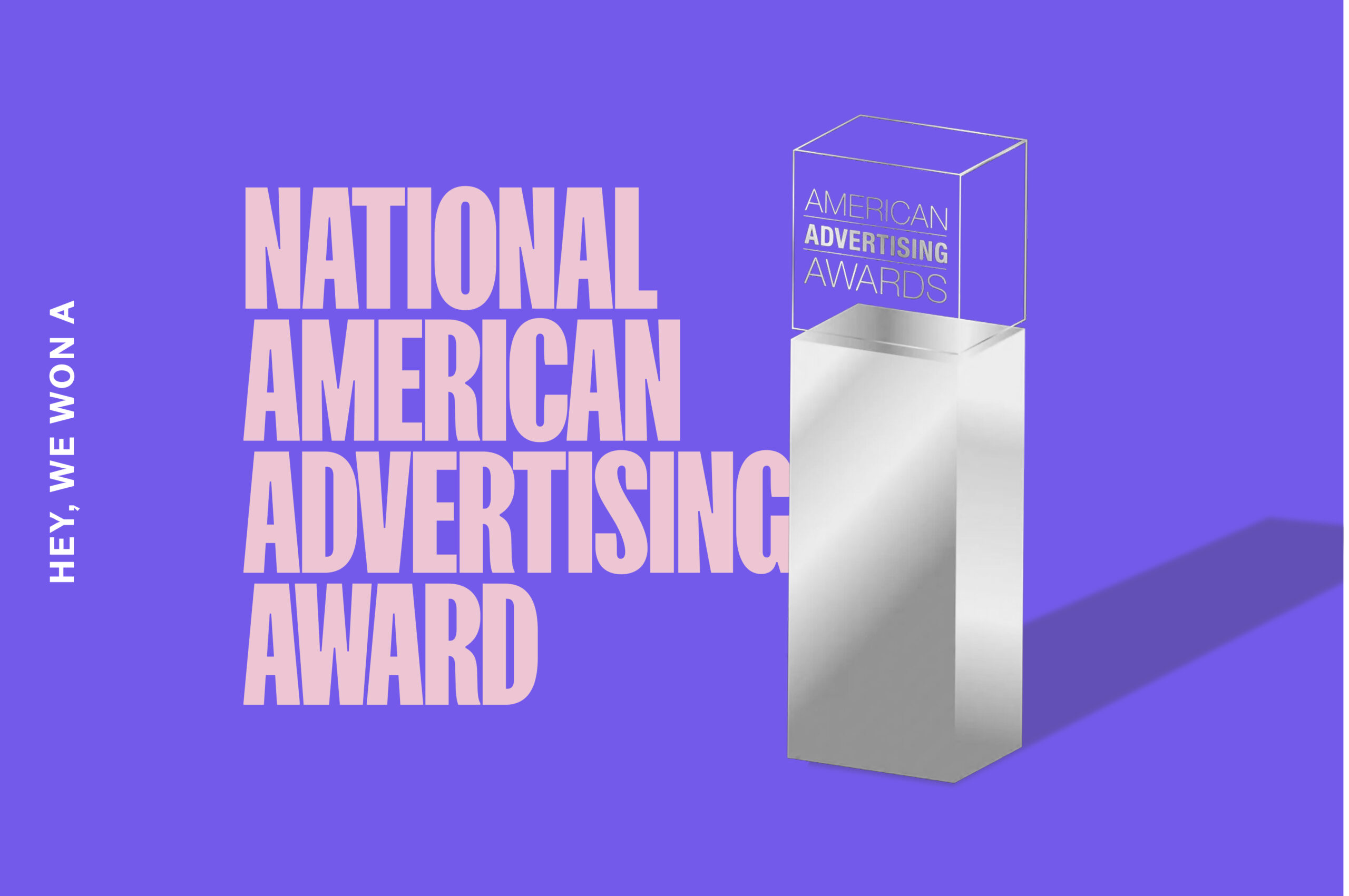
We’re proud to share that Designsensory has been honored with a National Silver American Advertising Award (ADDY) for our work on a one-of-a-kind out-of-home (OOH) installation promoting Wicked for Regal Cinemas.

This immersive experience brought the magic of Oz to life in a Regal lobby in New York City, where influencers were greeted by a massive screen and a mysterious, booming voice from “behind the curtain.” Just like the Wizard himself, our live performer (our very own Brad Carpenter) interacted with guests in real time, welcoming, joking, and surprising audiences with personalized banter. The result? A theatrical, larger-than-life experience that blurred the lines between marketing and movie magic.

The activation transformed a simple lobby into a moment of wonder and connection, perfectly aligned with the spirit of Wicked, and drew crowds that lingered, laughed, and shared.

Our thanks to the Regal team, who helped make the vision real through creative, technical, and logistical wizardry to the table. This award is a recognition of what’s possible when experience design meets showmanship.

More to come—this is only the beginning.