Author: Hunter Foster

Designsensory Co-CEOs Joseph Nother and Brandon Rochelle Honored with Webb School “Distinguished Alumni Award”

Posted on by Hunter Foster

Recognition comes as longtime friends and business partners celebrate Designsensory’s 25th anniversary

As Designsensory marks 25 years of creativity, innovation and growth, Co-CEOs and co-founders Joseph Nother and Brandon Rochelle have received a recognition that brings the agency’s story full circle: Webb School of Knoxville’s “Distinguished Alumni Award.”

Nother and Rochelle, both members of Webb’s Class of 1999, were honored during the start of the school’s Spartan Alumni Weekend on Thursday, Sept. 10. One of Webb School’s most prestigious alumni honors, the “Distinguished Alumni Award” recognizes graduates whose professional accomplishments and service to others exemplify the ideals of the school.

The recognition carries particular significance during Designsensory’s 25th anniversary year. Long before they became business partners, Nother and Rochelle were friends and classmates at Webb. While still in college – Nother at the University of Tennessee-Knoxville and Rochelle at Johns Hopkins University – they recognized that their distinctly different strengths could complement one another and began building what would become Designsensory.

Twenty-five years later, that partnership has grown into a nationally recognized independent creative agency bringing together strategy, creative, technology, research, marketing and content production for regional and national brands.

“Receiving this recognition together, especially during Designsensory’s 25th anniversary, makes it incredibly meaningful,” said Nother. “Brandon and I started as friends who saw something in each other that we knew could become something bigger. Webb was an important part of shaping who we were then, and it’s rewarding to look back 25 years later at what that friendship, curiosity and willingness to think differently helped us build.”

Since its founding in 2001, Designsensory has grown from a two-person venture into a multidisciplinary agency of more than 35 professionals, with its work earning Emmy, ADDY, Telly and Webby honors. The agency’s portfolio has included brands such as Bush’s Beans, Biltmore, Dalmore Scotch, Visit Gatlinburg, Regal Cinemas, NASCAR, HGTV and Tennessee Tourism.

Throughout that growth, Nother and Rochelle’s complementary perspectives have remained central to the company. Nother brings a background spanning design, brand strategy, advertising and creative leadership, while Rochelle has helped drive the agency’s technology and digital capabilities, including e-commerce, digital platforms and emerging technologies.

Their return to Webb also provided an opportunity to look forward. In addition to accepting the award, Nother and Rochelle spoke with students across Webb’s three divisions about entrepreneurship, friendship, learning and the changing role of technology and artificial intelligence.

Those conversations echoed a theme guiding Designsensory as it enters its next chapter: “Built for What’s Next.”

“Twenty-five years teaches you that technology will continue to change, sometimes dramatically, but the ability to adapt, stay curious and surround yourself with people who challenge your thinking remains incredibly important,” said Rochelle. “That’s something Joseph and I learned early, and it continues to shape how we think about Designsensory and where we go from here.”

For Nother and Rochelle, the award represents both a milestone and a reminder of where the Designsensory story began, with two friends whose different talents and perspectives became the foundation for a 25-year partnership.

As Designsensory celebrates its first quarter-century, the recognition also underscores what has remained constant throughout its evolution: a belief in the power of people, ideas, collaboration and the willingness to continually ask what’s next.

Photos available for media use.

About Designsensory:
Founded in 2001, Designsensory is an independent creative agency that solves marketing and technology challenges through an integrated approach to strategy, creative, technology, research, marketing and content production. Headquartered in Knoxville, Tenn., Designsensory works with regional and national brands to create ideas and experiences designed to connect with audiences and drive meaningful results. As the agency celebrates its 25th anniversary in 2026, Designsensory remains focused on the philosophy that has shaped its evolution from the beginning: Built for What’s Next.

MEDIA CONTACT:
Erin Burns Freeman
Vice President of Communications, Designsensory
[email protected]

Is the Future of Social Media and Video Content 4:3?

Posted on by Hunter Foster

I recently debated a simple-sounding question with a creative director: what’s the best format for video?

Coming from a social media background, I felt the answer was obvious. Vertical. It’s what most people prefer when it comes to consuming content, and on social it’s been that way for years. Video in feeds went from wide to square, square to portrait, and portrait to full-screen vertical — a natural progression.

TikTok lit the fuse. Its explosion pushed every other platform toward an algorithmic, full-screen feed, mostly out of fear of losing screen time to it. And to me, that only made the case stronger. If the algorithm rewards vertical video, it’s because that’s how people want to (or do) watch. And if that’s how people want to watch, it’s the best format—for a social media marketer, at least.

Underneath all the user behavior and platform talk was the simplest argument: “it’s just because of our phones, vertical is the path of least resistance”. It’s the device we spend more time with than any other, and we hold it upright. The dominance of vertical video was basically pre-ordained. A byproduct of the hardware.

And his position? Well, it was that of the artist’s perspective — “4:3 is the best format, just look at film.”

Just a few weeks after that conversation — thanks to Apple— his argument should perhaps no longer be limited to (in my mind) that of the artist, or the creator, or the nostalgic child of the ’80s and ’90s. But instead, it should be adopted by the marketer.

So, why should the aspect ratio of the past–the same one that was the shape of the TV some of us grew up with and the old family camcorder–be what we pursue in marketing?

Because it’s having a moment. And for the first time in 20 years, the hardware in our pockets is starting to lean its way.

The Box is Back

4:3 content is mostly showing up in two places.

On Instagram, it appears in the feed and in Reels as horizontal video that doesn’t try to fill the screen. It sits in the middle of the display with room around it or nestled into the post UI. On YouTube, it shows up in long-form vlogs, music videos, and short films that pick the boxy frame on purpose even though 16:9 is the default.

The creators I see using it most often tend to fall into a handful of groups:

  • Photographers and filmmakers who think in frames, not feeds. Many shoot film, in 4:3 on DSLRs, or on an iPhone.
  • Fashion and lifestyle creators building a curated, editorial look, the kind of account that feels like a magazine instead of a livestream.
  • Skate, music, and subculture creators, where 4:3 comes straight from the VX1000, MiniDV, and early-2000s music video look.
  • Travel and lifestyle vloggers, whose content is about atmosphere and pace more than performance and tip-sharing.

They’re choosing the format for what it says, not for the algorithm.

Why the Box Feels Better

Some of it is nostalgia, but not all of it.

The nostalgia is real. For millennials, 4:3 is the shape of Saturday morning cartoons, home movies, and the family computer. For Gen Z, it’s a borrowed memory. It’s the reason there’s a thriving resale market for 2000s point-and-shoots and the reason apps like Dazz and Huji exist. The boxy frame reads as analog, personal, and a bit handmade, which is the opposite of the edge-to-edge, algorithm-first look that dominates most feeds.

It’s a portrait frame. Film has known this for a century. The Academy ratio (1.37:1) is where cinema started, and filmmakers keep returning to boxy frames when they want intimacy. Wes Anderson used it for the 1930s sections of The Grand Budapest Hotel. Robert Eggers went almost square (1.19:1) for The Lighthouse. Zack Snyder released his cut of Justice League in 4:3. A boxier frame gives more space to the human figure and less to the scenery, so the subject fills the frame, and the viewer’s attention stays with them.

It signals taste. A few years ago, a corner of the internet started calling posts that read as high-quality and high-effort as “Instagram Premium”. While this wasn’t applicable only to 4:3 video content, it became a signal that people were welcoming a break from lo-fi, low-effort, and (during this time) slop. I’d say that still holds true, and the logic makes sense when applied to 4:3. A video that fills your phone is asking for your attention. A 4:3 video with a border around it, like a picture hung on a wall, is asking you to look at it. It belongs to a wider pushback against vertical-only feeds, the same impulse (and novelty) behind Instagram’s “thinnest video” trend.

And it’s the shape the camera actually captures. This is the point most people miss. Smartphone camera sensors are natively 4:3. Every standard photo your iPhone takes is 4:3. The 16:9 horizontal video and the 9:16 Reel are both crops, cutting pixels off the top and bottom or off the sides to fit a screen. So 4:3 isn’t a retro filter. It’s the whole picture.

Hollywood Proved It, Again

If you want to see how much people care about aspect ratio, look at this summer’s biggest film conversation.

Christopher Nolan’s The Odyssey, released July 17, was shot entirely on IMAX film cameras. That meant it was shown in a spread of formats: 1.43:1 in IMAX 70mm, 1.90:1 in digital IMAX, 2.20:1 in 70mm and 2.39:1 in standard 35mm. The internet responded the way it does now, with memes and side-by-side comparison posts showing the same shot in each ratio, the tall IMAX frame towering over the letterboxed versions.

The IMAX 1.43 frame shows about a third more picture than the 1.90 digital IMAX version. The comparisons went viral because people could see what they’d be missing, and seeing it in the 70mm IMAX experience was, in short, the prestige way to watch.

A funny aside: the home release, scheduled for November, is reportedly 16:9. So the version most people will watch on a TV or phone is a crop of the one everyone was arguing about, and it makes the limited and exclusive experience of 70mm all the more special.

That’s the whole story in one film. Audiences are more aware of aspect ratio than they’ve ever been, and they’re treating the boxier frame as the premium experience.

The Hardware is Bending (or Folding) Toward the Box

For 15 years, phone screens got taller and narrower, and content followed. That’s starting to change with the introduction of the foldable phones.

First, Samsung. The Galaxy Z Fold 8, announced July 22, moved its 7.6-inch inner display to a 4:3 aspect ratio, a wider, passport-like shape that breaks from the tall, narrow foldables before it. Samsung’s Jay Kim, EVP and Head of the CX Office, called it “the new standard for viewing content,” and pointed to the way people actually use their phones: scrolling Reels and TikToks, reading and watching.

Then Apple. The iPhone Duo, Apple’s first foldable, was announced September 9. It has a 7.6-inch inner display and a 5.4-inch outer one, and Apple says both share the same aspect ratio so content carries over seamlessly between folded and unfolded. Unfolded, it’s been compared to an iPad mini, a device that’s been 4:3-ish its whole life. It starts at $1,999 and ships October 23, another premium.

Now do the math on how content fills these screens:

  • On a standard phone held vertically, a 4:3 video fills about 42% of the screen. A 9:16 Reel fills all of it.
  • On a 4:3 foldable display, a 4:3 video fills 100% of the screen. A 16:9 video fills about 75%. A 9:16 Reel held upright fills only about 56%, with bars on both sides.

Put simply, the letterboxing that makes 4:3 look out of place on today’s phones moves to vertical video on tomorrow’s. The format that “wastes” space now is the one that fits perfectly on the new screens.

Instagram is already moving in the same direction. In early 2025, it changed the profile grid from squares to 3:4 rectangles, and a few months later it started accepting 3:4 uploads without cropping. That’s the same boxy shape turned on its side, and it matches what the camera captures.

How You Can Make 4:3 Today: Open Gate

Then there’s the production side.

“Open gate” is a term from cinema cameras. It means recording the entire sensor instead of a cropped 16:9 portion. On cinema rigs, it’s been a pro feature for years. With the iPhone 17 Pro, it came to the phone.

Using Apple’s Final Cut Camera app or the Blackmagic Cam, the iPhone 17 Pro can record open gate video in ProRes RAW at 4224 × 3024. That’s the full 4:3 sensor, in Apple Log 2 for serious color grading. Filmmakers were pushing it further within weeks of launch, and a growing group of third-party apps, like OpenCam, offers similar access.

To be clear, it isn’t a one-tap feature in the regular Camera app. The files are huge, you’ll usually record to an external SSD over USB-C, and it’s aimed at people who already think like filmmakers. But in two years, open gate went from a feature of cameras costing tens of thousands of dollars to something a creator can do with a phone and a pocket drive.

And the most important thing about open gate isn’t that it gives you 4:3. It’s that it gives you every ratio.

The Case Against 4:3

To be fair, here’s what cuts against the trend.

9:16 still wins on reach. Reels, TikTok, and Shorts are built for full-screen vertical video. A 4:3 video on a standard phone leaves more than half the screen empty, and on platforms that reward watch time and immersion, that can hurt retention. The “premium” look has a cost in performance, and most brands can’t ignore it.

Foldables are still a niche. The Z Fold 8 starts at $1,899 and the iPhone Duo at $1,999. Foldables are a small slice of the phone market, and even with Apple joining in, most people will be watching on regular slab phones for years. Designing for a device your audience doesn’t own yet is a bet, not a plan.

Paid social doesn’t use 4:3. Meta’s ad placements are built around 9:16, 4:5 and 1:1. For now, 4:3 is an organic, brand-building choice, not a performance format.

Once everyone does it, it stops standing out. Much of 4:3’s appeal is that it signals taste. If every brand adopts it next quarter, it loses that meaning. Filters, grain and borders have all gone through this cycle.

The real answer may be “no ratio at all.” With open gate capture and AI reframing tools improving fast, aspect ratio is turning into a choice you make after the shoot. Shoot the whole sensor and deliver whatever each screen needs.

So, is the Future 4:3?

Yes, just not in the way the question suggests.

4:3 won’t replace vertical video. 9:16 is too deeply built into how platforms deliver and reward content. But 4:3 is becoming three things at once:

  1. The master format. It’s what the sensor records and what open gate captures, and every other ratio is cut from it. The future of production is shooting 4:3 and delivering everything.
  2. The native shape of the next screens. As foldables go mainstream, 4:3 stops being the ratio that wastes space and becomes the one that fits.
  3. A creative choice that means something. In a feed full of edge-to-edge vertical video, a boxy frame tells people to slow down and look. It’s a small provocation, and it works.

The future isn’t one aspect ratio. It’s not committing to one too early.

What This Means for Brands

If you’re making content in 2026, here’s how we’d approach it:

  1. Capture wide, deliver narrow. Where production allows, shoot open gate or the full sensor. One shoot can deliver 9:16 Reels, 4:5 feed posts, 16:9 YouTube, and 4:3 hero content without reshooting. That’s the most practical efficiency in this whole trend.
  2. Use 4:3 where the goal is brand, not reach. Hero films, brand manifestos, destination storytelling, and craft and product pieces are the places where “look at this” beats “don’t scroll past.” Travel and tourism brands especially: landscapes with people in them are exactly what the boxy frame does best.
  3. Keep 9:16 as your performance workhorse. Paid social and most short-form distribution still belong to vertical. Don’t give up reach for looks.
  4. Frame for the center. If you’ll crop one master to several ratios, keep the key action and any text in the middle of the frame. Composition is now a distribution strategy.
  5. Test for the foldable now. Preview your content on a 4:3 screen, or at least a tablet. Check how your vertical assets look with bars on both sides. By the time foldables are common, you’ll already know.

The screen is changing shape again. The brands that come out ahead won’t be the ones that guessed the right ratio. They’ll be the ones that shot the whole picture.


Customers Want Convenience on Their Terms

Posted on by Hunter Foster

This article originally ran in the Knoxville News-Sentinel.

Increasingly, people are trying to do more with less time. Urbanization, lean organizations and global competitiveness have all converged to force people and businesses into a frenzied pace to be more productive and time-sensitive than ever before, creating a growing group of time-pressed consumers who emphasize convenience above all else.

Customer expectations across-the-board have changed dramatically due to an “on-demand” culture, fed by well-known, on-demand experts such as Amazon Prime, Uber, Grub Hub and others.

So what does convenience really mean to your customers? Some businesses view customer convenience as “making it slightly easier” to buy their products or to do business with them.

Wrong! Customers want ultimate ease of purchase in all parts of the buying continuum – not just the main transaction or point of sale. And research shows that convenience is quickly emerging as the single biggest driver of long-term customer loyalty. In fact, the customer conversion journey is now being dictated by the convenience factor more than anything else.

The key is to make your product or brand the easiest within your industry to find and to buy. Start by doing a thorough assessment of any and all barriers that could prevent your customers from finding out about your products or services (and therefore from actually buying them). Be honest with yourself in compiling your list of possible barriers, and for each potential obstacle, try to find a true, actionable solution for it. Weigh every considered solution against the actual definition of convenience: “something that is conducive to comfort or ease.”

If people buy your products in-person or in a bricks-and-mortar store, do you need to increase your distributor network, and/or create more outlets within targeted geographic areas in order to
meet your customers’ desire for convenience?

If your customers buy from you primarily online, are you everywhere your customer is, virtually all the time? With mobile setting the pace for online transactions, are you maximizing your mobile presence? Do you know your targeted customers across all the devices they use? Have you built in ways to anticipate their needs while shopping or searching on your site? Can you save them time by offering smart, self-service solutions that understand their language?

All of these strategies – and more – are necessary when marketing to what are now referred to as “Convenience Customers” because that is their #1 priority relative to purchase decisions.

Brands that really want their business are using technology in increasingly innovative and customized ways to delight these consumers, not just to meet their basic needs and expectations.

Over the next couple of years, we will likely see the creation of more niche marketplace platforms which offer a select and curated range of products and can be easily personalized for targeted customers and specific demographic groups.

Millennials are twice as likely as other generations to pay extra for same-day delivery of online purchases, and a key to winning their business is enabling them to make a purchase without interrupting what they are doing – whether they are in a store, browsing online or messaging friends on their smartphones.

The lesson here for marketers? It is important to make your products and services available in the easiest and most compelling ways you can all the time, or someone else will.

Cathy Ackermann is founder of Ackermann Marketing & PR, now a part of Designsensory.

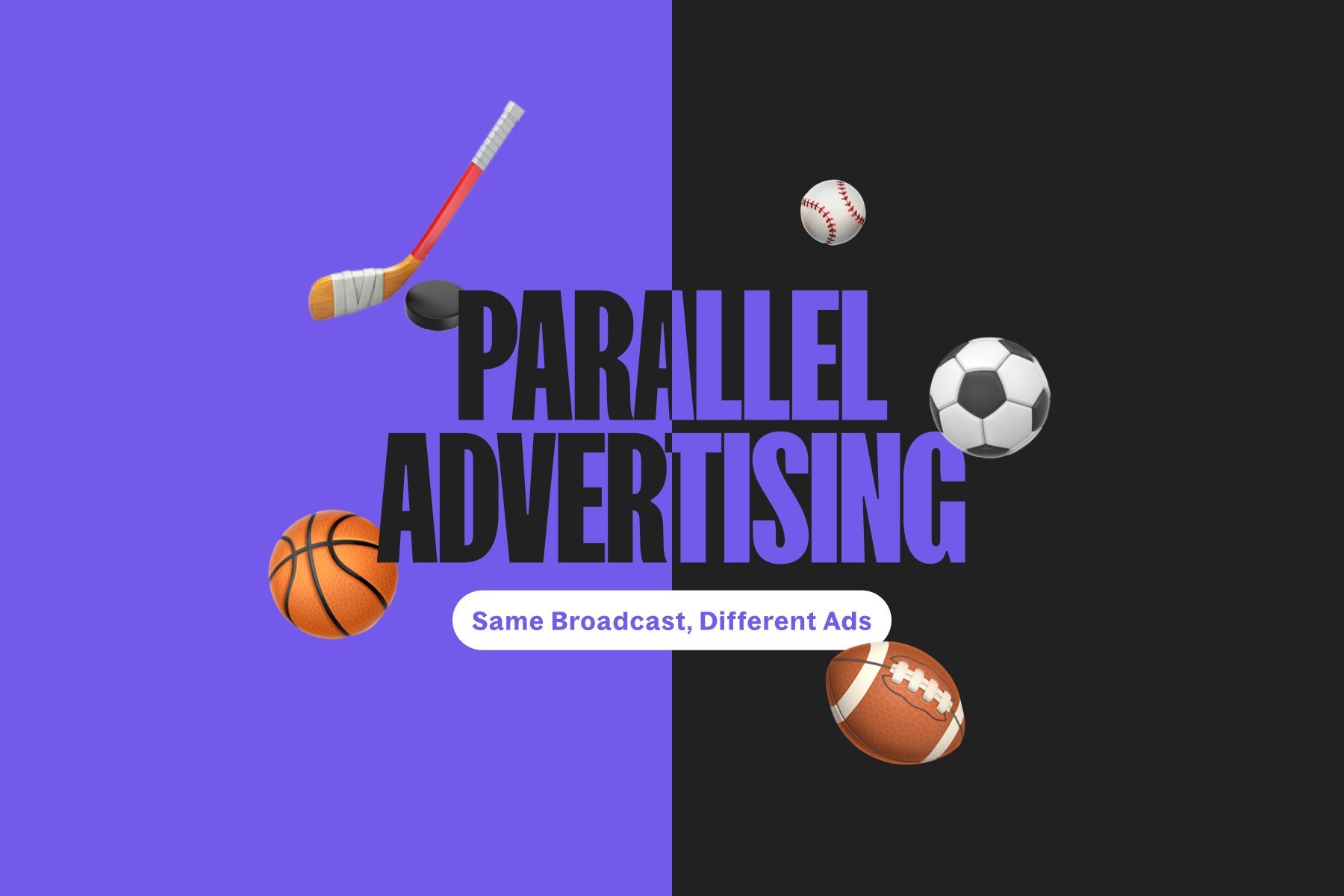
Same Board. Different Ad. Exploring Parallel Advertising.

Posted on by Hunter Foster

The NHL has spent four seasons proving that one physical ad board can carry dozens of messages, all at once.

You’ve probably seen it without knowing what it’s called.

A goal lights the lamp, and from the bar you’re watching at in New York, you see the rinkside board flip to Norwegian Cruise Line. But for a fan in Toronto, watching the same faceoff, they see an ad for a bank on those same boards.

That’s parallel advertising, and it isn’t a pilot program or a slide in someone’s trends deck. European football has used it on international feeds for years, but the NHL has taken it further. Since the 2022–23 season, it has run in every game, in every arena, for every team in the league.

The World Cup this summer put the practice on the largest international stage, and with the start of the 2026–27 NHL season approaching in September, we’re reminded of the practice again. So US brands shouldn’t be asking whether this is real. They should be asking why they aren’t in it yet.

How It Actually Works

The technology is called Virtual Board Replacement (VBR). AI-powered software finds the physical boards in the broadcast frame and places a different ad over them in real time. Because this happens separately for each feed, every network, market, and territory can see its own message on the same board at the same moment.

The NHL calls its version Digitally Enhanced Dasherboards (DED). It was built with Supponor, which TGI Sport acquired in 2024 for roughly $100 million. Everything runs from a central hub, so the boards in all 32 arenas are programmed remotely with no crew on site. According to ESPN, the inventory breaks down like this:

  • Five zones per rink: behind each net, plus three across center ice, each sold separately
  • 30-second increments tied to the game clock, with 120 available per game
  • A clean feed with no virtual ads, for broadcast partners that require one

The biggest upgrade arrived in 2024–25 with moment-based takeovers. Instead of buying a slot in the rotation, a brand can own the entire board wrap the instant something specific happens: the opening faceoff, the first goal, a power play, overtime. Norwegian Cruise Line went first, taking over the boards league-wide on ESPN and TNT every time the opening goal is scored. The brand isn’t buying airtime anymore. It’s buying a moment of truth.

Where Each League Stands

NHL: The Clear Starting Point

No other US league runs parallel advertising in every game, and the results show up in the numbers. In the first season, more than 700 brands bought DED inventory, and team sponsorship revenue jumped 21% to $1.28 billion. It has kept climbing since: $1.4 billion in 2023–24, $1.53 billion in 2024–25 and a record $1.7 billion last season. Sports Business Journal estimates DED adds a mid-eight-figure boost each year on top of what the old fixed boards earned.

The strongest use case is the border. Because the NHL plays in both countries, a brand can run one message on ESPN or TNT in the US and another on Sportsnet or CBC in Canada, from the same board at the same moment. That used to require buying rights in each market separately. This summer’s World Cup, played across the US, Canada and Mexico, showed how often live audiences cross borders. Parallel advertising lets one board speak to each of them.

Sportsbooks figured this out quickly. With DED, a sportsbook can advertise in states where it’s licensed and stay invisible where it isn’t, all from a single board.

MLS: Growing, with a Question Mark

MLS has virtual perimeter ads at some venues through TGI Sport. Its Apple TV deal, worth about $250 million a year, keeps broadcast rights under one roof, which makes virtual inventory easier to sell. The catch is that the deal, originally set for 10 years, was revised in late 2025 to end after 2029. With three seasons left, no one knows yet how virtual inventory will be packaged in the next deal. For now, buys go through TGI Sport or individual clubs.

NBA: Different Surface, Same Idea

Basketball doesn’t have dasherboards, but the NBA has invested heavily in virtual courtside signage: the scorer’s table, baseline LED strips and logos on the court itself. Its partnership with Meta streams 52 games a season in 180-degree VR, which creates ad space that doesn’t exist in the arena at all. Buys go through NBA Global Partnerships or individual teams’ local broadcast deals.

NFL: Furthest Behind, Biggest Upside

The most valuable media property in American sports is also the furthest behind, and the reason is structural. NFL games are split across NBC, CBS, Fox, ESPN/ABC and Amazon Prime. Getting five competing broadcasters onto one virtual ad system is far harder than anything the NHL had to solve.

That won’t last forever. The US sports TV ad market is on track to approach $25 billion by 2027, much of it driven by the NFL, and the league has been pushing to reopen its media deals early. As of August, Fox said it won’t renegotiate before its 2030 opt-out. Whenever the next round of deals happens, it’s the natural moment for virtual inventory to arrive.

What It Costs

DED is sold in 30-second increments across five zones, 120 per game, and pricing is negotiated as part of broader sponsorship packages. Four things move the price:

  • National vs. local feed. ESPN and TNT cost significantly more than regional sports networks.
  • Zone. Behind-the-net placements get more screen time, so they cost more.
  • Moment vs. rotation. Takeovers tied to moments like the first goal are premium add-ons.
  • Season vs. single game. Season packages come with better rates.

For a rough sense of scale, DED’s mid-eight-figure first-year impact was spread across more than 700 brands. That works out to an average in the high five figures per brand. The average hides a wide range, since a national sportsbook and a regional credit union aren’t writing the same check. It still makes the point: this isn’t reserved for the Fortune 50, and it’s far easier to get into than comparable inventory in European football.

Who It Works For

Brands selling on both sides of the border. Run different creative in the US and Canada from one board, without buying rights twice.

Sportsbooks and other regulated categories. Appear only in the markets where you’re allowed to advertise.

Auto, finance and CPG brands with regional offers. Match pricing, promotions or product lines to each broadcast market.

Brands that want to own a moment. Take over the first goal, overtime or a power play: live, in the broadcast and impossible to skip.

Challenger brands. Show up in premium broadcasts for a fraction of what a traditional 30-second spot costs.

Destinations and DMOs. Reach Canadian travelers on the Canadian feed without buying Canadian rights.

So What?

Parallel advertising already works in the US, and most agencies still aren’t bringing it to their clients. The NHL has built the most advanced version in North American sports. Team sponsorship revenue is up about 60% from the season before launch, and the technology can now react to live moments as they happen.

It also won’t stay this open for long. The inventory is relatively uncrowded today, and that will change over the next three to five years as more brands catch on. If you’re working with a sports marketing budget of roughly $250,000 or more, now is the time. When the Carolina Hurricanes raise their championship banner against Florida on opening night, every board in that building can carry a different ad for every feed watching.

The brands that move first get the best ice.

Building Brand Loyalty in an Experience Economy

Posted on by Hunter Foster

This article originally ran in the Knoxville News-Sentinel.

Many consumers are making purchasing decisions around their scarcest resource these days… and that is their time. Of course, buyers are still buying goods of all kinds, but they are spending more thoughtful time considering what to do, not just what products to buy.

Research shows that younger consumers in particular lean toward valuing experiences over tangible goods. They even organize their identities around their experiences at times. Where
they have been and what they have done become more significant than just “stuff.” Activities that they can post online are important.

The experience economy is alive and well… and is growing according to many consumer reports. In a world that is frequently shaped by Instagram and TikTok, there is a distinct urge for “magic moments” that can be shared. Young consumers love to tell their friends about an “amazing experience,” and unique trip, or a conversation with a trend-setting person.

What this means for businesses, particularly those whose audiences include younger consumers, is that they need to understand the new lens through which their potential buyers are looking. These buyers need to be convinced that a particular purchase is worth their time, in addition to their money. Brands are now frequently competing for individuals’ share of time.

Consumers are apt to decide how they feel about companies they buy from, not just how attractive their products are. And further, they also make buying decisions based on their ability to “bring those purchases to life” within their highly social and networked worlds.

There is almost no type of consumer-focused company that doesn’t need to step back and examine whether or not they are providing their customer base with not only adequate, but hopefully exciting and visual ways, that their brand can be “brought to life,” by buyers who are excited about sharing their purchasing decisions and their resulting experiences with their peer groups.

The more we have to do and the more choices we have around doing those things, the more critical it is for businesses to be smart and innovative regarding how they present their products and services to increasingly smarter and more demanding audiences with less disposable time than ever before.

Cathy Ackermann is founder of Ackermann Marketing & PR, now a part of Designsensory.

Designsensory’s Tisha Clapp Elected President of AAF Knoxville

Posted on by Hunter Foster

Designsensory is proud to announce that Tisha Clapp, Senior Media Operations Specialist, has been elected president of AAF Knoxville, the local chapter of the American Advertising Federation. Her appointment reflects both her leadership within the advertising community and her longstanding commitment to advancing the marketing and communications profession throughout East Tennessee.

As president, Clapp will lead the organization’s Board of Directors in supporting professional development, fostering industry connections and strengthening engagement among advertising, marketing and communications professionals across the region.

“Tisha is an exceptional leader whose passion for people and our profession makes her the ideal person to lead AAF Knoxville during this exciting chapter,” said Joseph Nother, co-CEO and chief creative officer of Designsensory. “Her commitment to collaboration, mentorship and community reflects the values we strive to embody every day at Designsensory. We’re incredibly proud to see her representing both our agency and the broader creative industry in this important leadership role.”

Clapp has been an active member of AAF Knoxville for several years, serving in multiple leadership capacities before being elected president. Throughout her career, she has been dedicated to creating meaningful connections within the industry while championing opportunities for professionals at every stage of their careers.

“I’m honored to serve as president of AAF Knoxville and grateful for the opportunity to help shape the future of our local advertising community,” said Clapp. “Our industry is strongest when we invest in one another, encourage fresh ideas and create opportunities for people to learn, collaborate and grow. I’m excited to work alongside our outstanding board to continue building an engaged, welcoming organization that supports creative professionals across the Knoxville area. I’m also thankful to Designsensory for encouraging community leadership and professional involvement that extends beyond our agency.”

Clapp’s election continues Designsensory’s tradition of investing in industry leadership and supporting organizations that strengthen the region’s creative economy. Through volunteer leadership, professional service and community engagement, the agency encourages team members to help shape the future of the communications, marketing and advertising professions.

Media Contact:
Erin Burns Freeman
Vice President, Communications
Designsensory
[email protected]

Smart Glasses are Having a Moment This Summer

Posted on by Hunter Foster

But this isn’t the first time. Back in 2016, while one of our team members was in New York, they tracked down a Snapbot, a bright yellow vending machine with a single blinking eye. And, after feeding it $129.99, it spit out a pair of glasses — the Snapchat Spectacles.

If you weren’t following tech news that year, or if perhaps I’m aging myself, Snapchat didn’t sell its first glasses online or even in stores. Hell, not even in a pop-up retail space. It dropped vending machines in random locations around the country and let online hype do the rest. 

And we bought in. We got two pairs, actually, and filmed some delightfully weird circular-format video, and mostly confirmed what everyone eventually figured out: they were fun, the aesthetic was a little corny, and nobody wanted to actually wear them around.

After a few months, it simply became a footnote in our relationship with experimental camera tech. When a new way to capture content shows up — GoPros, gimbals, drones, 360 cameras — we’re more than happy to try it all. A lot of it ends up in a drawer, but some of it changes how we shoot.

That brings us to right now, because for the first time in a decade of false starts, smart glasses aren’t a gimmick anymore. Meta has sold somewhere north of 10 million pairs of its Ray-Ban glasses (7 million in 2025 alone). We’ve got Kylie Jenner wearing a rhinestone-studded pair. iShowSpeed is jumping out of a plane wearing them. Smart glasses are here, and this time it’s not Google, not Snapchat — it’s Meta at the helm. 

So let’s talk about why this attempt is working, why every previous attempt face-planted hard enough to break those same glasses in half, why there’s real controversy brewing, and what any of it means for the work we all do.

Why did everyone before Meta fail?

The graveyard of smart glasses is instructive because almost every failure comes down to the same thing: they looked like tech or a toy.

Google Glass (2012) was the original sin. It was a titanium band with a prism floating over one eye — my personal favorite comparison is that it looks like a power scouter from Dragon Ball Z. It didn’t matter what it could do. Nobody wanted to be the person wearing it, and “Glasshole” entered the dictionary before the product even shipped.

Snapchat Spectacles (our beloved 2016 pair) had the opposite problem. They looked almost normal, a bit like something you could buy off a rack from a souvenir shop at any beach town, but with a big yellow camera ring on the corner that screamed: “I am recording you.” They went viral off marketing and novelty, then died. They sold 22,000 pairs in the first year. The pendulum would swing in multiple directions after that as, to this day, Snap is still releasing new iterations of the Spectacles. In 2018, they released Spectacles 2.0 (lighter frames, more colors). The very next year, they released Spectacles 3 (new design, HD cameras and some 3D tech). Yet another year later, they releasesed the Spectacles 4 in 2021 (another redesign, computer vision and new software). In 2024, the Snap went all in on Augmented Reality with the Spectacles 5, and is still at it, by the way — its new $2,195 AR “Specs” launched recently to a near-universal thud. They’ve picked a different offering, type of consumer and pricepoint than Meta.

Let’s look at GoPro, arguably the most successful “wear a camera” product ever, deliberately stayed in its lane. It was marketed as gear, as camera equipment. Something for ski runs and mountain bike trails, not brunch. That framing made it acceptable, but it also capped its potential.

Imagine you invited me to brunch and I had a helmet and an action camera or even an AR headset on (I’m not saying I won’t, by the way).

Anyways, the pattern across all of them was visible tech on your face reads as nerdy at best and creepy at worst and lack of mass market appeal. Nobody solved that until Meta partnered with the most powerful glasses company of all time, and some malicious users began to hide that they were recording.

Why Meta is winning now

Meta’s masterstroke was the 2021 partnership with EssilorLuxottica, the company behind Ray-Ban and Oakley. Instead of inventing a futuristic-looking device, they put cameras, speakers, and microphones inside a Wayfarer — one of the most familiar, most beloved frame shapes on Earth. The tech didn’t jump out. It disappeared into the fashion.

It’s been successful in three disctint ways:

  • Fashion first, tech second. Mark Zuckerberg has said, essentially, that these have to be glasses people want to wear even if the tech didn’t exist. That means celebrity co-created models (rhinestone details and Kylie Jenner). Or making a more capable version of what you already were wearing in Meta’s Oakley line, which targets the GoPro, outdoor, athlete crowd. Multiple styles for multiple identities.
  • Right fit, right time. The hardware is small, light, and fast enough. The photo and video output are high-quality, while the desire to create content is at an all-time high. The features list aligns to what people actually want in their daily lives — content capture, phone calls, music, voice commands and chat.
  • AI is the reason to believe. This might be the biggest shift — the emphasis on Smart. The pitch is no longer “record everything you see.” That’s the creepy version. The pitch is “your AI assistant can see what you see.” Ask it about the painting in front of you. Get live translations. Have it walk you through a recipe. The camera becomes a feature of the assistant rather than the point, which gives everyone a semi-socially acceptable reason to have one on their face.

And there are genuinely great use cases emerging. The most compelling story in this whole space is accessibility: blind and low-vision users pairing the glasses with Be My Eyes to have a volunteer (or the AI) read menus, sort mail, and navigate the world hands-free. Display versions can put live captions over conversations for people who are hard of hearing. That’s real change in the lives of people coming in the form of a (relatively) easily accessible device. 

Okay, now the uncomfortable part

Here’s the flip side, and the part users and marketers need to be aware of. We now have a recording device that’s nearly indistinguishable from a regular pair of glasses, and social norms haven’t caught up.

The glasses do have a privacy LED that lights up while recording. In practice? Many people don’t know what that little light means. And tutorials for covering or disabling it are all over TikTok. Entire genres of shock content — like creators secretly filming strangers without consent and posting the interactions — have built million-follower accounts on exactly this loophole. Interviews have surfaced where people only discovered they’d been filmed when the video went viral.

The legal landscape is a patchwork. Recording in public is generally legal in the U.S., but roughly a dozen states require all parties to consent to a recorded conversation — which matters if your content involves audio of people who didn’t agree to be filmed. Other places are moving faster: the EU’s GDPR requires explicit consent, South Korea mandates a loud shutter sound on phone cameras, and U.S. jurisdictions are starting to ban the glasses in courthouses and behind the wheel. Employers out there are writing “no glasses in meetings or bathrooms” policies as we speak.

There’s also a data question hiding under all of this. A Swedish newspaper investigation found that footage from users’ interactions were being reviewed by human contractors overseas — including deeply private moments people assumed only a machine would ever see. And Meta has reportedly (and allegedly) developing a facial-recognition feature called NameTag that would let wearers identify strangers on the street, a project that’s drawn opposition from more than 70 civil liberties organizations. 

In short, the opposition is: these glasses are normalizing surveillance, and your data may not be as private as you think. 

What marketers need to know

So where does that leave those of us making content and potentially embracing these wholeheartedly?

  • The POV format is real, and it’s only growing. First-person footage has an intimacy that b-roll can’t fake — it’s a huge part of why glasses content performs on social. For tourism, hospitality, and experience-driven brands, “see it through my eyes” is a genuinely useful creative tool. We’ve been experimenting with it since the Spectacles days, and this generation of hardware is the first that’s actually very production-friendly.
  • Consent is now a production line item. If you’re shooting glasses content in public — or briefing creators and influencers who will — build consent into the workflow. Releases for identifiable people, awareness of two-party consent states, no covered LEDs, ever. Treat it like a “real” camera. Backlash against creators who film people unaware should tell you everything about where public sentiment sits.
  • Vet your influencer partners’ capture practices. The creator who’s great at glasses content and the creator who built an audience on secretly filming strangers can look identical in a media kit. Ask how footage gets captured before your brand rides along in it.
  • Watch the adoption curve, don’t chase it. Even the most enthusiastic reviewers describe today’s glasses as, day to day, “glorified headphones.” Battery life measured in minutes for heavy AI use, headaches after long wear, and no killer app yet. Realistic mainstream adoption is probably five to ten years out. This is a start-experimenting moment.
  • And keep an eye on the ad layer. Every major platform shift eventually becomes an ad product. A device that sees what millions of people see, all day, is the most valuable targeting data ever assembled. When that inventory arrives, the brands who understand the format — and the trust issues around it — will be way ahead.

TLDR: We’ll still keep a pair in our camera bag. They don’t yet belong next to the Spectacles in the drawer. But this time, we’ll be a bit more careful before we hit that record button.

How Compelling Is Your Personal Brand?

Posted on by Hunter Foster

This article originally ran in the Knoxville News-Sentinel.

Most consultants and agencies in my field of marketing and communications focus almost exclusively on positioning and selling their clients’ products and/or services (of course).

However, as a result, they sometimes end up ignoring the development and strengths of their own brand. It’s a classic case of the “shoemaker’s children having no shoes.”

Sometimes the most successful third-party marketers are the worst at promoting themselves, and beyond consultants and agencies, this also applies to marketing and communications professionals within corporations. The reality of today’s fast-paced and demanding world is that the people who are best at messaging and promotions frequently don’t apply this same thoughtfulness and these same skill sets to themselves.

It’s important to think about “personal branding” at every stage of your career, regardless of what your chosen career field is. In addition to doing the job for which you were hired, it’s smart to consider how your accomplishments on behalf of your employer or client can also be beneficial to the mastering of your own professional brand and the communication of your growing skill set over time.

Start by thinking of yourself as a “product to be packaged and sold,” and ask yourself the following questions:

  • What are my primary strengths and “product differentiators?”
  • What are my accomplishments as a skilled marketer/communicator in my professional field thus far?
  • What have I learned to do that enables me to do these things outside of my current employment situation?
  • What words and proof points best describe my skill set?
  • How can I best articulate my Unique Selling Proposition?

It’s always a little tempting to over-embellish resumes and use a bit of exaggeration, which can lead your reader down a path that doesn’t truly reflect the realities of your actual experience base. So while you are attempting to put your best foot forward and present the most positive portrait of yourself, don’t stray too far from reality and from those attributes and accomplishments that can be backed up with facts and actual results.

No matter how content you are with your current professional situation, it is important to keep track of your ongoing accomplishments, how you have personally contributed to the growth and success of your profession or industry, and the ways in which you can best communicate your skill set.

Think of yourself as a “living, breathing marketable entity,” continually capture your ongoing successes, and think about how to best package and communicate them to your current and future key audiences.

Cathy Ackermann is the founder of Ackermann Marketing & PR, now a part of Designsensory.

The True Role of Public Relations Today

Posted on by Hunter Foster

This article originally ran in the Knoxville News-Sentinel.

What do audiences, customers, followers and content explorers want today? It’s an ever-changing landscape and is admittedly difficult and sometimes confusing for businesses to navigate, make decisions based upon, and measure relative to cost-effectiveness and end-game goals.

Yes, marketing is changing at an unprecedented pace. After years of distributing content that was previously difficult to measure (and perhaps even unwanted), public relations outreach has come back into its own. It is admittedly less flashy and eye-catching than other outreach efforts at times, but it can be viewed not only through its traditional lens of “third-party credibility,” but also through a related and equally critical lens of “sanity.”

In an era where evidently anyone can say anything anytime about most any topic and claim knowledge of that topic, public relations – at its best and “highest use” – can help cut through the clutter and false facts and can deliver believability. It’s now more important than ever for public relations professionals to do the job for which their profession was originally intended, which is to create honest ways to tell their key audiences what they need to know in order to make well-informed decisions.

PR professionals should not so much be actively selling products and services these days as they should be discussing truthfulness and creating messages for their key audiences that help them make informed decisions as to what products to buy, what causes to support, and where to put their resources. Today’s audiences want stories with underlying values that are honestly displayed and spokespeople who are believable and non-self-serving.

With local news coverage shrinking and fewer reporters than ever, it is incumbent upon these professions to play the role for which it was initially created – and that is to help produce stories with substance and develop spokespeople with credibility, not just loud voices.

With the increasingly important role that AI plays and its admittedly unique ability to bring instant information to the surface, it still cannot explain why a story matters. Human storytellers still have the critical role of curating information and using the tools available only to them to support independent thinking and decision-making.

Cathy Ackermann is the founder of Ackermann Marketing & PR, now a part of Designsensory.