Author: Ryan Lee

How We’re Actually Using AI at DS (And What We’re Not Buying Into)

Posted on by Ryan Lee

If you’ve scrolled LinkedIn lately, you’ve noticed: AI isn’t some freaky sci-fi future anymore. It’s running in your inbox, your CRM, your Spotify queue. And brands aren’t dipping toes in—they’re all in.

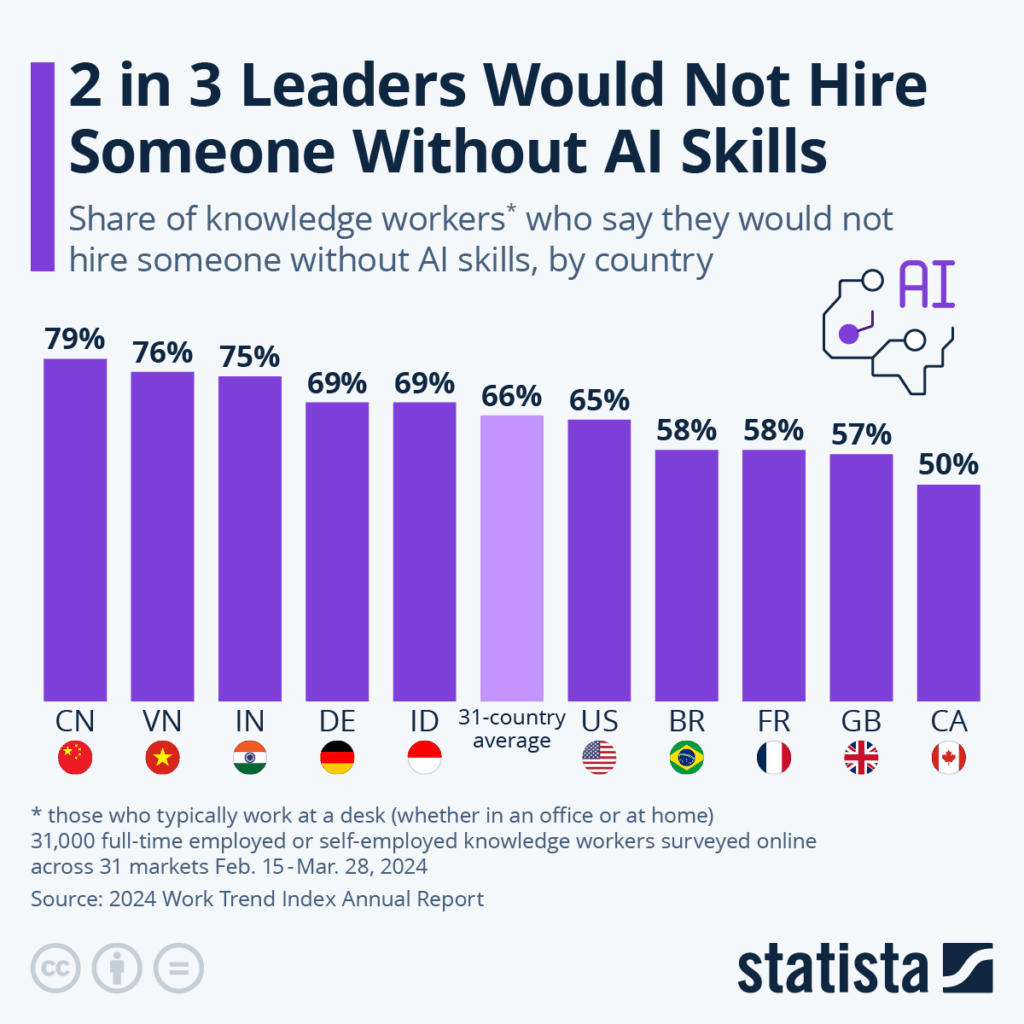
According to McKinsey, 78% of companies are using AI in at least one business function. Meanwhile, Big Tech is poised to drop over $320 billion on AI next year. That’s not a trend. That’s a business model shift. And a global-average 66% of leaders say they wouldn’t even hire someone who wasn’t proficient in using AI.
We use AI at DS, too, because it helps us move faster, test smarter, and scale what works. But speed is only valuable if you’re still steering.

The ethical risk isn’t that AI makes things too easy; it’s that it makes the wrong things feel efficient. Replicated ideas. Misaligned messaging. Work that skips the hard thinking.

We don’t use AI to skip steps. We use it to spend more time on the steps that matter.

I sat down with a few folks across our teams to get specific about the tools we’re using, the ones we’ve scrapped, and how we keep the “sense” in Designsensory with firsthand answers from:

  • Jessica Thompson (Media Director)
  • Chris Cable (VP, Creative)
  • Stephan Zerambo (VP, Interactive)
  • Hunter Foster (VP, Media + Comms)

What AI tools do you and your team use directly?

Jessica
“ChatGPT. Some of our team uses it to reword clunky sentences or proof short blocks of copy—just as a second set of eyes, not the lead author. It’s helpful for making sure a paragraph holds up or flows the way we want.”

Chris
“We use a handful of tools to speed up concepting and kill busywork.”

  • ChatGPT / Gemini – For brainstorming, writing drafts, tone/voice calibration
  • DALL·E / Midjourney – For early-stage visual concepts and moodboards
  • Firefly / Adobe Sensei – For auto-masking, background removal, content-aware fills
  • “Right now, we’re experimenting with Sora for video comps. Still unpredictable, but interesting.”

“The throughline is speed. These tools help us skip the friction and get to the good stuff.”

Stephan
“On the interactive team, ChatGPT’s a go-to for dev help. Think: debugging, quick code stubs, ‘What’s causing this React hydration issue?’ Copilot helps generate test cases, scaffold components, even translate data formats. It’s not perfect, but it gets us 90% of the way, which saves a ton of time.”

  • Sentry flags bugs and suggests likely root causes
  • Gemini is creeping into Google Workspace for quick replies, summaries, and content blocks
  • Jasper + Grammarly help with quick content edits outside of dev

What tools have AI baked in—even if you’re not prompting it directly?

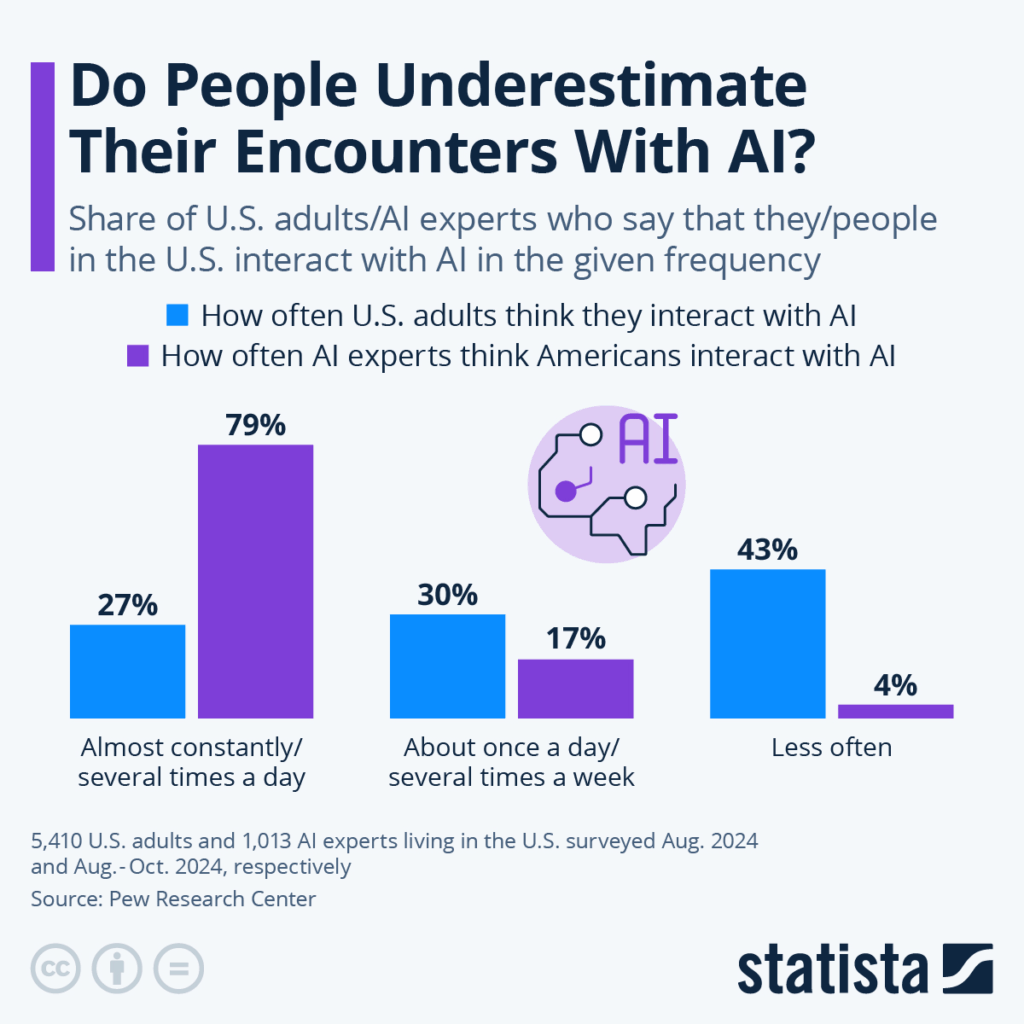
Even if you’re not directly asking something like ChatGPT to write stuff, it turns out AI is way more mixed into our everyday tech than most people realize.
Jessica
“Meta has AI that can auto-generate ad versions by swapping creative elements, but we don’t use it much. We want more control.”

Chris
“Figma’s starting to roll out AI features like wireframe generation and copy suggestions. Haven’t gone deep yet, but it’s promising. And Adobe Creative Suite is full of Firefly integrations now; it’s low-key making everything faster.”

Stephan
“GA4 surfaces trends. WordPress and HubSpot suggest AI-powered content ideas. Figma’s getting smarter. These invisible upgrades aren’t game-changing individually, but they’re stacking up to improve efficiency.”

Any tools you’re watching that could shift how your team works?

Jessica
“Copy.ai could be huge for paid search. We need dozens of headlines and descriptions quickly. It could cut down manual writing time big time.”

Chris

  • Artlist.io for AI voiceover—great when we need quick-turn video
  • Kaiber / Pika / Wonder Studio for faster motion design workflows
  • “We’re watching Sora for campaign storyboarding, but it’s not there yet.”

Stephan

  • Maze / PlaybookUX: AI-powered user testing
  • ElevenLabs: Synthesized voice for accessibility prototypes
  • “Some tools are starting to make stack-aware dev suggestions, not just snippets. That’s big.”

Where does AI still fall short?

Jessica
“It can’t own anything. It’s helpful at the start or middle of a task, but it’s not built for the finish line.”

Chris
“It doesn’t understand timing, taste, or tone. It can’t feel the nuance in a brand’s voice. And clients aren’t prompts, they’re people. AI doesn’t read the room.”

Stephan
“AI outputs aren’t production-ready. Code still needs validation. Brand still needs consistency. Strategy still needs a brain. We don’t let tools do the work of thinking.”

Excitements and hesitations?

Jessica
“Excited about how it could streamline media processes. Cautious about job impacts. Automation cuts steps, but it can also cut people.”

Chris
“It’s a creative accelerator. We’re faster, more personalized, and more experimental. But if everyone uses the same tools the same way, we risk sameness. Our edge comes from how we use it, not that we use it.”

Stephan
“Excited to spend less time on repetitive dev work. Concerned about overtrusting outputs that ‘feel’ right but aren’t. And yes, we’re watching ethical concerns and data handling closely, especially in client work.”
Bonus: Hunter on AI in Social

Hunter Foster
“Sora’s great for fast social content; it lets us skip steps without losing sharpness. Claid.ai handles visual placement with precision, and Premiere Pro’s generative tools like Remix and Extend have totally changed how we edit. The AI built into Meta and Google Ads is powerful, but we use it selectively. We want to steer the strategy ourselves.”

What This Means for You

AI isn’t here to replace us. It’s here to pressure-test us. To force better questions, sharper thinking, and more responsible output.

We use AI to make the work faster, not cheaper. Smarter,not soulless. It’s a tool, not a substitute. And we hold it to the same standard we hold ourselves: it has to serve the strategy, not distract from it.

The ethical line isn’t whether you use AI. It’s how. Are you chasing shortcuts? Or are you clearing space to go deeper?

At DS, we’re not just keeping pace. We’re making sure every prompt, every output, and every idea still leads somewhere original.

If you’re figuring out where AI fits in your brand’s process, let’s talk about what better looks like.

Start here →
Cyber Week 2024: E-commerce Trends and What Your Brand Needs to Know

Posted on by Ryan Lee

It’s Cyber Monday. Back in the halcyon days of the early aughts (2005 to be precise) the National Retail Federation wanted to push a new initiative. Its goal was simple: capitalize on the post-Black Friday buzz and convince people to shop online. At the time, many people didn’t have fast, reliable internet at home, so they waited until Monday to snag deals using their (much faster) work computers. It was a genius move that tapped into the early days of e-commerce.

Fast forward to today, and what became known as “Cyber Monday” has grown into a global shopping phenomenon, fueled by smartphones, tablets, and lightning-fast Wi-Fi. What started as a single day of online deals has evolved into “Cyber Week,” stretching discounts across days (and sometimes weeks). The lines between Black Friday and Cyber Monday have blurred, with retailers offering discounts that overlap both shopping events. And honestly—who’s complaining? With more days to shop, consumers have even more chances to grab amazing deals.

Tech and electronics still dominate the Cyber Monday landscape, with big-ticket items like laptops, TVs, and smartphones leading the charge. It’s become the ultimate playground for those looking to score high-value products at unbeatable prices, making it a favorite for holiday shoppers and bargain hunters alike.

Big Spending, Bigger Trends

This year’s Cyber Week is well underway. The numbers are in for Black Friday, and they’re staggering:

  • Online shopping accounted for $10.8 billion in sales in the U.S. on Black Friday alone, according to Adobe Analytics.
  • Salesforce reported an even higher number: $17.5 billion in the U.S. on Black Friday.
  • But, that pales in comparison to the $74.4 billion in sales on Black Friday globally, marking a 5% increase from last year, according to Salesforce.
  • Since November 1, total online spending in the U.S. has reached $118.2 billion, per Adobe Analytics. 
  • And we’re only halfway there, with Adobe Analytics projecting $241 billion for the entire holiday season.

And here I was thinking that I was overspending this year. Anyways, these figures aren’t just impressive, they’re proof of how deeply e-commerce has embedded itself in our shopping habits.

A Look Back At Cyber Week 2023

In 2023, Cyber Monday continued its reign as the biggest online shopping day of the year, shattering records (again). Adobe Analytics reported a hefty $12.4 billion in online sales for Cyber Monday alone. During the peak shopping hour from 10:00 to 11:00 PM EST, spending hit an unbelievable $15.7 million per minute. Yes, you read that right—per minute.

And 59% of those purchases were made on smartphones, up from 55% the previous year. This growth highlights how much we’ve come to rely on convenience and, likely, impulse shopping. 

But while online shopping ruled the day, brick-and-mortar stores weren’t completely left behind. Mall visits surged by an impressive 300%, and superstore foot traffic jumped by 81% compared to regular shopping days. Still, the numbers speak for themselves—90.6 million people shopped online on Black Friday, compared to 76.2 million in physical stores. Clearly, digital shopping continues to dominate. And according to Chain Store Age, in-store shopper traffic on Black Friday 2024 was down 8.2% compared to 2023. 

So far, 2023 Cyber Week numbers have only exaggerated in 2024. So what’s fueling this shopping frenzy? Let’s break down the biggest trends:

The Continued Rise of Buy Now, Pay Later (BNPL)

Ever noticed those “Pay in 4” options at checkout? You know the usual suspects—Affirm, Klarna, Afterpay. That’s Buy Now, Pay Later (BNPL) in action, and it’s rapidly transforming how we shop. On Black Friday 2024 alone, shoppers spent $686.3 million using BNPL services, an 8.8% increase from the previous year. Even more interesting, nearly 79% of those purchases were made via mobile devices. It’s clear that the flexibility of BNPL, combined with the ease of mobile shopping, is a winning combination for retailers and consumers alike.

Discounts, Discounts, Discounts

Let’s face it—there’s nothing like a great deal to get us clicking. Salesforce reported an average discount of 30% during Black Friday, with categories like toys (27.8%), electronics (27.4%), and TVs (24.2%) offering the steepest markdowns, according to Adobe Analytics. These discounts don’t just drive sales; they also encourage shoppers to start their holiday shopping earlier. It’s a smart strategy that benefits both consumers and retailers. Who doesn’t love crossing items off their holiday list early?

Generative AI: Your Personal Shopping Buddy

The future of shopping is here, and it’s powered by AI. Adobe found that 20% of U.S. consumers used generative AI tools (like chatbots) during Cyber Week to find deals and get personalized shopping recommendations. Imagine AI acting like your personal shopping assistant, guiding you to the best discounts and most relevant products. It’s a game-changer that takes the guesswork out of finding the perfect deal, making the experience even more seamless and efficient. And could cause major concern for product discoverability on search engines in future holiday shopping seasons. 

Extended Shopping Windows

Another trend reshaping Cyber Monday is the extended shopping period. Retailers are no longer confining their deals to one day or even one week. Some start offering Cyber Monday-like discounts as early as the start of November, allowing shoppers more time to plan and take advantage of savings. This shift caters to changing consumer behavior, where convenience and flexibility are key. In my personal experience, I caught my first “Black Friday” deal at 8:00 AM EST on the Monday before Thanksgiving. 

Looking Ahead to Cyber Monday 2024

So, what’s next for Cyber Monday? If 2023 is any indicator, 2024 is poised to set even higher records. Projections suggest sales will reach $13.2 billion, up from $12.4 billion this year. The trend is clear: online shopping is winning the retail race.

Expect mobile shopping to grow even further, with more consumers embracing the convenience of purchasing directly from their phones. BNPL will likely become a checkout staple, making it easier for shoppers to afford big-ticket items. Meanwhile, AI-driven personalization will make online shopping feel even more tailored, offering deals and recommendations that feel almost too perfect. Retailers will also lean into data-driven strategies to optimize their offerings, creating a shopping experience that’s as intuitive as it is enjoyable.

Some of our Favorite E-Commerce Brands:

Look, admittedly, we’re biased. We think our clients are some of the best in the game, and we’re particularly excited for our e-commerce clients this time of year. As the holiday season ramps up, it’s a critical time for online businesses to shine, and we love seeing our clients rise to the occasion. We’re fortunate to lead e-commerce tech efforts for some incredible brands, including Zoo Knoxville, a force for both family-friendly fun and serious species protection efforts;  Bush’s Beans, a household name in comfort food; Photo Barn, a leader in personalized photo gifts; Lokar, an innovator in high-quality automotive products; and Arrowmont School of Arts and Crafts, a 100+ year old hub for artistic exploration and education here in the mountains of East Tennessee. 

Want More Shopping Data?

For the data enthusiasts out there, resources like Salesforce’s Retail Dashboard and Adobe’s Holiday Shopping Report offer real-time insights into e-commerce trends. Like us, you too can stare at these charts all holiday season long and say “wow, that’s crazy.”

Ned Ludd, Amara’s Law, and Protecting Your Career Against AI

Posted on by Ryan Lee

100 miles northwest of London in the heart of the English Midlands lies the land of Robin Hood, lace and industrial protest: Nottingham. In the early years of the nineteenth century, textile workers in the city began to lash out at their employers, who had taken to using weaving machines manned by untrained, unskilled workers to make shoddy products that would bring in a quick buck—or pound sterling, as it were. 

It wasn’t even the machines themselves that were the problem in their eyes. No, these skilled laborers who had apprenticed and trained and spent years of their lives learning their craft—which included making handy use of these machines—were being cut out and replaced. Manufacturers had become content to hire low-paid workers to make inferior products, rather than rely on the expertise of their craftsmen. 

So, as disgruntled workers throughout history have been known to do, they started causing a ruckus, sneaking in at night and bashing up these machines to stick it to The Man. They took as their patron saint a fellow machine-bashing malcontent from Leicester named Ned Ludd (he’s that handsome lad in the photo up there.)

They called themselves the Luddites. And modern workers have a whole lot of common cause with them.

One of the most persistent reasons that workers, especially in creative fields, are wringing their hands over AI is the possibility that, given the opportunity, they’ll be replaced. If a Large Language Model (LLM) like ChatGPT can write blogs, why hire writers? If generative image AI platforms and built-in AI like Adobe’s Firefly can generate images with a few words of prompt or just a few clicks, why hire designers? Even a decade ago an Oxford study predicted that up to 47% of U.S. jobs could be at risk due to automation. Recent estimates from Goldman Sachs suggest that up to 300 million jobs worldwide could be affected: 

Using data on occupational tasks in both the US and Europe, we find that roughly two-thirds of current jobs are exposed to some degree of AI automation, and that generative AI could substitute up to one-fourth of current work. Extrapolating our estimates globally suggests that generative AI could expose the equivalent of 300mn full-time jobs to automation.

The Potentially Large Effects of Artificial Intelligence on Economic Growth, Goldman Sachs, 2023

As a writer, researcher and strategist who works alongside a cadre of insanely talented designers, developers, and other creative geniuses, quite frankly that scares the hell out of me. 

And when I get stressed and in my head, I like to listen to podcasts to shift my brain to something else that’s both edifying and distracting. Imagine my utter horror to turn on my favorite podcast, Stuff You Should Know, and hear this little chestnut:

So one of the astounding things about this that it really caught everybody off guard is that these large language models, the jobs they’re coming after are white-collar knowledge jobs. Yeah. They’re so good at things like writing. They’re good at researching. They’re good at analyzing photos now. And that’s a huge sea change from what it’s been like traditionally, right? Whenever we’ve automated things, it’s usually replaced manual labor. Now it’s the manual labor that’s safe in this generation of automation. It’s the white-collar knowledge jobs that are at risk. And not just white-collar jobs, but artists who have nothing to do with white-collar or jobs, they’re at risk as well.

Large Language Models and You, Stuff you Should Know, June 20, 2023

Et tu, podcasts?

It’s easy to spiral in a cultural conversation wherein much of the conversation seems to center upon the inevitability that everyone who works at a computer will soon be rendered useless. Rather than speed headlong into catastrophizing, though, we’d do well to remember Amara’s Law, named for the late futurist Roy Amara:

We tend to overestimate the effect of a technology in the short run and underestimate the effect in the long run.

Roy Amara

That makes it doubly important, then, to understand what AI is good at, what the limitations of this technology are and how you can future-proof (as well as anyone can) your career.

The Helping Hand(?) of AI

To understand what AI is good at, it helps to have a baseline understanding of how it produces content. Take the name ChatGPT. The “GPT” stands for Generative Pre-Trained Transformer. ChatGPT and other LLMs scrape existing content to essentially predict a sequence of words that make sense together. For example, if I type the word “thank,” an AI can predict that the next word I’m likely to type is “you,” because among the hundreds of billions of data inputs it has to work with, that’s usually what comes next. 

If I’m setting up a meeting with a member of my team and I type “Does that…” the AI can take a guess and finish out the phrase based on something that gets input a million times a day. So it knows that there’s a good statistical probability that what I’m about to say is “Does that time work for you?” That makes LLMs incredibly useful for spitting out a routine email at lightning speed, something I’m sure you’ve already made use of with Google’s Smart Compose feature.

Another area in which generative AI can be a huge benefit to creatives is ideation. Whereas I can put 10 ideas on a page in—depending on my caffeine intake—between 10 and 30 minutes, an AI can generate 10 ideas in three seconds. And one of them might be the spark that I need to do some deeper thinking, make some long-buried connections, and start considering something in a new way.

So, these platforms are remarkably helpful for doing low-level thinking for us. But when we rely too heavily on generative AI and LLMs to do too much of the heavy lifting, we get into some real trouble.

The Hilarious Ineptitude of AI

For all of our well-founded concerns about what AI could mean for the future of these knowledge jobs, there are some serious limitations to what it can do. And “limitations” is a generous term. We’ve already talked about how generative AI platforms are trained on extant data, and then assemble that data as a response to a prompt, in a way that is statistically likely. The biggest thing that means is that LLMs are incapable of novel thought. Well, they’re incapable of thought, really. They can only output what they can predict based on existing inputs. So you can forget about the works of Cormac McCarthy (RIP) or Jean-Michel Basquiat, or the off-the-wall menus assembled by the world’s most innovative chefs. 

ChatGPT was recently asked to describe the meeting between James Joyce and V.I. Lenin. It responded dutifully:

James Joyce and Vladimir Lenin met in Zurich, Switzerland in 1916. Both men were living in exile in Zurich during World War I. Joyce was a writer and Lenin was a revolutionary. They met at the Cafe Odéon, a popular gathering place for artists and intellectuals in Zurich.

ChatGPT

Imagine being there when two of the most influential men of the 20th century met each other. Well, you’ll have to imagine it. Because 1916 was more than 100 years ago, and also that never happened. ChatGPT totally made it up.

This is a persistent problem that plagues AI, known as Hallucination. Hallucinations occur when a bot not only gets something wrong, but fabricates it completely. 

This New York Times article doesn’t exist.

Pinning too much of the legwork of researching, developing and writing content on LLMs is an unreliable way to perform work that often leads to outputs that are poor quality at best, and factually inaccurate at worst. When professionals outsource large parts of their work to AI, it can have disastrous results. New York Lawyer Peter LoDuca found that out the hard way in his client’s personal injury case against Avianca airlines, when Avianca’s lawyers noted that they couldn’t find any information on eight cases that LoDuca had cited in his brief. LoDuca had enlisted ChatGPT to do the legwork for his legal brief, resulting in the platform fabricating eight legal decisions—and detailed background on those decisions—from whole cloth.

ChatGPT isn’t a search engine. It only knows what it’s been told. It then does its level best to reconstitute all that information into a series of words that make logical sense. If you can do better than that, you already have a leg up on generative AI. But, remember Amara’s Law? While we’re probably making too much of AI right now, there will come a day when we realize we’ve underestimated the impact of AI on our jobs. 

Three  Ways to Protect Your Job Against AI

So what can we do? Here  are some concrete things you can start doing that will make you irreplaceable. 

  1. Never Stop Learning
    AI can only automate tasks that require repetitive, predictable outputs. Stay curious, continually upskill, and focus on developing new approaches to complex, strategic problems. We talked about how susceptible AI bots are to hallucinations, so become the real-world expert in your job. Become a holder of the real, accurate knowledge that AI is trying to emulate.
  2. Learn Everything You Can About AI
    The more you understand about what AI can and can’t do, the more you can use it to your advantage. By understanding the menial tasks that AI can help you with, you can be more productive and less bogged down in low-level tasks. You’ll also be able to understand what parts of your work are susceptible to automation, and develop skills that AI can’t replicate that will make you indispensable.
  3. Work on Soft Skills
    As much as AI is sure to advance, one thing that it will never be able to do is empathize. It will never be able to collaborate, be compassionate, lighten the mood or pick up the load for a team member that’s having a tough time. Engage your team, build relationships and become inimitably human.


Thanks for joining us as we continue to explore the ins and outs of AI and what it means for our advertising and marketing world. Next time we’ll dive into who owns, and gets credit for, content produced by AI.

*The content above was 100% written by a human being. 

We Need to Talk About Generative AI

Posted on by Ryan Lee

I’m not an ethicist. I’m not a technologist. And I can definitely attest that reading one Michio Kaku book does not a futurist make. But to not be curious, concerned, thrilled, terrified and generally fascinated by Artificial Intelligence is to bury your head in the proverbial sand (and yes, I know ostriches don’t actually do that.) Or at the very least, ignoring AI is to make the same mistake scientist Clifford Stoll made in 1995:

I’d say [the Internet is] not that important. I think it’s grossly oversold and within two or three years people will shrug and say, ‘”Uh yep, it was a fad of the early 90’s and now, oh yeah, it still exists but hey, I’ve got a life to lead and work to do. I don’t have time to waste online.

And, in the ad/marketing world, to ignore AI is to sign your organization’s death warrant. AI isn’t coming: it’s here. And not only is it here, it’s already making fundamental changes to the way marketers, strategists, creatives and technologists do their work. Which makes it incumbent on us, an agency with clients who look to us to innovate and eschew the status quo, to ask our questions and take part in a global conversation about what it all means.

Generative AI Effects

For our industry that largely means talking about the impacts, both positive and negative, that come with Generative AI specifically. If you or anyone you know have used ChatGPT or DALL-E, that’s generative AI. There are scores of variations of artificial intelligence, but generative AI is (in the most simple of simple terms) the technology that takes extant data, rearranges those billions of inputs in new and useful ways, and uses it to respond to user requests to do or make something.

This makes generative AI incredibly useful for thousands of everyday tasks in marketing and technology. Need campaign ideas? Ask AI. Need a blog post? Ask AI. Need help laying down the base code for a new website. Well, thankfully, only a human being can handle that one.

Just kidding. AI can do that, too.

So you might be wondering: is AI good? Yep! It’s helpful on a number of levels, in ways that free up human brain power to focus on more complex and strategic thinking. You may also be thinking “Wait, I thought there were huge problems with AI…” Right again. It can be used for some pretty duplicitous (or downright deceptive) purposes, there are ethical questions about who gets credit for things created by generative AI, and then there’s the ever-present fear of the whole planet getting Skynet-ed.

This almost certainly might not happen. Probably.

So we’re going to spend a few weeks (months?) exploring the good, the bad, and the ugly of AI and how it can, and almost certainly will, transform the way we do almost everything in our industry. Buckle up.

Environmental Sustainability

One of the most persistently overlooked impacts of the wonders of generative AI is the massive energy consumption required to power the physical infrastructure that underlies the systems. While the past few years have seen a flurry of concerns about the environmental impact of cryptocurrency, the recent proliferation of generative AI comes with its own sustainability concerns.

These large language models comprise hundreds of billions of parameters, and the computing power required to run those operations is gargantuan. By some estimates, the amount of energy needed to power GPT3 could have powered 120 U.S. homes for a year. That same amount of energy would take the average Tesla nearly 4 million miles. GPT3 also consumed about 700,000 liters of fresh water—that’s about 190,000 gallons for those of us in the U.S. who refuse to get with the times and use the metric system.

I should also mention one small detail. Those eye-popping consumption numbers were just to get GPT3 going. That’s before anyone even used it.

Another compounding factor is that thus far we’ve only talked about GPT3 as an example. That’s just one AI platform. The knock-on effect of hundreds and thousands of generative AI platforms coming online could create some serious environmental impacts. But, it’s not all doom and gloom for the future of AI when it comes to energy consumption. Kate Saenko, associate professor of computer science at Boston University, notes that there are reasons to be hopeful:

The good news is that AI can run on renewable energy. By bringing the computation to where green energy is more abundant, or scheduling computation for times of day when renewable energy is more available, emissions can be reduced by a factor of 30 to 40 compared to using a grid dominated by fossil fuels.

And the race to make AI systems less of a burden on the planet is already in motion. Even now, data farms in Iceland are harnessing hydroelectric and geothermal power for power, and Switzerland is experimenting with massive physical batteries that use the gravitational potential energy of 35-ton concrete blocks. So it’s not all bad. Like any nascent technology, it’s almost certain to become more efficient, more cost effective and, hopefully, less environmentally taxing to operate.

Thanks for sticking with us. Next time, we’ll have the dreaded job automation conversation.

*The content above was 100% written by a human being. I did use the internet, though. Sorry, Clifford Stoll.