
Who Owns AI-Generated Content? Navigating Credit and Ownership in the Age of Artificial Intelligence
Spread the word. ❤️🔥
C’mon. I know you want to subscribe to our Email List.
Or Follow us on X and Facebook.
Who Owns AI-Generated Content? Navigating Credit and Ownership in the Age of Artificial Intelligence
In the digital age, the rise of artificial intelligence (AI) is causing big time anxiety among creative professionals. Even in the face of a huge disruption in our established ways of working, writers, designers, and other creatives face another unsettling question: Who owns the content produced by AI, and who deserves credit for it?
The Role of AI in Content Creation
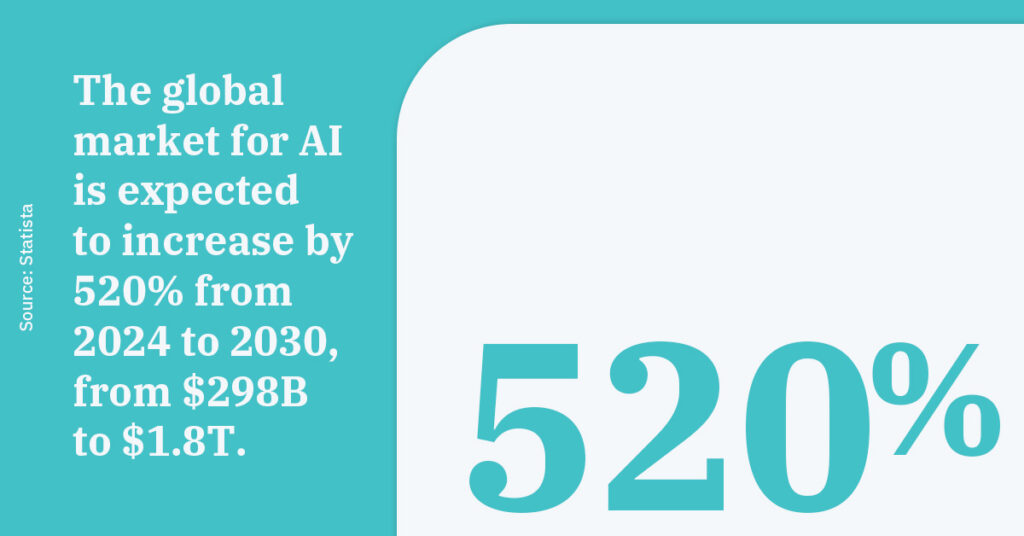
AI, especially generative AI models like ChatGPT, has completely changed the game in content creation. The global market for AI is expected to increase by 520% from 2024 to 2030, from $298B to $1.8T
These technologies write articles, compose music, generate art, and even develop software. But as AI’s capabilities expand, so do the ethical complexities surrounding ownership and credit.
Generative AI models work by analyzing tons of existing data to predict and produce content. For example, ChatGPT can craft coherent text by predicting word sequences based on its training data. While this makes AI an invaluable tool for generating ideas and speeding up repetitive tasks, it raises big questions about intellectual property and authorship. Think of it as a high-tech parrot: it might know all the right words, but it certainly didn’t come up with “Polly wants a cracker” on its own.
The Ownership Dilemma
The primary issue is straightforward, yet profound: if an AI generates content, who owns it? The answer isn’t exactly clear-cut. Generally, AI-produced content ownership can be broken down into a few key perspectives:
- The Developer’s Claim: Some argue that the creators of the AI—those who designed and trained the model—should own the content. After all, they built the foundation for the AI’s capabilities.
- The User’s Claim: Others believe that the person or entity using the AI to generate content should hold ownership. This viewpoint considers the user’s input, such as the prompts and guidance given to the AI, as a form of creative direction.
- A Joint Claim: A more nuanced perspective suggests joint ownership between the AI developers and the users. This approach acknowledges the contributions of both parties in producing the final content.
Each of these perspectives has implications for how credit is assigned and disputes are resolved. Right now, the legal landscape around AI-generated content is still evolving, and different places might have different interpretations.
Credit Where Credit’s Due
Beyond ownership, giving credit for AI-generated content is just as tricky. Traditional ideas of authorship involve creativity, intentionality, and originality—qualities that AI sorely lacks. AI doesn’t have thoughts or intentions; it just processes and regurgitates data.
Should we be giving a pat on the back to the toaster for making breakfast too?
However, the role of the user in shaping AI outputs can’t be dismissed. A writer using AI to draft an article, for instance, still exercises creativity and decision-making in refining and finalizing the text; the user arguably deserves recognition for their part in the creative process.
In practice, credit for AI-generated content might look different depending on the context. For instance:
- Co-authorship: In academic or collaborative works, AI can be listed as a co-author, alongside human contributors. Imagine citing “John Doe and ChatGPT”—a duo for the digital age.
- Acknowledgments: In other contexts, AI’s role might be noted in an acknowledgment section, crediting it as a tool rather than a creator. “Special thanks to ChatGPT for tirelessly suggesting synonyms.”
- Attribution Models: Some propose developing new attribution models that specifically address the contributions of AI in content creation.
And this attribution doesn’t just affect who gets credit for the work. Proper attribution influences how people perceive marketing efforts when AI is involved in the creation of content. Only 27% of people find an AI ad trustworthy even with disclosure of AI’s role in its creation. Without disclosure, that number drops to 15%. Perhaps more concerning is the effect that these disclosures have on brand trust. 53% of audiences will trust a brand who discloses AI’s role in creating their ad content; when AI is not disclosed, only 27% are likely to trust the company.
Moving Forward
As AI continues to advance, it’s crucial for creatives to stay informed and adapt to these changes. Here are some steps to consider:
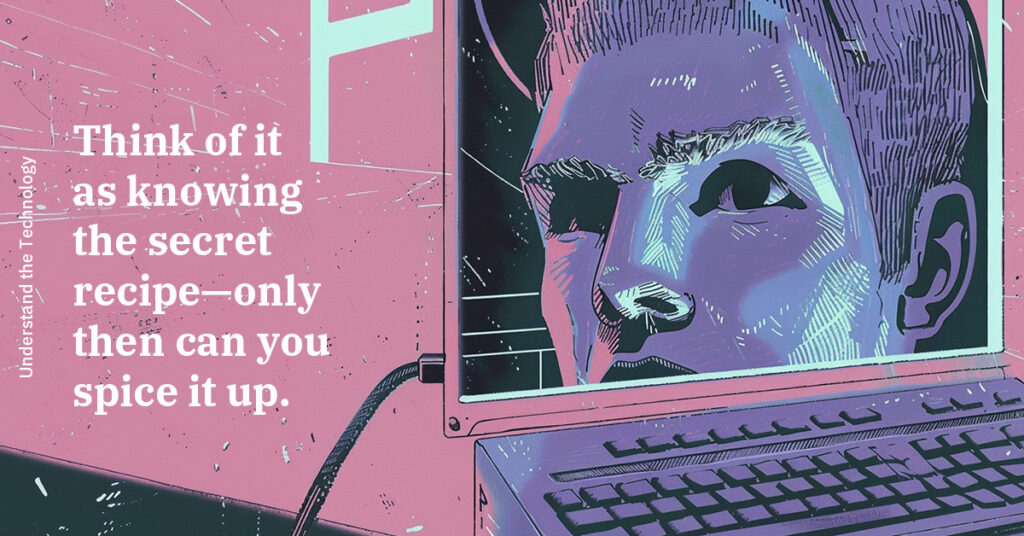
- Understand the Technology: Knowing how AI works and what it can and can’t do is vital. This knowledge can help you better navigate the complexities of AI-generated content. Think of it as knowing the secret recipe—only then can you spice it up.
- Stay Updated on Legal Developments: The legal landscape is continuously evolving. Keeping abreast of new laws and regulations can help you protect your rights and understand your obligations. The New York Times’s ongoing lawsuit against OpenAI is shaping up to be a pivotal moment in the history of AI. Lawyers are having a field day with this, so stay tuned.
- Collaborate and Innovate: Embrace AI as a tool that can enhance your creativity. By working alongside AI, you can push the boundaries of what’s possible while ensuring your contributions are recognized. It’s like having a super-smart assistant who never needs coffee breaks.
The advent of AI in content creation echoes the historical tensions between skilled workers and technological advancements. Just as the Luddites fought to protect their livelihoods, modern creatives have to navigate the challenges and opportunities presented by AI. Ownership and credit for AI-generated content are complex issues that require thoughtful consideration and adaptive strategies. By understanding these dynamics, creatives can ensure they remain integral to the ever-evolving landscape of content creation, rather than becoming a relic of the past.
So, gear up, fellow creators. The machines are here, and they’re not just taking jobs—they want credit for it, too.

